
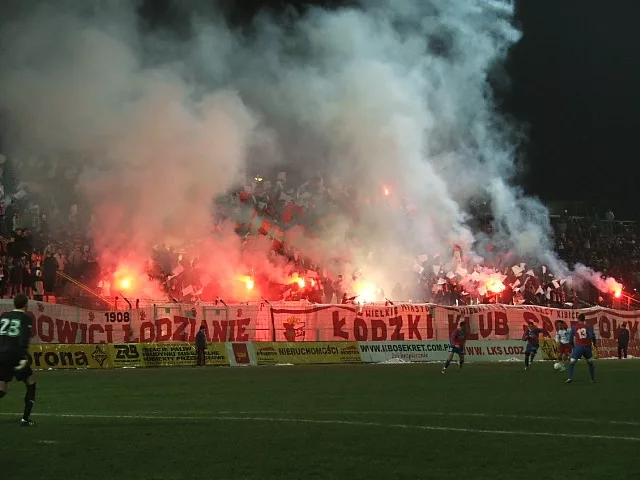
Łódzki Klub Sportowy achieved its first major success as early as 1912, winning the Gilchrist and Smith Cup for victory in the LFV competitions (Lodzer Fussballverband) – the "Łódź League" under the leadership of then captain Zenon Sienkiewicz. The club's good run was interrupted by the outbreak of World War I, and they had to wait four years to return to play.
Poland's regained independence and the end of fighting with the Bolsheviks led the ełkaesiacy to return to the game, and in 1921 they won the regional competitions, thus advancing to the first (completed) post-war Polish championships. For ŁKS, it was a time of gaining important experience; defeats and victories, ultimately to finish in third place.
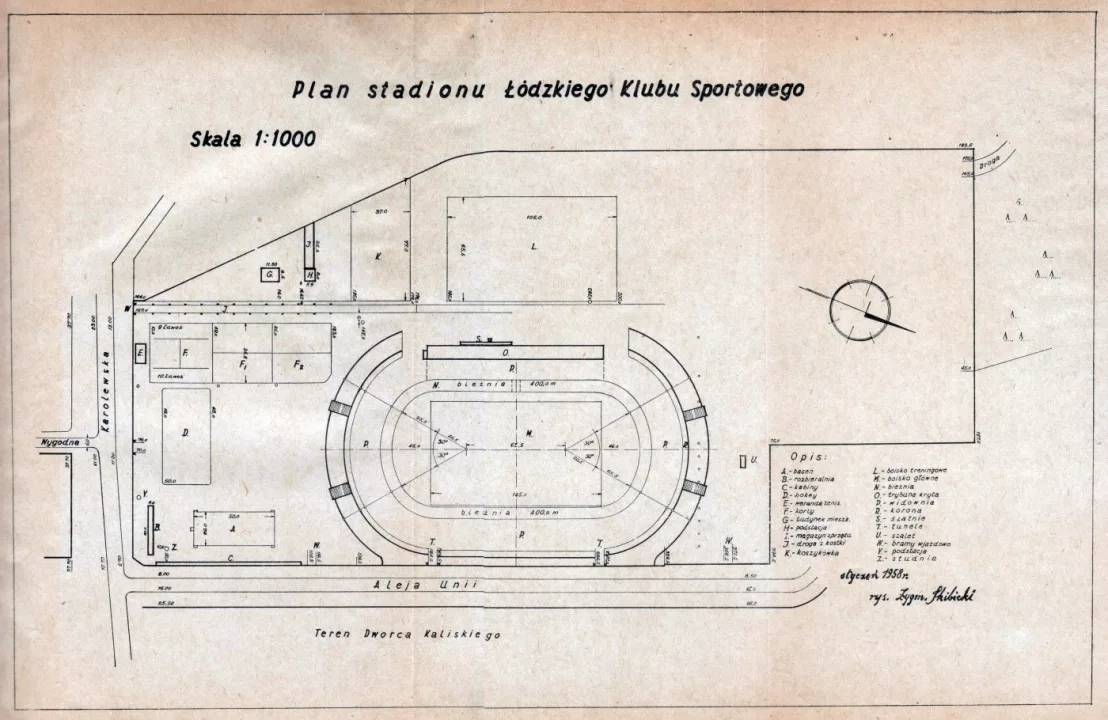
In 1923, under the watchful eye of ŁKS coach Lajos Czeisler, his first member made his debut in the Polish national team – Wawrzyniec Cyl (Paris Olympics, 1924), one of the most outstanding pre-war defenders of the Łódź club. On June 24, 1924, the ceremonial opening of the football stadium took place. The following years brought many victories that thrilled fans, and defeats through which the club gained new experience. Unfortunately, in 1938 ŁKS finished second to last in the table and was relegated from the first league.
On September 3, 1939, players were supposed to face Lechia from Tomaszów Mazowiecki. However, the match never took place. The club's activities were halted with the entry of the Nazis into Poland. Many players died during World War II, and ŁKS returned to activity only after its end.
The Greats of ŁKS
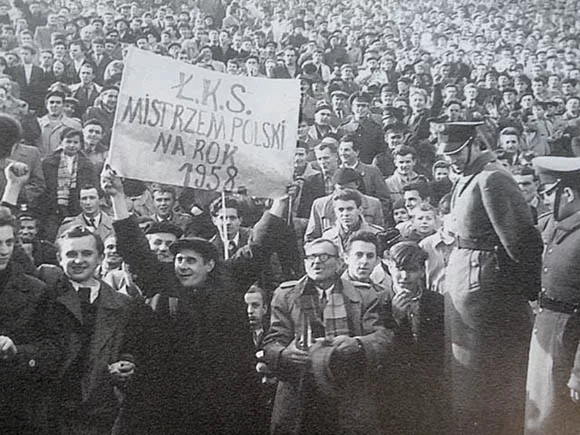
In 1948, the club started in the first post-war top-flight competitions. The 1940s and 50s were a sine wave for the ełkaesiacy. They showed their class by winning many matches (including defeating Legia in Warsaw 5:1, and also twice thrashing Widzew 6:2 and 6:1), but also suffered several defeats (e.g., in 1949 from Lech Poznań 8:1). The greatest success came in 1958 when Łódzki Klub Sportowy won the Polish Championship. It is also worth mentioning 1966, when Kazimierz Deyna played his first (and unfortunately last) match in ŁKS colors, celebrating his debut in the top flight at the time.
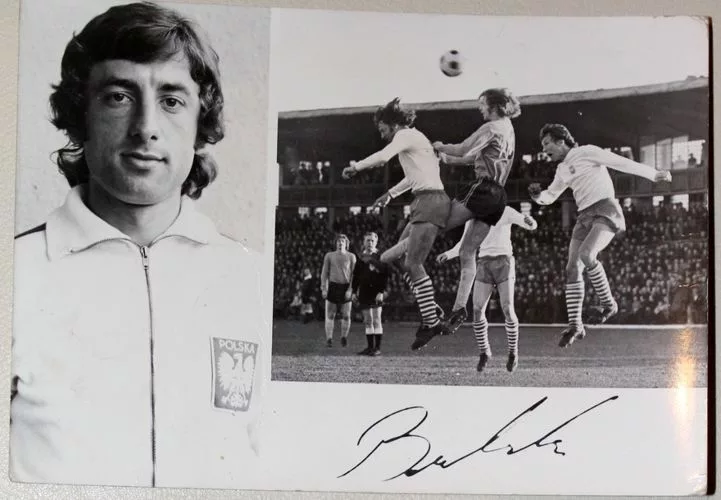
From 1972 onwards, Jan Tomaszewski was ŁKS coach, thanks in part to the support of then coaching coordinator Kazimierz Górski – a legend of the Polish coaching scene. From the 1970s onwards, the club had many wonderful players bordering on the national squad, including Jerzy Kasalik, Grzegorz Ostalczyk, Ryszard Polak, Włodzimierz Białek, Mirosław Bulzacki, Andrzej Drozdowski, Andrzej Milczarski, Bolesław Szadkowski, Marek Dziuba (medalist of the World Cup in Spain, still considered the best footballer from Łódź in history) and football artist Stanisław Terlecki. Unfortunately, even the best players could not fully cooperate with each other, which meant the club did not achieve many successes during this period.
Łódzki Klub Sportowy Returns to Form
The late 1980s gave hope for the return of the ełkaesiacy to the wonderful form and victories of the 1950s, this time under the leadership of Ryszard Polak. ŁKS were represented at that time by Andrzej Woźniak, Dariusz Podolski, Zdzisław Leszczyński, Tomasz Lenart and Grzegorz Krysiak.
The following years brought ups and downs caused by player form and cooperation between coaches. Nevertheless, ŁKS Łódź achieved a great deal in its career. In 1994, it played in the Polish Cup final again, finishing in an honorable second place (after losing to Legia in Warsaw 2:0), and in 1998 it won the championship once more. Moreover, the club currently ranks sixth in the all-time standings. The struggles of the ełkaesiacy have been followed by loyal fans for years: thanks to them the club continues to function as best it can and delights its fans in Poland and around the world.
{{video_0}}
Be the first! Add a comment.
You need to log in to add a comment.
Log in