
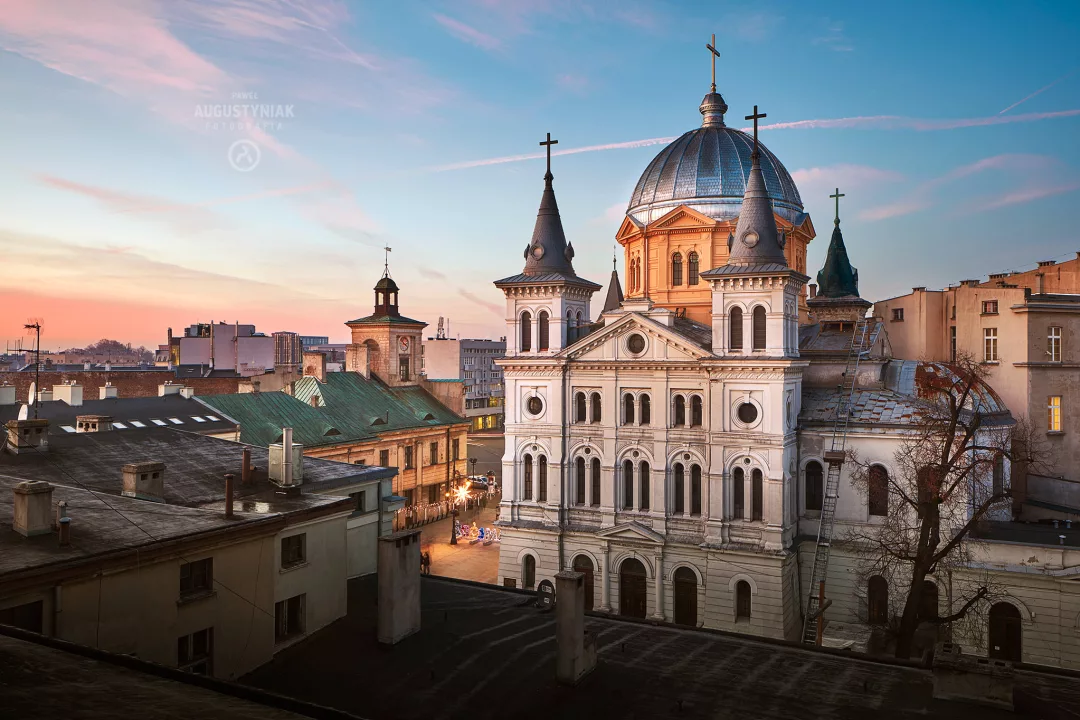
Łódź, a city that experienced its renaissance during the industrial period. The development of the textile industry attracted workers and entrepreneurs of various nationalities, but also different faiths. To this day we can admire traces of those times in the city – including sacred buildings.
Churches
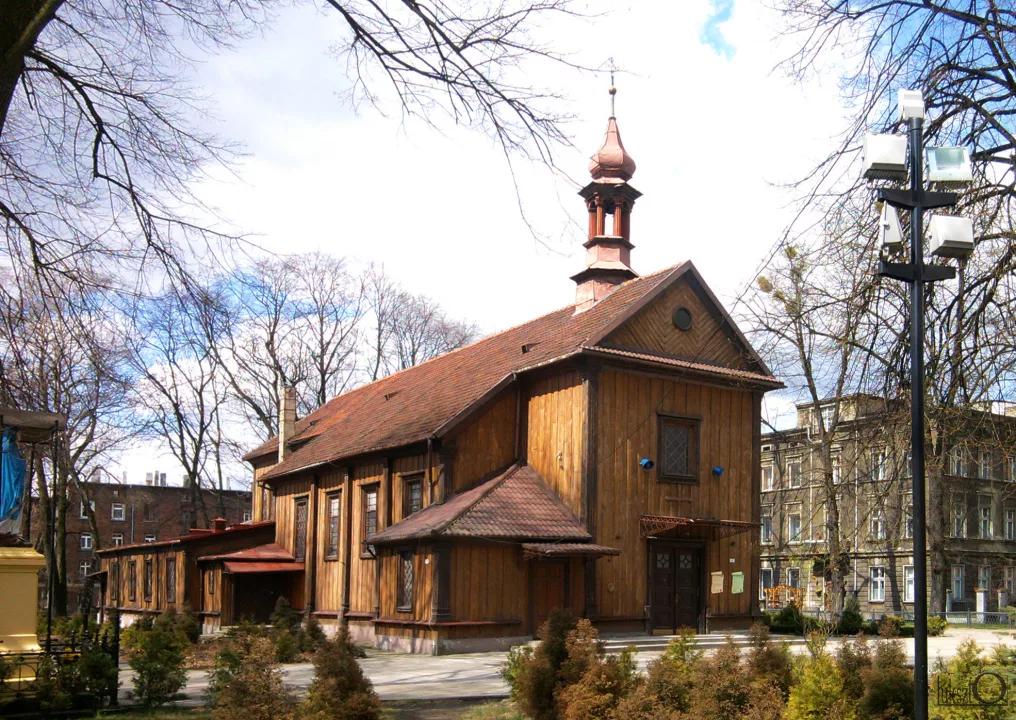
The oldest Łódź church is the one dedicated to St. Joseph, located at ul. Ogrodowej 22. The only place of worship from the era of agricultural Łódź. In 1765, construction began on a church dedicated to the Assumption of the Blessed Virgin Mary, on today's Plac Kościelny. It was a tiny larch wood building. In the 19th century, it became clear that it could not accommodate all its faithful. Ultimately, the decision was made to build a new brick church. The parish priest, Jan Siemiec, managed to save the wooden marvel from destruction. It was moved to the former Catholic cemetery at ul. Ogrodowej. The relocation contributed to a change in appearance. The roof was covered with tar paper instead of shingles, and its small tower was moved from the center to the front of the building. In the church we can admire altars that have an incredible shine. There is also a painting from the turn of the 17th and 18th centuries, depicting the Sorrowful Mother of God in a silver dress.
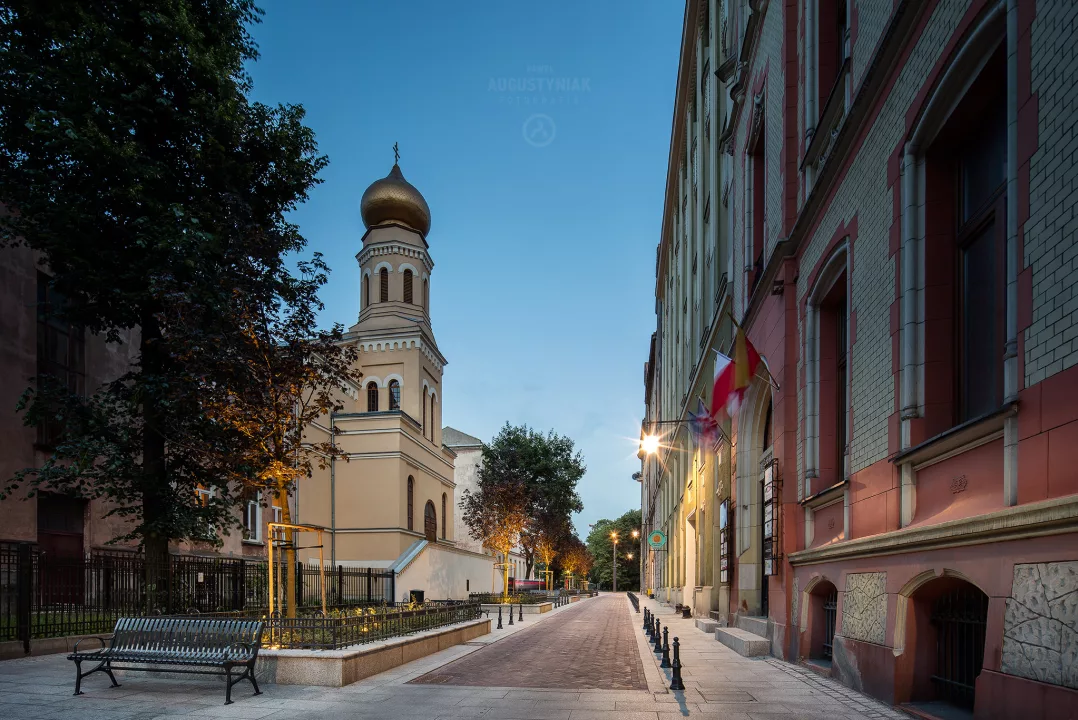
The garrison church at ul. św. Jerzego is another interesting monument. Consecrated as an Orthodox church, in 1896 it was a two-part structure. With a sacred part (today the presbytery), and a riding arena (nave). After World War I the Orthodox church was taken over by the Catholic church and a military parish was established there. The bulbous domes were removed, an image of the Mother of God of Częstochowa was brought in and she was crowned as the Hetmaness of the Polish Soldier. The interior of the church consists of a single nave, with a vestibule in its eastern part. There are also two side altars with images of St. Joseph with the Christ Child and the Mother of God. The main altar is in Byzantine style, a remnant of the iconostasis, with an image of the Mother of God, Hetmaness of the Soldier.
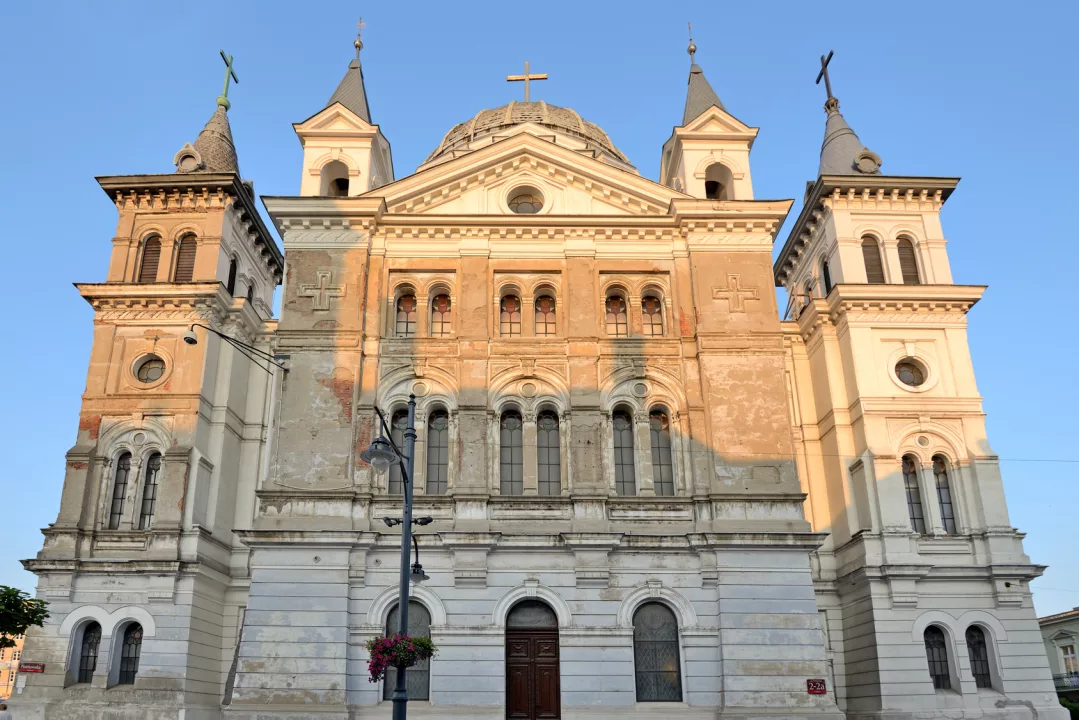
The Neo-Romanesque Church of St. John at ul. Sienkiewicza 60 was built in 1880-1884 as a Lutheran church dedicated to St. John the Evangelist. After World War II it was taken over by the Jesuit order. Here we can see a beautiful altar and listen to organs with 44 registers.
The building located at ul. Piotrkowskiej and adjacent to Plac Wolności was also an evangelical church: dedicated to the Holy Trinity. Its design and original appearance was deceptively similar to the Łódź town hall, which stands across from the church, but over time the need for renovation arose. At the end of the 19th century it took on its present form. In 1945, a Roman Catholic parish of Pentecost was established here and exists to this day. The walls of the church are decorated with a polychrome by Mieczysław Saar.
The history of this Neo-Baroque building unfortunately ends quite sadly. This is the Church of the Mother of God of Perpetual Help at ul. Żeromskiego. It was erected in 1911-1913 for the community of Moravian brothers. Later it was taken over by the evangelical church. After the war, the Polish Catholic Old Church parish existed here, and from 1948, the Polish National Catholic Church. In 1990 the Evangelical Church terminated the lease. In recent years the property with the chapel was sold to a private person, and the church is deteriorating. This is a very interesting monument of Łódź. Built in the shape of a large hall covered with a mansard roof, in its center stands a small turret.
Synagogues
In our city before World War II there were approximately 250 synagogues. To this day, only two have survived. The first is the building at ul. Rewolucji 1905 r., built in 1895-1902 from funds of the Reicher family. The building survived the war, but after it suffered many attempts at destruction and break-ins. It is a brick building on a rectangular plan with a main prayer hall. The hall is surrounded by galleries intended for women, with separate entrances leading to them. The eastern wall is occupied by the Aron ha-kodesz, a blue canopy supported on four pillars, and in front of it is a pulpit for the cantor.
The second synagogue is located in the headquarters of the Jewish Community at ul. Pomorska. Established in 1997, it consists of a prayer room, the so-called babinec (women's section), which is separated from the main room by a screened window and a small vestibule.
Orthodox Churches
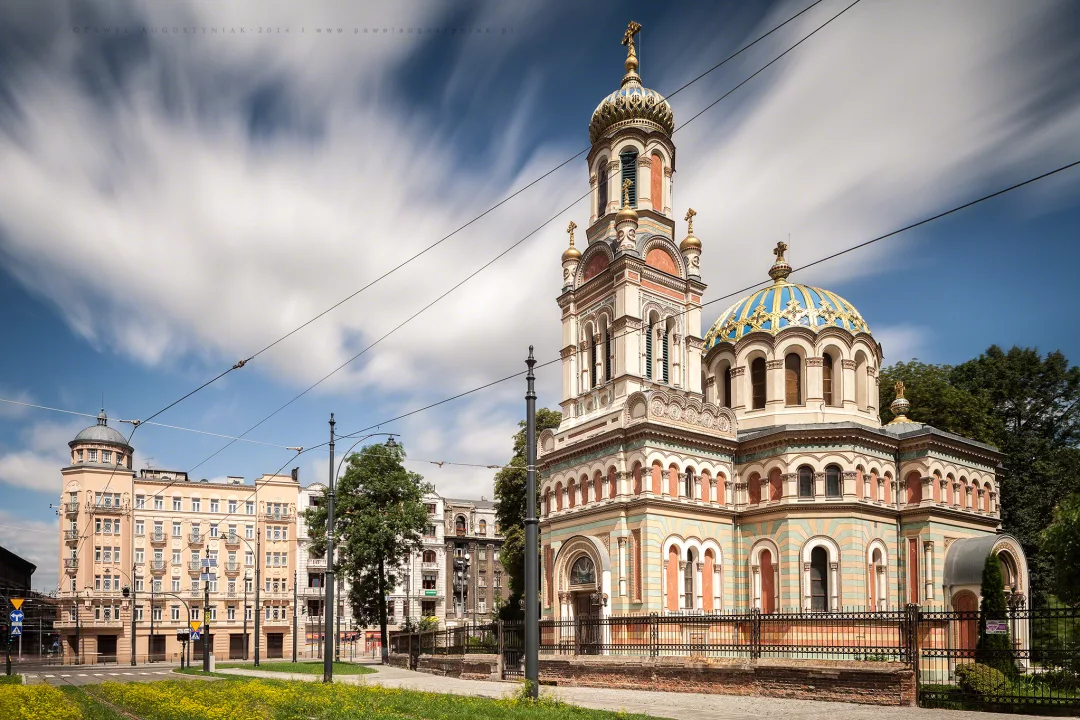
The Cathedral of St. Alexander Nevsky is located at ul. J. Kilińskiego. Interestingly, the founders of this church were Łódź manufacturers, not necessarily of the same faith. They had their own interest in this, as they counted on the favor of the Tsar's authorities in their own affairs. The church was consecrated in 1884, built in Byzantine style on an octagonal plan. The building is crowned with a dome. The elevations are decorated with numerous arcades. The interior of the church is covered with beautiful polychrome and rich stuccowork. The iconostasis was made of oak wood. Its founder was Izrael Poznański.
We can admire another Orthodox church at ul. Piramowicza. The church dedicated to St. Olga from the end of the 19th century is a single-nave building built on a rectangular plan. On its axis stands a tower covered with a helmet. Inside, an image of St. Olga, princess of Kyiv.
The last and smallest Orthodox church is located in the Orthodox part of the cemetery at Doły. The building was constructed in 1904 from brick, topped with a golden dome.

Be the first! Add a comment.
You need to log in to add a comment.
Log in