
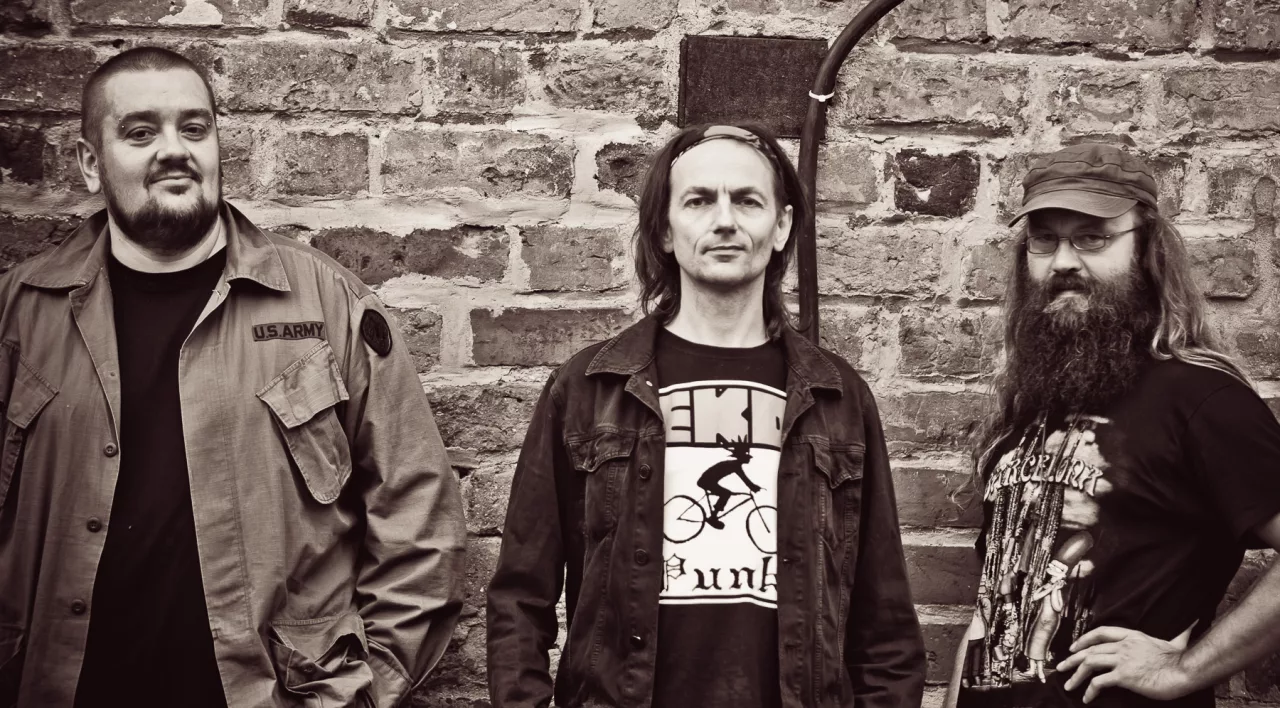
Dynamism and raw sound became the hallmark of the cult crew whose cassettes were passionately copied from Szczecin to Ustrzyki. The band was formed in 1983 on the initiative of Paweł "Guma" Gumowski — the vocalist and charismatic frontman of the band. Their goal was simple: to play more extremely and faster than all the other bands. Guma already had experience as a guitarist in TNT at that time. After a memorable performance at Jarocin in 1982, he tried to convince the other band members to speed up the tempo, but as the youngest in the lineup he had no say. He therefore decided to start his own path with a completely different composition.
History of the band
The inspiration for Moskwa was the second wave of punk. Among others, bands like Discharge and GBH, from which Guma drew his fascination with raw and extreme sounds. The name came about quite naturally, as it perfectly reflected what the band's musicians wanted to write songs about. It quickly turned out that the provocatively named band became a red flag for Soviet rulers and censorship, and yet rebellious attitude is the foundation of punk rock.
As the "Moskwa" members themselves say, the appearance and character of Łódź at that time also inspired them and became a motor for action. In those days, the city was mainly associated with tall factory chimneys, smoky gray streets and inhabitants who were not much more colorful. Only the distinctive clothes of punks stood out in the colorless crowd. The mood was further fueled by news trickling in from the television news.
Ultra fast hardcore punk
On the first Moskwa posters appeared the slogan: "ultra fast hardcore punk", which perfectly captured the character of the group. During the memorable Jarocin `84 festival, hardcore punk was experiencing its "15 minutes of fame". On stage appeared representatives of the new energy in Polish underground music, such as Siekiera, Prowokacja and Moskwa itself, and a new, transformed and more provocative repertoire was also shown by Dezerter and Abaddon.
It was then that the band shone with its original appearance. In teased and dyed hair, leather jackets densely covered with patches and badges, they couldn't be missed. As they themselves recall, during this performance they became convinced that their musical interests were shared by many other bands with whom they later played concerts. The fashion for rock'n'roll and punk firmly captured the hearts of not only musicians, but also crowds of fans.
First album
Moskwa's popularity eventually led the band to record their first album. The album was created in 1987 and featured songs such as: "I know, you know", "Material mess", "Air" and the still timeless "Never". It was then that censorship unfortunately spoke up, intervening and ordering that vulgar words starting with "k" be replaced with innocent "dolls". The album's distribution also faced difficulties. The record simply titled "Moskwa" could only go on sale two years after the material was recorded. It's hard to explain why this had to happen, but it's impossible not to see the threat to the positions of decision-makers at the Pronit studio. The fact that the threat of losing one's seat was real is evidenced by the fact that without the knowledge (let alone consent) of the musicians, their band's name was being transformed on the radio, saying "M-kwa".
Original lineup
The band's history remembers many reshuffles of musicians. When Moskwa was founded, it had only three people: Paweł Guma Gumowski — vocals, Piotr Rogoza Rogoziński — bass guitar, Tomasz Grona — drums. In 1985, Jarek "Wózek" Adler joined the band. A year later, bassist Dariusz Balon Adryańczyk replaced Rogoza. In this lineup, the musicians were filmed by Andrzej Kostenko's crew, who was filming the documentary "My Blood Your Blood" on commission from the BBC. Earlier, during the memorable Jarocin `84 festival, they were captured on tape by Piotr Łazarkiewicz, who was gathering material for the film "Fala" at that time.
Moskwa's fame began to extend beyond the country's borders. Hundreds of concerts played and festival appearances (Rockowisko, Nowa Scena, FMR, Rock Arena) did not, however, translate into financial success for the group. Moreover, after somewhat softening the formula in favor of more rock'n'roll sounds, many fans turned away from them. Guma later decided to go to India, seeking life balance and a sense of purpose in Zen philosophy. Fortunately, the group has not yet suspended its activities. In 2012, there were further changes in the band, but Moskwa continues to perform concerts.

Be the first! Add a comment.
You need to log in to add a comment.
Log in