

Tadeusz Miciński was born in Łódź, the son of Rudolf and Wanda Miciński (née Pruska). He soon moved to Warsaw, however, and completed his studies at V Gimnazjum there. The artist did not stay in the capital for long; after graduating from secondary school, he moved to Kraków and began studying history at the Jagiellonian University. After his next move (first to the university in Leipzig, and then in Berlin – where he completed his studies in philosophy), one could already sense that Miciński was a typical "restless soul" searching for his place in the world. However, his stay in Spain proved to be a turning point for him. It was there that Miciński developed a broader interest in matters that some prefer not to speak of openly.
A Specialist in Magic, Satanism and Esotericism
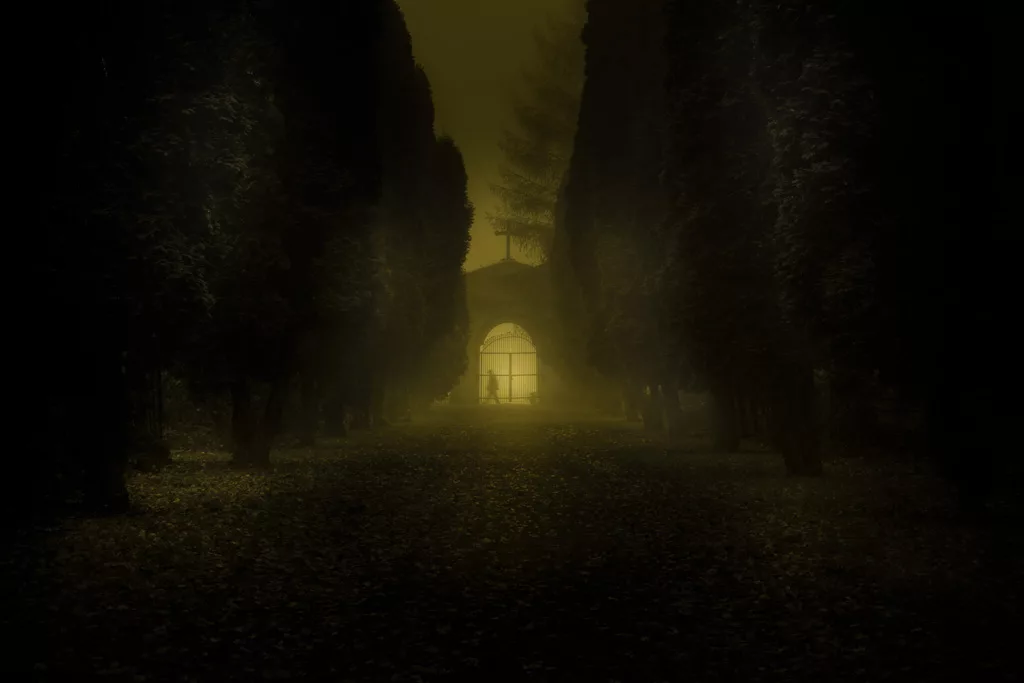
Miciński's stay in Spain was extremely fruitful in many respects. A man curious about the world, he became interested in various things there – from Spanish painting (with emphasis on the work of F. Goya), through drama, to the philosophy of Plato and Nietzsche. His attention was drawn to mysticism, satanism and occultism. He also began to promote quite radical views – that the world was not created by God, but by Satan, and that Earth is a caricature of Heaven. He even insisted that the Phoenix, Lucifer and Christ were names of the same person…
Journalistic and Literary Activity
During World War I he lived in Moscow and collaborated with "Gazeta Polska" and two journals – "Russkoje Słowo" and "Russkoje wiedomosti". As for his journalistic career, for a short time he was even a correspondent in Sofia – this was during the Balkan Wars (he worked then for the weekly "Świat"). He published his works in "Chimera" and "Krytyka". He was the creator of colorful theatrical productions (including "Łazarzy" and "Marcina Łuby"), and also wrote poetry (the poetry collection "W mroku gwiazd") and prose (the novel "Nietota"). Interestingly, Miciński's poetry was considered extremely innovative, "transcending the boundaries of Young Poland aesthetics". In the poet's works, motifs of mysticism, sadism and eroticism merged together, with extremely strong symbolism and onirism. All of his creative work constituted a kind of experiment (as with the not yet mentioned "Xiądz Faust"). In later years, his bold and innovative dramas were staged – this was the case, for example, with "Kniaziem Patiomkinem" and "Termopilami Polskimi".

Be the first! Add a comment.
You need to log in to add a comment.
Log in