

An essential factor in the city's cultural development was the literary community. As is well known, industrial Łódź did not provide conditions for this. The city was better known as a center of Polish textile industry work. Until the 1820s, the representatives of culture here were merely a priest, a mayor, and a teacher. Only just before the outbreak of World War I did literary life begin to develop gently, thanks to the growth of Polish intelligentsia migrating to the city. However, the writers' community still represented the smallest number in these circles.
The impetus for reviving the literary spirit was the founding of the "Dziennik Łódzki" by Henryk Elzenberg. The publication collaborated with, among others, Eliza Orzeszkowa and Maria Szeliga. Another important newspaper published in Łódź was "Rozwój" by Wiktor Czajkowski, whose pages featured literary competitions and texts concerning the history of Polish literature and theater.
Łódź literature of the interwar twenty years
This was the situation until World War I. Literary life flourished primarily in the press. During the twenty-year interwar period, literary books barely existed, as there was a struggle against illiteracy. However, around 550 periodicals were established at that time, including "Meteor", "Prądy – Regional Literary Magazine of the Łódź Literary Club" and "Głos Polski". Of course, alongside Polish publications, Jewish and German periodicals also appeared, as was fitting in a city of three cultures. Therefore, libraries supplemented their collections with magazines and books in Yiddish. Alongside these efforts, a literary community was forming, a radio station was established, and secondary education was developing. The Municipal Public Library had a significant influence on the development of reading culture.
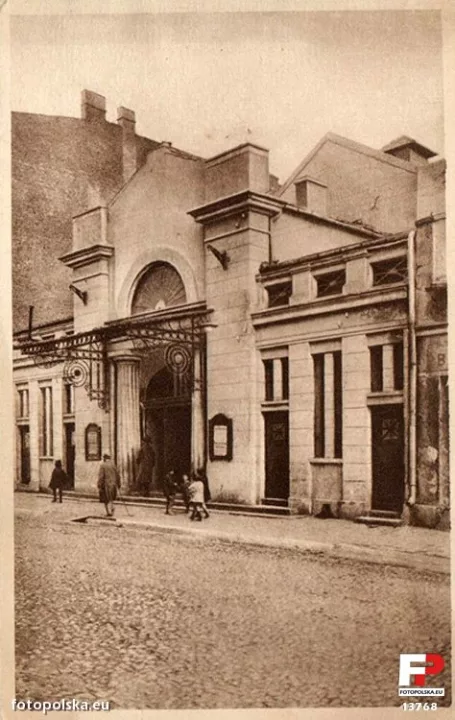
The Jews mentioned earlier played a very important role in the development of cultural and artistic life in Łódź. Already at the end of the 19th century, artists were coming to Łódź in search of patrons, and among the population, after meeting basic needs, a desire for contact with art was born. Łódź factory owners funded scholarships and purchased artworks for their palaces. Painters, architects, writers, sculptors – it was they who gave new direction to culture and art. Through associations in which they actively participated, such as "Srebrny Wóz" (Silver Cart) or "Grupa Łodzian" (Łódź Group), the local community consolidated. Numerous exhibitions were organized, mostly by Jewish creators. The first took place on April 1, 1918, and another in December. A literary and artistic group Jung Idysz (Young Jews) was also founded, with main representatives: Mojżesz Broderson, Icchak Kacenelson, Jankiel Adler and Henoch Barcinski (Henryk Barczyński). The founder of the group was poet and graphic artist Mojżesz Broderson. On their initiative, poetry evenings were organized, collections of poetry and other interesting publications were issued. They also founded the Ararat cabaret. In what they did, they sought to fulfill a guiding slogan calling for a break with the past and living in the present. Therefore, in their artistic work they often turned towards realistic depictions of life, folk themes, and abstraction. They were often called representatives of Jewish Expressionism, who oriented themselves towards irrational philosophy and Hasidic mysticism. The publication and monthly "Tel Awiw" issued by the group under the editorship of poet Zygmunt Bromberg played a very important role in the life of Jung Idysz. Besides literary activities, the young people organized numerous exhibitions in Łódź, Warsaw, and New York.
The most interesting places associated with the artistic bohemia's activities
The apartment of the Szydłowski couple at ulica Gdańska 38 was an important place in interwar Łódź. In this house, artistic society associated with the Jung Idysz group gathered – writers, journalists, painters, and actors. For some time, the well-known Jewish painter Jankiel Adler also lived here. The interiors of the building were decorated with a rich collection of works by this painter and by Marek Szwarc.
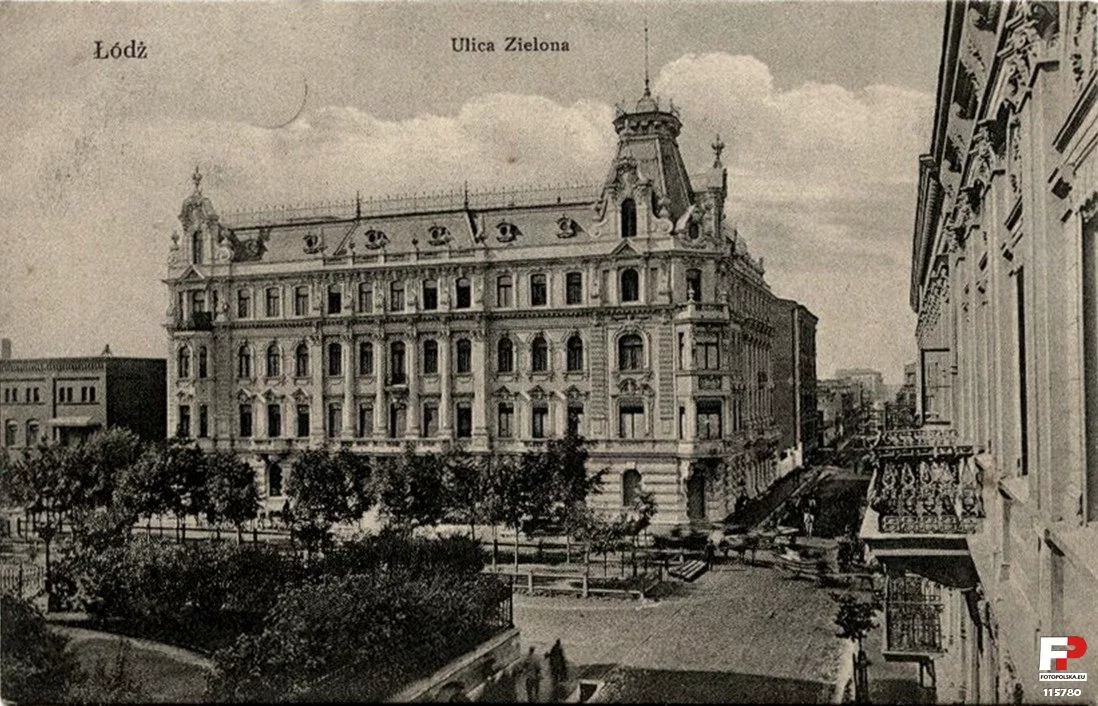
Another interesting architectural monument associated with the city's artistic life is the building of Mieczysław Pinkus and Jakub Lende at al. Kościuszki 1/3. The Pinkus family was engaged in trade with Russia, selling textile products, mainly cotton, which allowed them to build such an impressive four-story house with almost 500 rooms. On the upper floors were the studios of well-known Łódź painters and sculptors, such as Samuel Hirszenberg and his brother Leon. Visitors to Hirszenberg included, among others, Polish painter and draftsman of Jewish descent Maurycy Trębacz, Leopold Pilichowski (Polish painter of Jewish descent) and sculptor Henryk Glincenstein. Long hours were spent here discussing art. During the interwar period, the Pinkus building continued to be known for organizing social gatherings by artists.
Łódź artistic associations
It is also worth remembering other artistic groups, consisting mostly of members of Jewish descent: there was the Start Association, the Łódź Group and Srebrny Wóz. Each of them took an active part in creating cultural structures, organizing, for example, numerous painting exhibitions and other artistic activities.
During this time, strong communities of Polish-Jewish avant-garde creators were also forming in Łódź, resulting in numerous works and initiatives, such as the Ararat theater. It was born in 1927, and its main idea was a turn towards the Qui Pro Quo and Azazel theaters. The ensemble performed in the sung variety of the Yiddish dialect, presenting songs, sketches, and recitations. Each performance was enhanced by comedians' acts. The theater performed not only on stage, but also in some Łódź cafes.
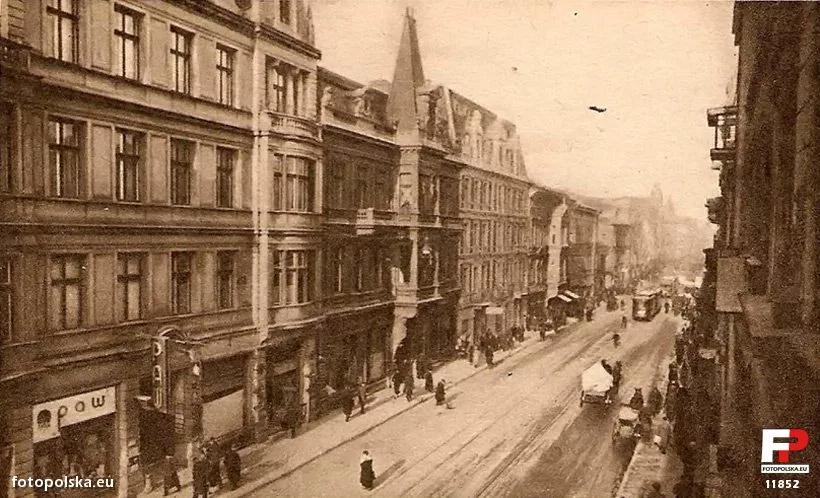
An important place on Łódź's cultural map is the artistic cafe Cafe Astoria at ul. Piotrkowskiej 27. It was in this place that Jewish artists – writers, painters and sculptors – conducted heated discussions about art and literature. This unique place was arranged in the style of artistic cafes in Paris, where the artistic bohemia held its meetings. A frequent visitor to Cafe Astoria was painter Jankiel Adler and poet Mojżesz Broderson, actor Moszer Puławer and composer Dawid Bajgelman. The cafe was also a meeting place for viewers of the Scala theater, in which the actors were Polish and Jewish artists.
The outbreak of World War II interrupted what had been built with such dedication in the field of culture by the hands of three nationalities. Łódź, from 1940, changed its name to Litzmannstadt at Hitler's command, was incorporated into the borders of the Third Reich, resettlements began, liquidation operations of Łódź's intelligentsia, and the broadest repression fell upon the Jewish population. However, what was sown in human hearts and minds, thanks to broadly understood culture, bore abundant spiritual fruits in the following years.
Be the first! Add a comment.
You need to log in to add a comment.
Log in