
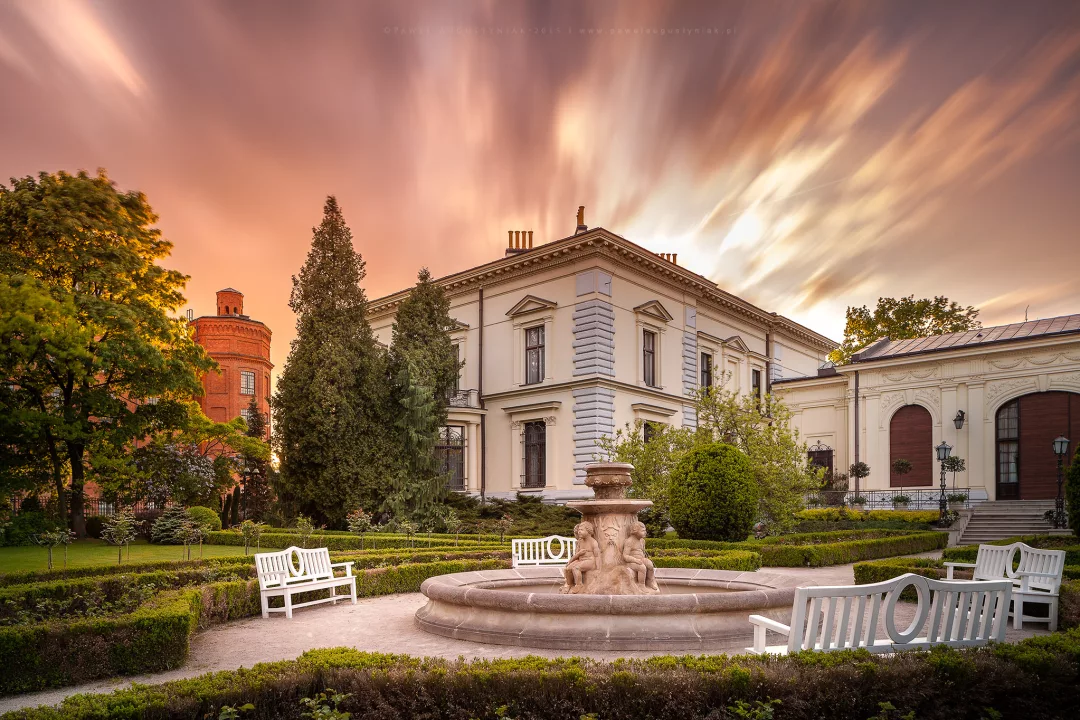
Edward's parents ensured his education. He studied at the Warsaw School of Commerce, and came to Łódź as a graduate in 1869. He began his career at the most dynamic Łódź factory of Karol Wilhelm Scheibler. The early 1870s brought him the position of one of the directors of the factory. He became co-owner of the factory shortly after marrying Scheibler's daughter – Matylda, though it is unknown whether this was a marriage for love or a union based on business interests.
Edward Herbst's Education and Work
In 1881, Herbst became the main director of the joint-stock company, which he established together with the sons of the deceased Karol Scheibler – the heirs Adolf and Karol, as well as son-in-law Georg von Kramsten.
Keeping diaries in those times was not as popular among factory owners' families as it was among aristocrats or the landed gentry. Nevertheless, Herbst became a patron of the "Dziennik Łódzki" (Łódź Daily), to which he bought a printing house in 1885. Herbst was also for many years the president of the Bank Handlowy (Commercial Bank) in Łódź. His wife closely cooperated with her mother on many philanthropic initiatives. After the death of their daughter Anna Maria, the Herbsts supported the construction of Poland's first pediatric hospital, on the initiative of Dr. Karol Jonscher. Construction lasted from 1902 to 1905.
Edward Herbst was always characterized by industriousness, reliability and dedication, and his behavior was said to resemble that of his father-in-law – and it was precisely for this reason that he was the Scheibler family's favorite son-in-law. With his mother-in-law, he was united by a passion for gardening, and Anna herself felt exceptional affection for him.
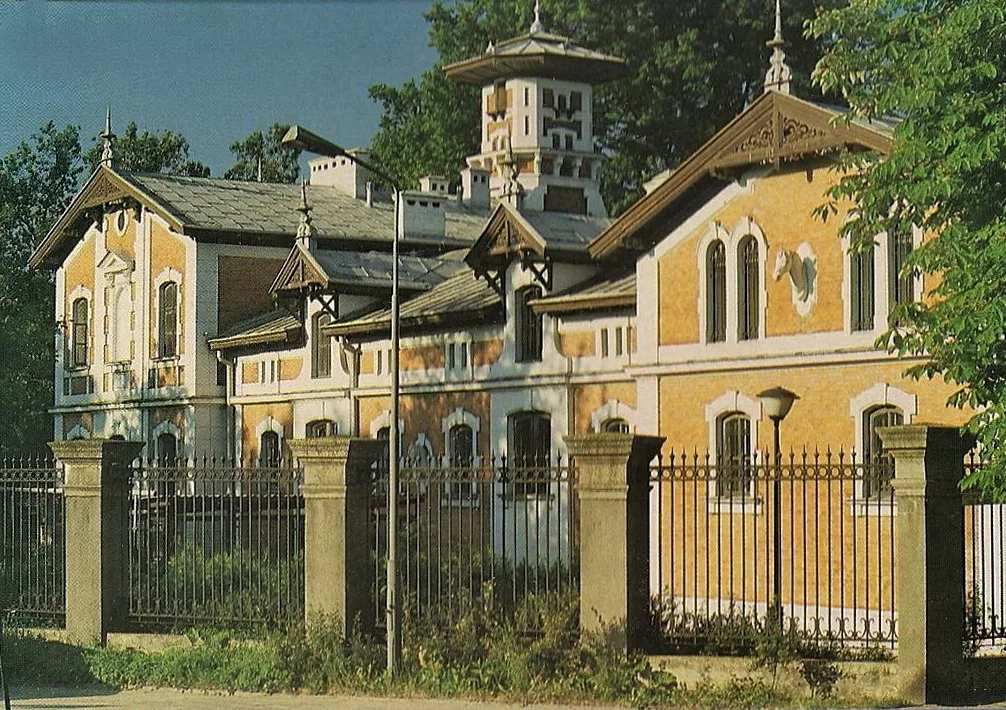
Herbst the Philanthropist
Herbst was known for his philanthropy. When he expanded a small summer house in Sopot into a large-scale residence, among other things, he undertook to finance the purchase of three bells for the "Gwiazda Morza" (Star of the Sea) church, and also provided financial support for the construction of the Sopot "Werminghoff" hotel. In October 1884, he was awarded the Order of Saint Stanislaus II class for his zeal demonstrated in the construction of the St. Alexander Nevsky Cathedral in Łódź, and four years later he received the Order of Saint Anne II class. Furthermore, at the request of the finance minister, on November 18, 1895, he was decorated with the Order of Saint Vladimir III class. He died in his expanded residence in Sopot, where he lived with his wife, and was also buried in Sopot.
Be the first! Add a comment.
You need to log in to add a comment.
Log in