
Ludwik Grohman (1828-1889)
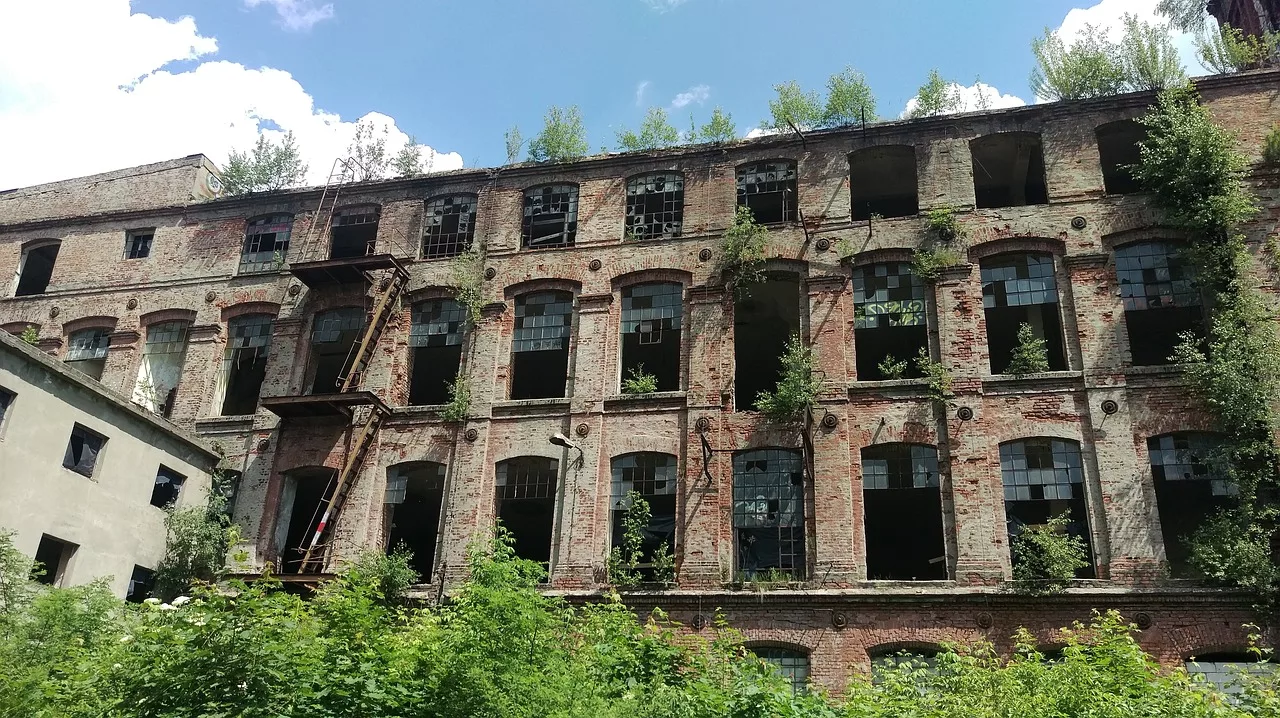
Worker settlements, so-called factory estates, stretched out near almost every major factory. Many of them, unfortunately, did not survive to the present day, some are preserved in fragmentary form, and still others look as if time has not touched them at all. During the greatest development of Łódź's industry, over 400 factories operated there, primarily connected with the textile industry. Now only remnants of former factory buildings and stories confirm that once there were many weavers and spinners here, and from the chimneys of mighty factories, clouds of gray smoke slowly rose skyward. The first worker settlement in Łódź, with multi-story "familokami" (family apartments) was built by Karol Scheibler at Rynek Wodny. Unfortunately, it has not survived to the present day. However, his second factory estate erected at Księży Młyn, consisting of 12 brick cottages, one and two-room, has survived in very good condition. Behind the residential sections were sanitary facilities and utility rooms. The settlement was surrounded by a wall and crowned with a gate on the axis designated by an avenue. The complex included a school, apartments for teachers, as well as a shop and workers' hospital.
Another worker settlement with a different character was the development consisting of workers' cottages of Poznański's factory at Ogrodowa street. The apartments were also one and two-room, and the staircases were narrow and dark. The living space also included basements. Only the courtyards were bathed in sunlight, where wells, sanitary facilities and utility buildings were located.
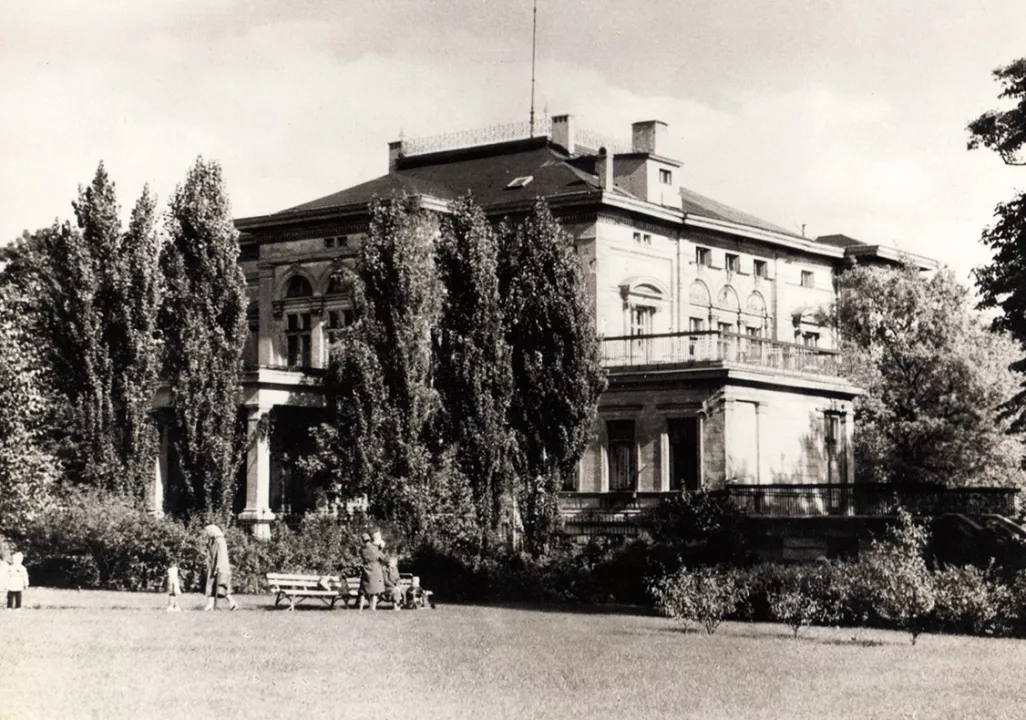
The industrial power of Łódź was created by several families, largely of Jewish descent, among which were also representatives of the Grohman family. Ludwik's father, Traugott Grohman, was the manager of Lamus at Księży Młyn, where he ran a cotton spinning mill and weaving mill. He occupied a factory house, which was also his private residence. The first steam engine in this complex was installed in 1854. The factory complex covered areas at Tylna and Targowa streets, extending to today's Fabryczna, Magazynowa, Tymienieckiego and Kilińskiego streets. In its southwestern section, after his father's death, his son Ludwik took up residence in an imposing villa. This residence was built in the architectural style of Italian Renaissance. After his son Leon's marriage, the villa was significantly expanded and divided into two parts – for the children and for the parents.
Biography
Ludwik was born in 1828 in Łódź. A city councilman, factory owner, industrialist, he took over the spinning mill from his father and transformed the facilities into the company Ludwik Grohman. He founded the first fire brigade at his factory and was the president and commander of Łódź's fire brigade and volunteer fire service. Besides that, he held other very important positions – co-founder of the Commercial Bank, the Municipal Credit Society and the Łódź Christian Charitable Society. He received a distinction – the Order of St. Anne, 3rd Class – for his involvement in the construction of the St. Alexander Nevsky Church. For his special care for the welfare of institutions subordinate to the Ministry of Education, he was honored with the Order of Saint Stanisław, 2nd Class. He died in 1889, leaving behind a daughter Anna Melania and five sons.
Further history of the factory
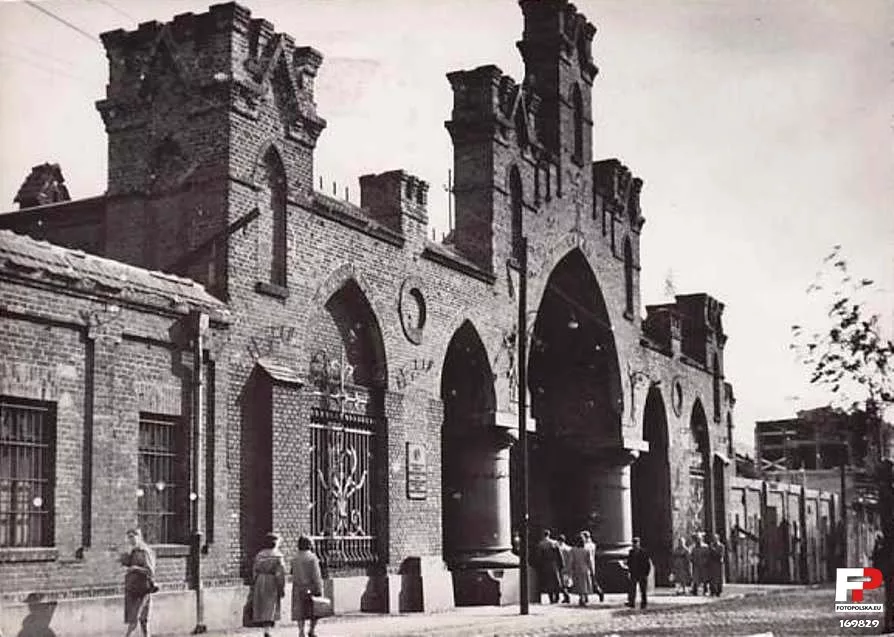
After his death, his son Henryk Grohman took over the management of the company. In the 1890s, he established a new jacquard weaving mill with an enormous entrance gate – these are precisely the famous "Grohman barrels," that is, powerful thread spools (one of the symbols of industrial Łódź, located at Targowa 46). On the factory floor there were as many as 522 looms, powered by a steam engine. There was also no shortage of yarn warehouses and finished product stores. The roof was glazed, erected on a steel-wooden structure. The exterior of the building was made of red brick, and the entire complex was surrounded by a wall decorated with turrets and other details typical of Gothic defensive architecture. Generally, from an architectural perspective, the factory appeared quite contrasting – a heavy, ornate gate also in Gothic style connected with a low shed hall. Neo-Gothic, pointed-arch windows, decorative hand-forged iron grilles and curved Art Nouveau plant stems. An eclectic, disharmonious, yet beautiful arrangement of styles emerged from this combination.
Cotton spinning mill
At Tymienieckiego 26, a cotton spinning mill factory was established. The finest cotton yarn in Łódź was produced here, intended for embroidery, lace and knitwear. Approximately 580 workers were employed there, and the weaving mill's turnover was 1632 rubles annually (1902). The First World War left its mark on the company's operations. Unfortunately, production was no longer going well, which contributed to the merger of the weaving mill with Karol Scheibler's facilities. The United Industrial Works of K. Scheibler and L. Grohman S.A. were created. Ludwik Grohman's son, Henryk, was a very talented factory owner. He served as the company's board president. For his versatile activities in many social and economic associations, he was honored with the Commander's Cross of Polonia Restituta.
Be the first! Add a comment.
You need to log in to add a comment.
Log in