
Juliusz Heinzel – from master to Łódź's King of Wool
The Heinzel family moved to Łódź in the 1820s. Jan Heinzel, a master weaver from Augsburg, and his wife Franciszka thus became among the first settlers. Their son Juliusz was born in 1834, after the family had already assimilated into Łódź's community of residents. The children received solid, though domestic, education and upbringing in the Catholic faith. Juliusz's passion for work and entrepreneurial spirit likely developed during his apprenticeship at Scheibler's mill, to which his father sent him after he completed his technical studies.
Juliusz Heinzel joined the Association of Master Weavers, apprenticed under Scheibler, and began to increase his wealth, which initially amounted to merely 100 rubles. Yet thirty years of life proved sufficient for Juliusz to acquire his first own factory. It was established in 1864 on ulica Piotrkowska (Piotrkowska Street) 104 and was a mechanized woolen mill. Woolen, not cotton as is commonly believed, because prudent Juliusz decided against purchasing the risky commodity of the time – cotton, due to the raging "cotton crisis" in the United States. He decided to build his fortune on wool instead.
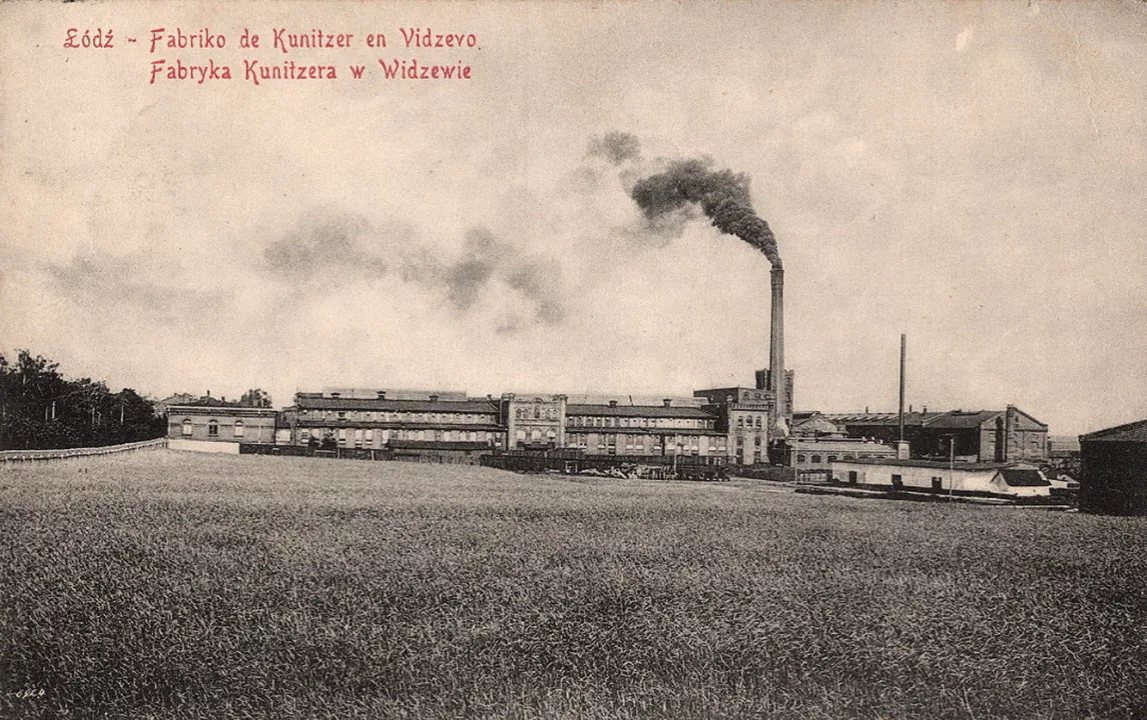
The facility expanded so rapidly that soon Juliusz Heinzel became the largest wool manufacturer in the entire Kingdom of Poland. His figure was reportedly the prototype for Reymont's literary character – Müller, whom we know from "The Promised Land". But that is not the end of his profitable business decisions. In 1879, Heinzel entered into a partnership with Juliusz Kunitzer. The latter planned to open a large factory in Wideaw, but needed a good partner. Together with Heinzel, they created a powerful facility that employed over 3,500 people. But that was not all – Heinzel and Kunitzer also built a workers' settlement, a school, and contributed financially to the construction of the Church of St. Casimir. The factory, under the name Widzewska Manufaktura (Wideaw Manufactory), operates to this day, though it is now a place where cultural life thrives.
Juliusz Heinzel died in 1895. When his family fortune was assessed after his death, it turned out that the initial 100 rubles had grown to 5,858,673 rubles and 61 kopecks.
The King of Wool's activities and assets
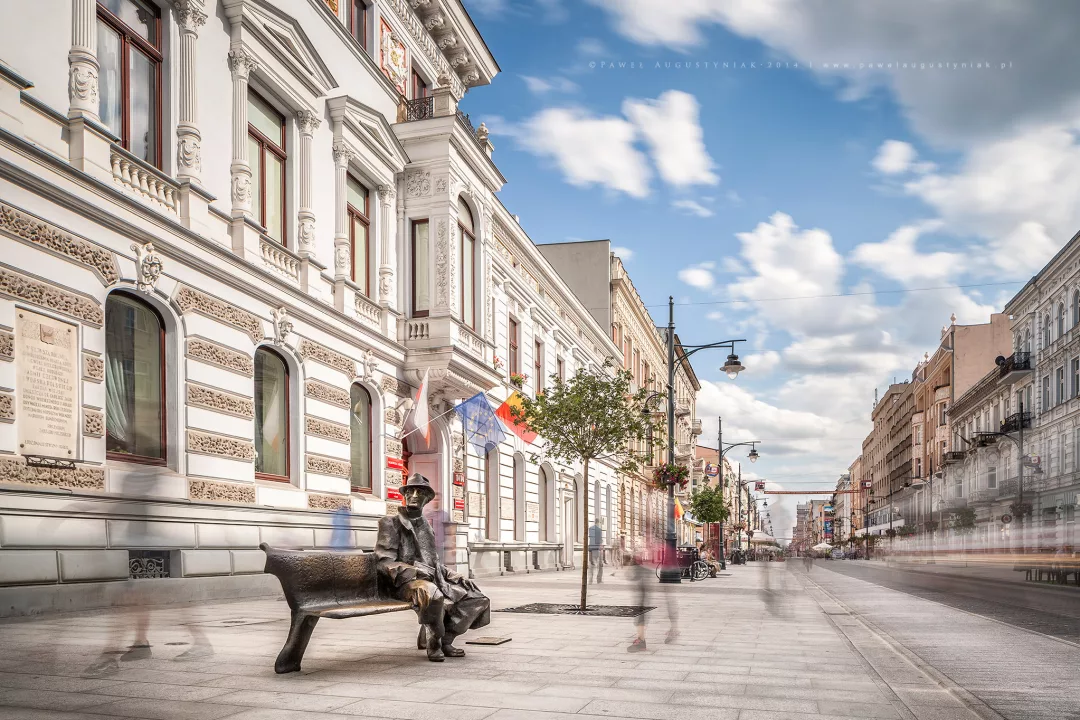
As the King of Wool and owner of an impressive estate, Juliusz had to reside in a palace. His first "kingdom" was located on ulica Piotrkowska 104. The front of the building is still adorned with an allegorical sculpture depicting three women – a symbol of industry. Just behind the palace was the Heinzel and Kunitzer factory. Currently, these buildings serve as the seat of the Łódź City Hall and the Voivodeship Office.
It soon became clear, however, that one palace was insufficient for a king, and it was difficult to rest in the hustle and bustle of the city. Heinzel therefore built another residence, this time in Radogoszcz, and adapted the surrounding area into a magnificent park. To this day, the neighborhood is called Julianów after its owner's name. The third of the great palaces was built in Łagiewniki on the Łegiewniczanka river near a monastery and chapels.
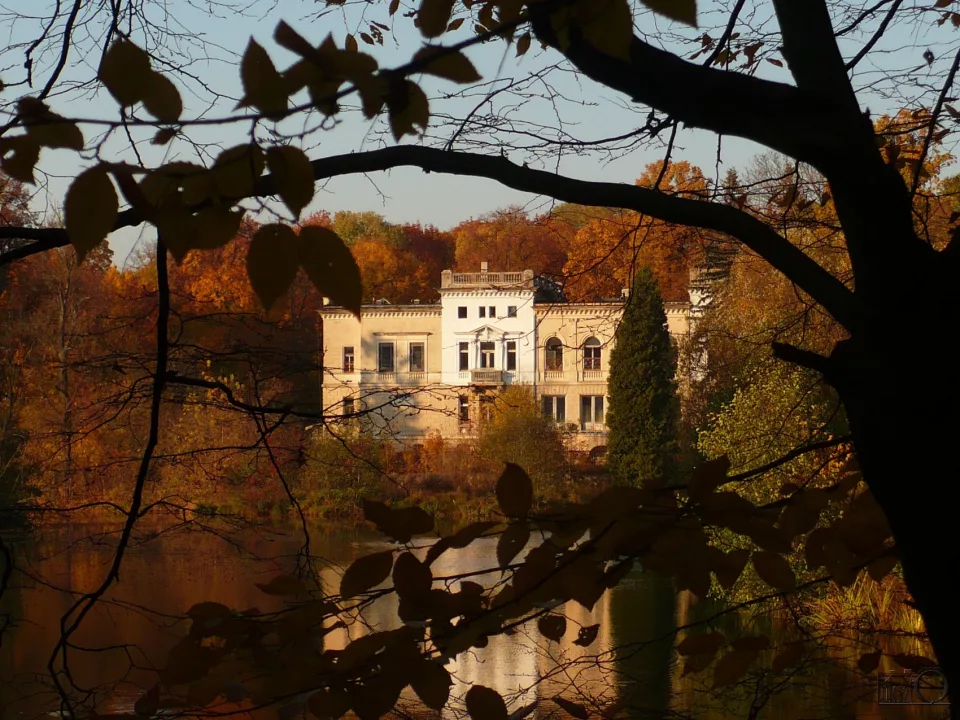
Heinzel's estate consisted in total of property worth 600,000 rubles, Julianów, several factories, three palaces, twelve farmsteads, and nearly five thousand hectares of land. At age 50, Juliusz already owned an entire factory complex with 946 looms. His fortune also contributed to the development of the city and provided employment to many thousands of people, making Łódź a symbol of industrial development.
Financial troubles for the large Heinzel family (Juliusz had six children) began after World War I. A similar fate befell other Łódź manufacturers. Many of their estates and properties were gradually sold off, until in 1936 an estate valued at several dozen million złoty of the time went under the hammer. The properties fell into the hands of the city or private buyers. Some of them are currently falling into ruin, but what was preserved still has enormous value. Descendants of the famous Heinzel are trying to recover some of the 17,000 square meters of building plots that once belonged to the family. Their value is estimated at 30 million złoty.
Be the first! Add a comment.
You need to log in to add a comment.
Log in