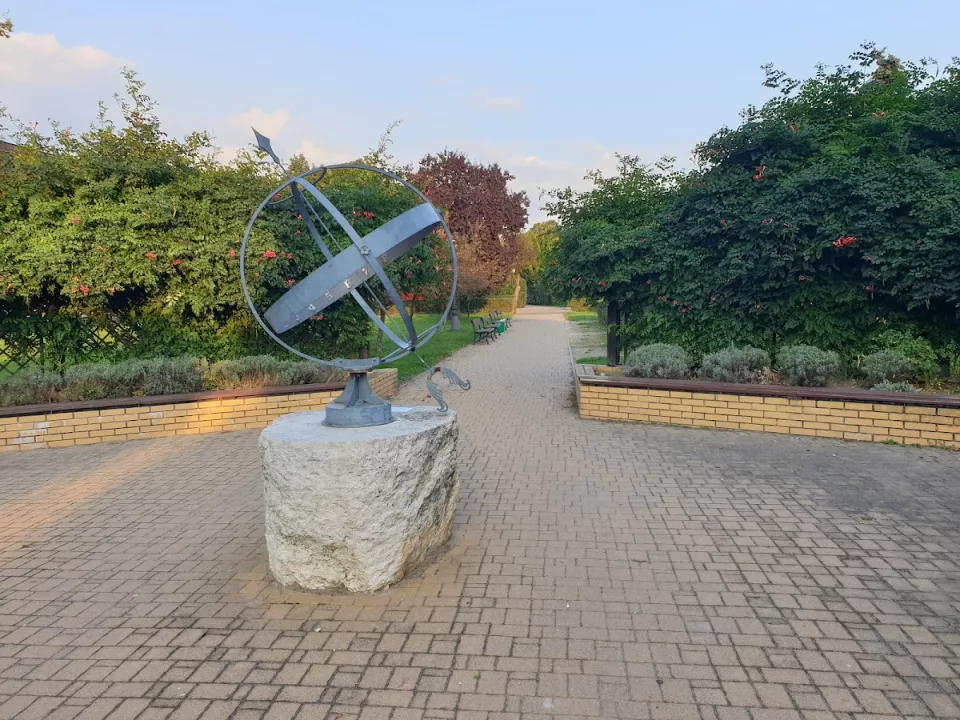
A historic sundial on Palestrańska in Wieluń, an unusual example of an ancient method of measuring time. An ideal spot for those interested in history, astronomy and technique—particularly if you want to see how our ancestors told the time without modern devices.
The sundial stands on the Wieluń planty, a strip of green space running where the old moat once surrounded the medieval town, on the side of ulica Palestranckiej. It is a modest element of the park scenery, usually noticed in passing during a walk rather than visited as a destination in itself.
The planty encircle Wieluń's historic centre and border the preserved fragments of medieval defensive walls. Among the greenery along ulica Palestranckiej stands baszta Swawola, a useful landmark when looking for this part of the park. The sundial is documented in a photograph from 2006 described as a sundial on the municipal planty, so it has been there for at least a dozen years.
Planty miejskie imienia Jana Pawła II were created where a moat once ran around the town. The walls were built from local sandstone following a fire in 1335, and Wieluń was among a group of towns fortified under Kazimierz the Great.
Of the old gates, one has survived. Brama Krakowska, a 14th-century gateway to which the town hall was later added, remains the city's most recognisable monument.
| Monday | 00:00 – 24:00 |
| Tuesday ← today | 00:00 – 24:00 |
| Wednesday | 00:00 – 24:00 |
| Thursday | 00:00 – 24:00 |
| Friday | 00:00 – 24:00 |
| Saturday | 00:00 – 24:00 |
| Sunday | 00:00 – 24:00 |
Hours per Google Places - may change on public holidays.

Be the first! Add a comment.
You need to log in to add a comment.
Log in