
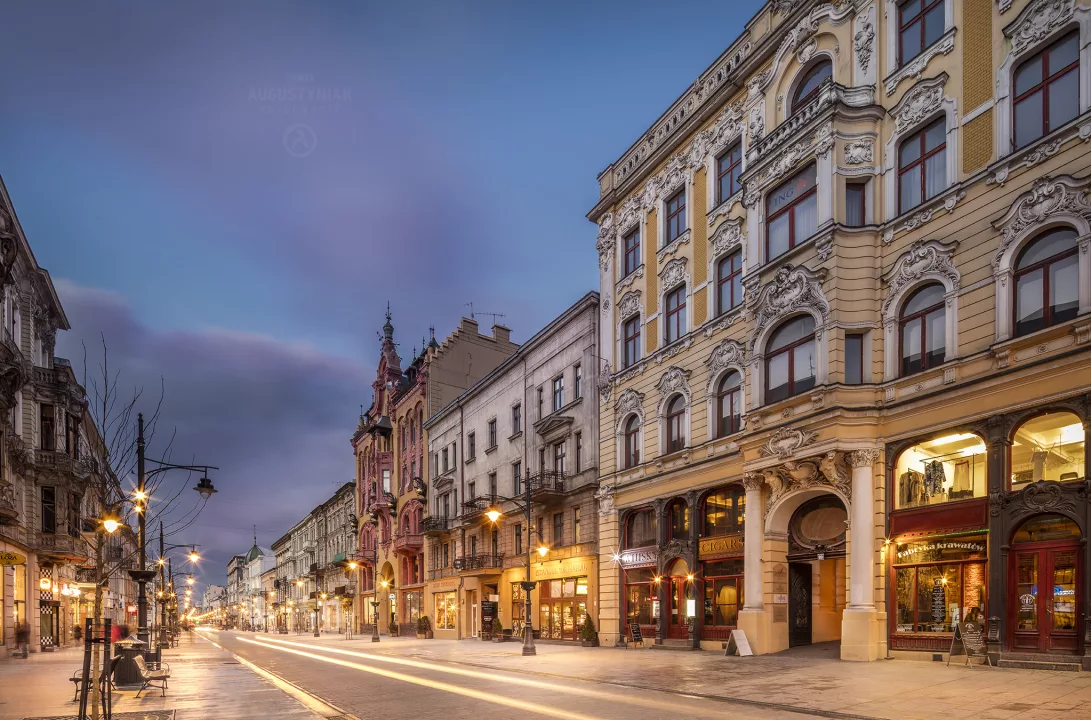
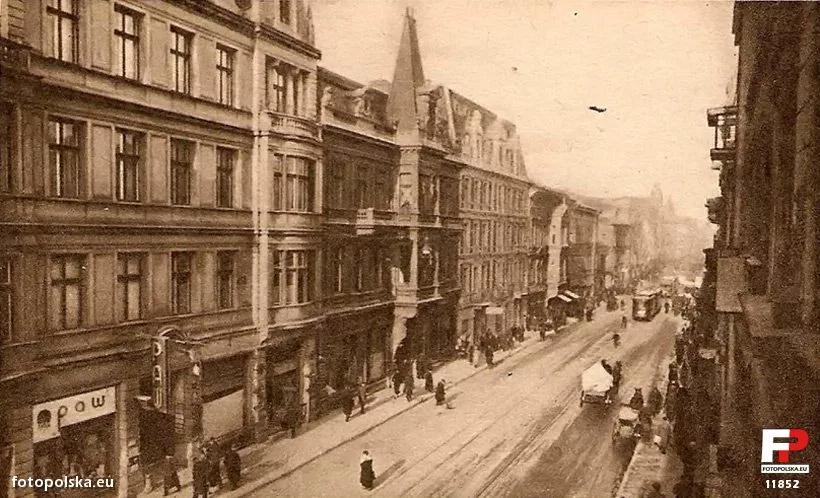
The Creation of Łódź's Most Famous Street
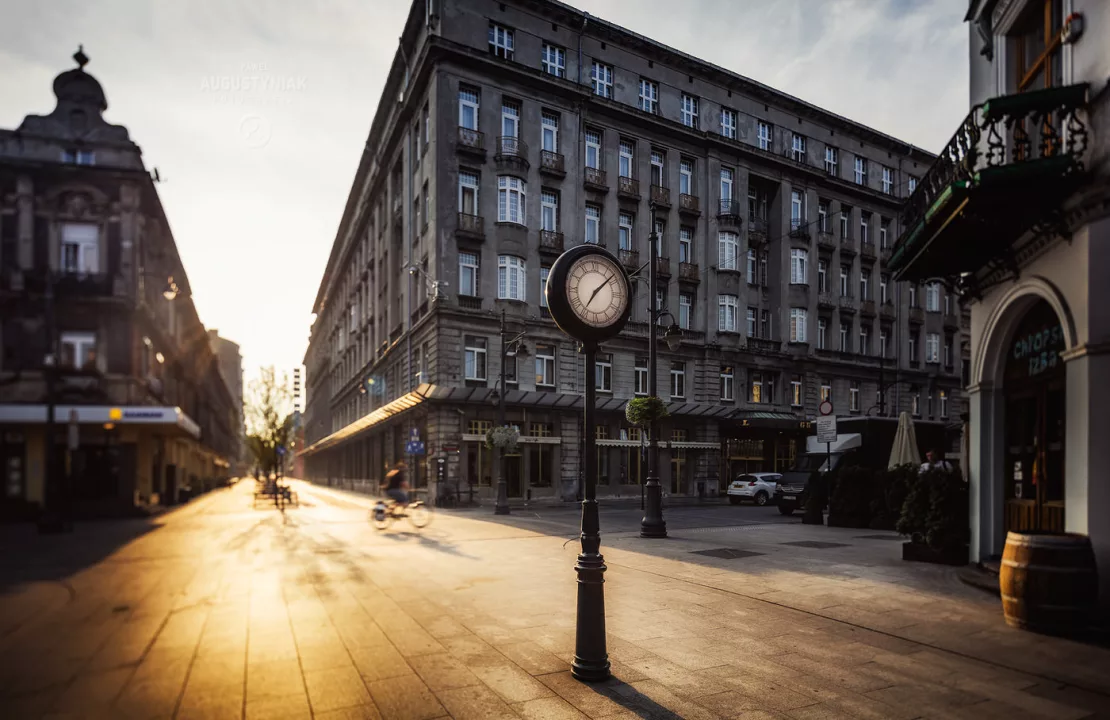
Before reinforced concrete dominated it, the street was densely settled by weaver-cottagers in single-story homes. Similarly, for a long time Piotrkowska featured green areas called Paradise, which unfortunately did not survive progress. They became an integral part of the city with theaters, a hotel, the first palaces and confectioneries. It was on this street that moving images were first shown on screen and the first electric lamp shone in front of the Grand Hotel. This was an exceptional hotel, as the lives of many Łódź residents had some connection to it. It was also here that one of the first Polish choirs, called "Lutnia," was inaugurated. Discussions were held among industrialists in 1905, toasts were raised to the success of cultural initiatives. The Polish flag was hung here for the first time in 1918. At the Grand Hotel, waiters went on strike, and negotiations took place with striking tram workers. Here operated the Mirage cinema and the Kameralny Theater, where performers included Irena Solska and Lidia Wysocka. In 1945 the hotel was the Belweder and seat of the Council of Ministers, where, for example, Mieczysław Moczar resided.
Continuing this retrospective tour, one must cross to the opposite side of the hotel, to an obscure omnibus station, where the smell of horse manure hung in the air. The same was true at Nowy Rynek (currently Plac Wolności). At number 123 one could buy beautiful steel goods at the Peterslige firm, while a printing house of the same name was located at number 86. The first house built in Art Nouveau style (concerning only ornaments) in Łódź stood at Piotrkowska 43, with unique sculptures on the window jambs. It housed a yarn warehouse belonging to Wojdysławski and Loewenson. Subsequent houses following Art Nouveau style include the former "Esplanda" café, the building at Aleja Kościuszki 93, the Small Palace at Wólczańska 31/33, and many others.
Piotrkowska was marched upon by worker processions with banners in 1919, demanding bread, work, and cheap housing, and at Kościuszki Street mounted police clashed with an angry crowd.
Interestingly, Piotrkowska Street could have had a different name, as on the occasion of the 10th anniversary of Independence there were plans to rename it Piłsudski Street. In 1927 the street gained an asphalt surface, which compared to many other Łódź streets was quite a rarity.
The Legend of the Beautiful Maiden and the Factory Settlement Plan
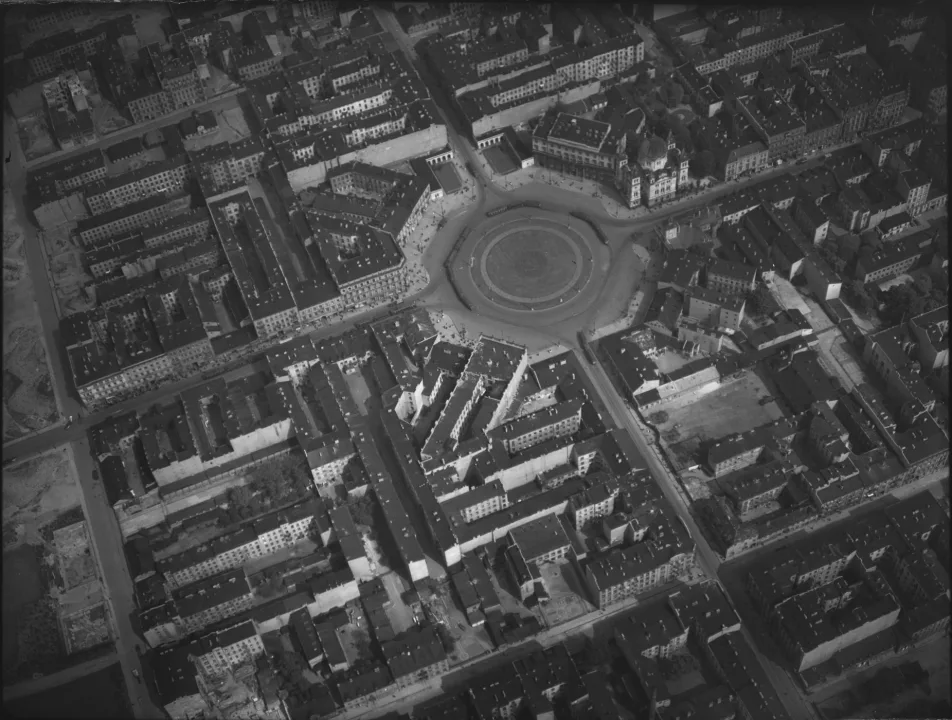
Besides a handful of fascinating history of Piotrkowska Street, there is also a colorful legend that every Łódź resident knows (or at least should). Among its main characters is a young man named Leszczyński, assistant to the Geometer of the Kingdom of Poland, Mr. Leśniewski, who fell deeply in love with the daughter of a pharmacist. He met her at one of the village celebrations and was immediately taken with her. When the pharmacist learned of this, he sent his daughter to a convent in Piotrków. The young man, seduced by the charm of the maiden, sketched her portrait, which became the impulse to capture the image of the woman within the drawing of the factory settlement he was to create. With the portrait of his beloved before his eyes, he gave the settlement the features of his chosen one. Thus the head became Nowy Rynek (today Pałac Wolności). The braids, extending to the sides, became Nowotki and Obrońców Streets, while the arms became Zielona and Narutowicza Streets. The section toward Plac Reymonta became the torso, while Rzgowska and Pabianicka Streets became the legs.
Much valuable information about this exceptional street can be found in A. Rynkowska's 1970 book "Ulica Piotrkowska." Vivid images, exceptionally plastic vocabulary, and the unfading charm of Piotrkowska are captured in these words:
"We now reach the part of Piotrkowska Street where in the afternoon and evening hours flows an enormous wave of elegant society [...] Here one shop succeeds another, and each strives to surpass its neighbor in the elegance of the display. In this building we are charmed by a jeweler's window display. Gold and silver gleam, along with tasteful precious stones." p. 159
In stories and history, Piotrkowska Street thus appears as the quintessence of good taste and flourishing social life. It was here that an exciting life of refined ladies and handsome gentlemen unfolded. Taverns, drinking establishments and restaurants, confectioneries attracted people from all over the city. New shops appeared like mushrooms after rain, enticing passersby with the beauty of their displays. On January 20, 1971, the buildings of the street stretching between Plac Wolności and Aleja Mickiewicza Piłsudskiego were officially recognized as historic and entered into the register of monuments.
Litości... Sztaudynger, którego miałem okazję jako dziecko znać NIGDY nie napisałby fraszki bez rytmu. Nie pamiętam czy oryginał był na pewno taki jak poniżej piszę, ale wystarczy powiedzieć to co na stronie napisane głośno by poczuć brak rytmu... wg mnie było tak: Jest największą łodzian troską zmieścić całą Łódź w Piotrkowską. Szanujcie Mistrza
You need to log in to add a comment.
Log in