
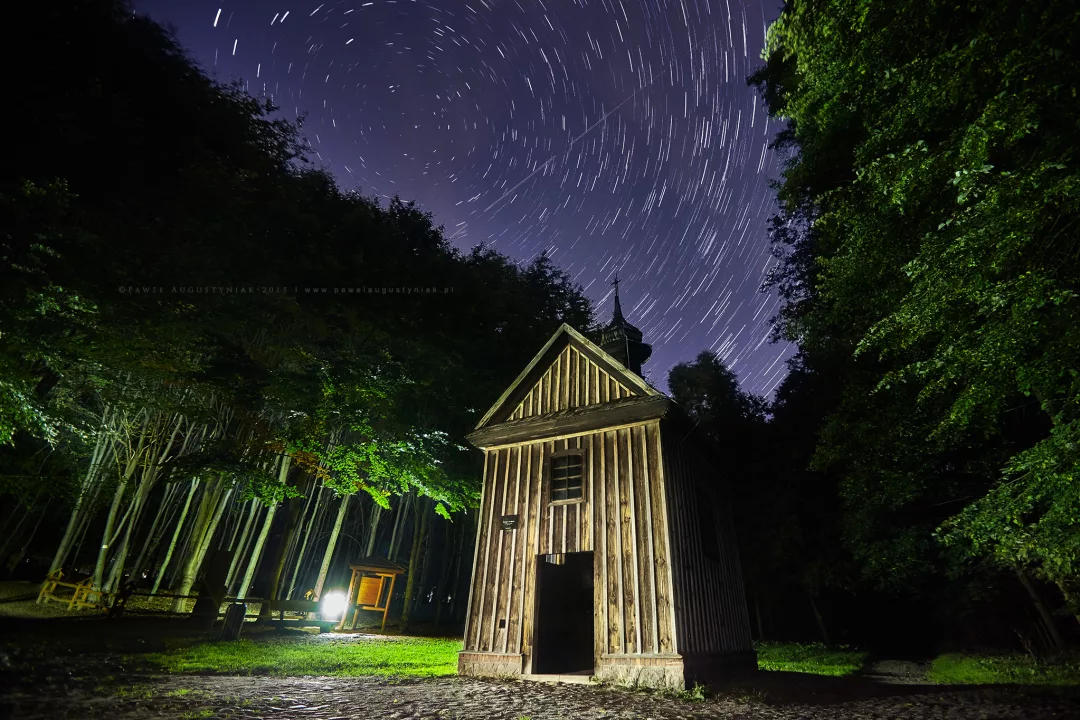
The Baroque, wooden chapel of St. Anthony located in Łódź-Łagiewniki is one of two chapels that have survived to this day and belonged to a complex of Franciscan chapels in Łagiewniki, which comprised six structures.
Łagiewniki – a place of pilgrimage
Since the 17th century, Łagiewniki had been a place of regular pilgrimages, as well as excursions for city residents. Łódź inhabitants came in great numbers not only on Sundays but also on holidays, particularly on Whit Sunday, to pray before the famous image of St. Anthony. Once the place was owned by Jerzy z Bełdowa, who had 11 other estates under his care. He was considered a powerful man, but also sometimes cruel and ruthless. This behavior of the master ended with the death of a peasant condemned to a flogging for the offense of stealing carp. Bełdowski's conscience tormented him, for the peasant did not survive the flogging, and the master himself died having terrible visions. His daughter, together with her husband Samuel z Żelaznej – Żeleski, received Łagiewniki from their father-in-law, and they treated this story as the so-called hand of God.
Supposedly Żeleski heard from the spirit of the penitent Bełdowski the words: "I am the spirit of the former master of these estates, I suffer the torments of purgatory and great is God's grace upon me, that I was not condemned, and this especially because once when fish were being caught in the pond, the one behind the manor, I noticed that a peasant stole a carp. Driven by anger, I ordered the peasant to be beaten with sticks, who, though not killed on the spot, never recovered in health and soon died…"
Żeleski, not waiting long, brought the Reformist fathers from Lutomierska and Brzeziny to Łagiewniki. They consecrated the manor, and then celebrated a mass for Bełdowski. After one of the Sunday masses, one of the priests suggested building a chapel of St. Anthony, to which Żeleski agreed and promised to do so, but did not keep his promise. Łagiewniki after many years were destroyed by a plague of people and livestock, which Żeleski attributed to witchcraft. Every person suspected of magical deeds he tortured and drowned. He only softened after persuasion by his relative – Kasper z Remiszowic – Stokowski.
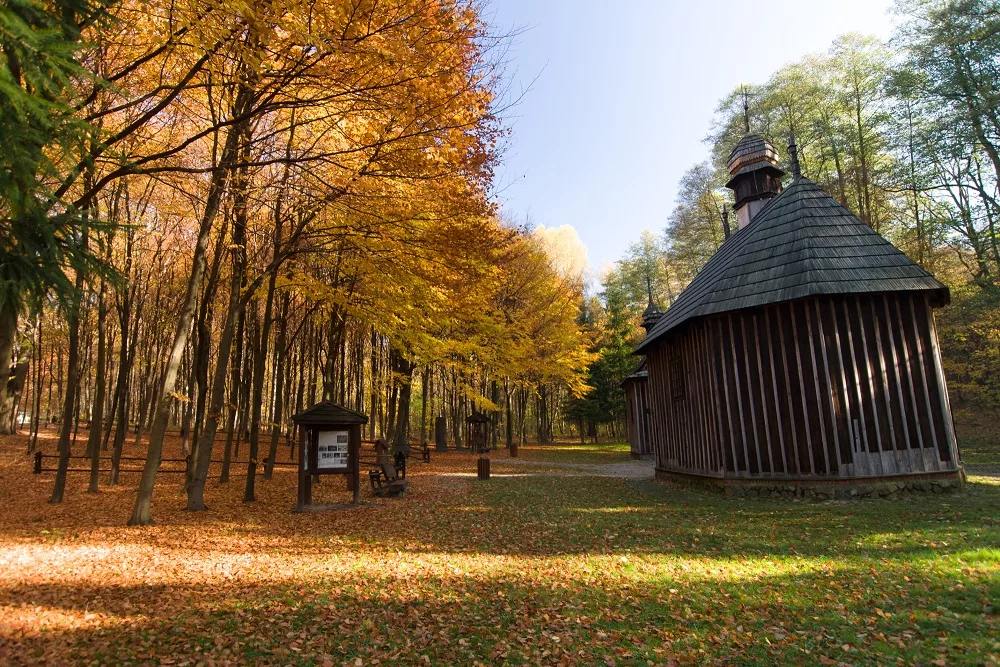
The construction of St. Anthony's chapel
Żeleski in time brought a carpenter from the area to build a mill. The God-fearing carpenter Jerzy could not, however, bear Żeleski's treatment, who had high demands and severely punished the carpenter for even the slightest shortcomings. Carpenter Jerzy eventually began to pray to St. Anthony, until the saint finally appeared to him. A vision was also experienced by Mateusz – the carpenter's apprentice, and later by Żeleski himself. The year 1676 brought quickly spreading news of the apparitions and people began to arrive to pray fervently. Żeleski ultimately traveled to Jasna Góra to confirm his vision and vowed to build a chapel of St. Anthony in the place where the apparition occurred. Soon after, a shrine was built on this spot, and a chaplain – Father Konstanty Plichta, a Franciscan from Piotrków – began his work there. To this day, pilgrims come in great numbers to the chapel of St. Anthony, believing in the miraculous power of the crystalline pure water that flows here.

Be the first! Add a comment.
You need to log in to add a comment.
Log in