
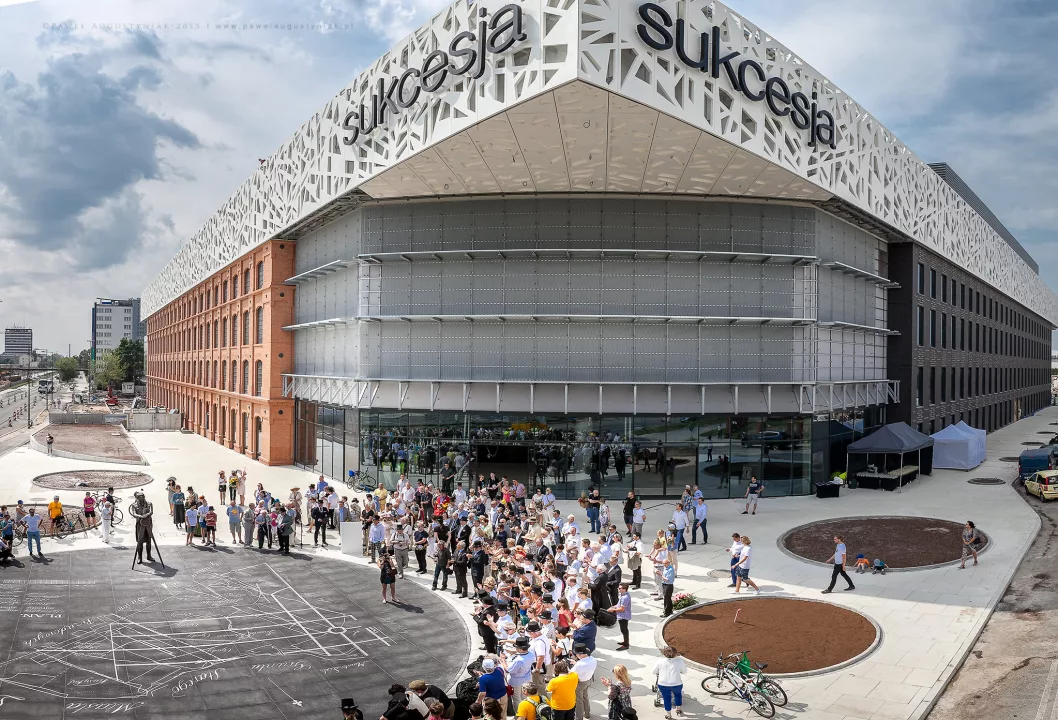
Sukcesja Shopping Center
2015 brought the completion of one of the largest investments in Łódź, namely the Sukcesja shopping center. Over 150 stores, a large bowling alley, and ecological technologies all contributed in their own way to the renown of this facility. Sukcesja carries history with it, as its construction began in 2008, when the cotton factory of Juliusz Albrecht and Józef Gampe was finally closed, later forming a complex of buildings at today's Aleja Politechniki, and after the war renamed to the Maltex Cotton Industry Works. Visually, in many places Sukcesja refers to the old factories. Its construction cost 120 million euros and lasted over 1700 days. Besides shops of Polish and foreign brands, it abounds with an external terrace with an area of 300 square meters, the aforementioned bowling alley and a Helios cinema chain cinema.
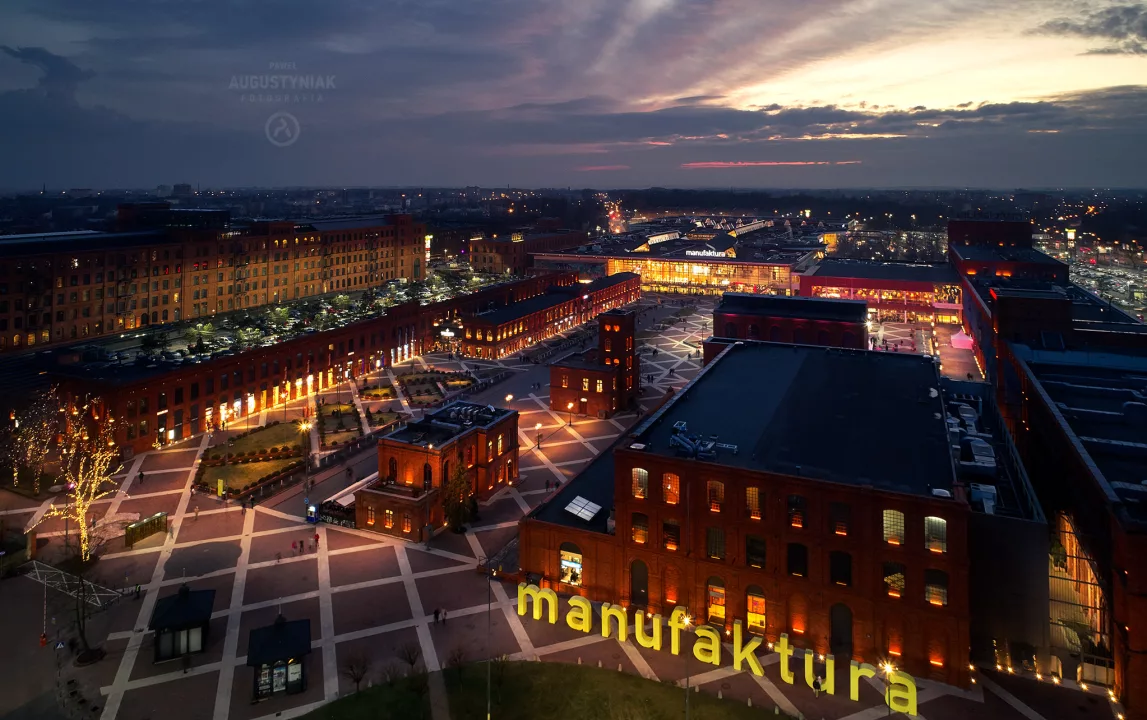
Manufaktura
Łódź can also boast a commercial-service-entertainment center in the form of Manufaktura. In Poland it is the shopping center second in terms of area, and the first in that same category, considering Eastern Europe. Manufaktura was created by a businessman living in Switzerland – Cyprian Kosiński – with Łódź roots. Manufaktura Shopping Center required five years of project development and almost four years of renovation before it was finally opened in 2006. The construction site was the former factory of Izrael Poznański in Łódź. In Manufaktura, efforts were made to preserve the atmosphere of the former factory complex, which is why post-factory buildings made of red brick dominate. Manufaktura owes its current architecture to the London firm – Virgile&Stone. On the grounds of today's Manufaktura you can use not only shops, but also cafes, restaurants, an automotive center, a cultural complex, including a branch of the Museum of Art and the Museum of Factory, as well as a cinema, bowling alley and an artificial climbing wall, amid a center of entertainment and recreation.
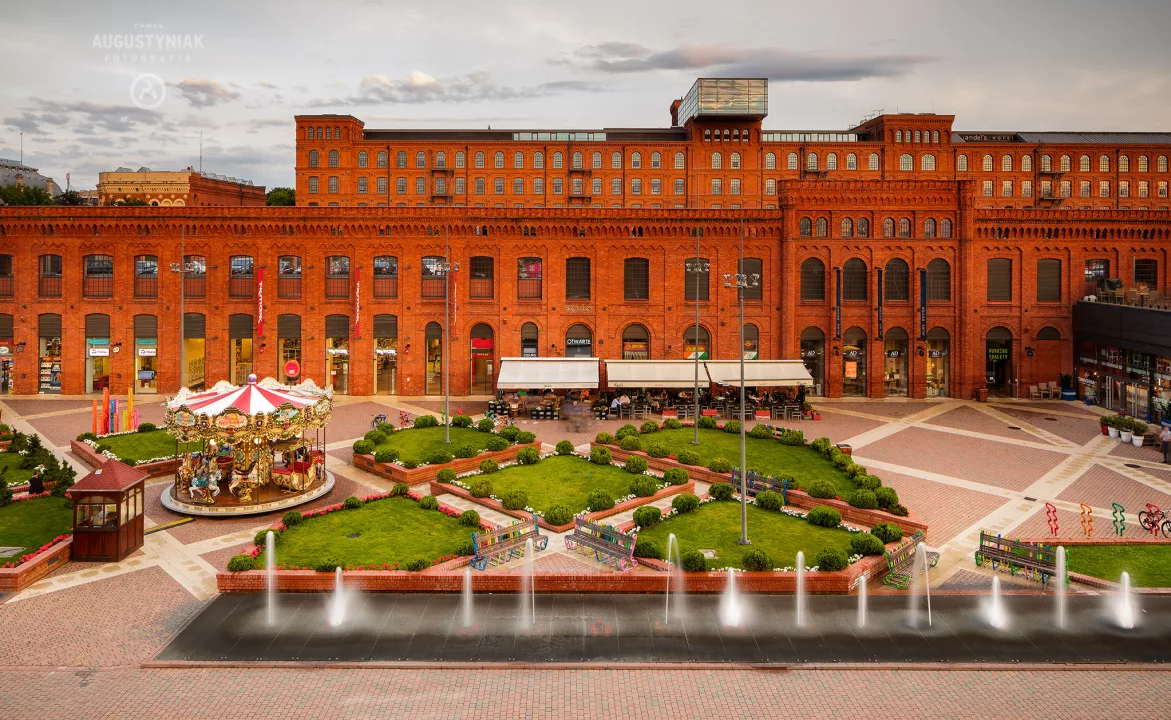
Pofabryczna Galeria Łódzka
Also worth noting is Galeria Łódzka opened in 2002, which in its architecture and color scheme also refers to post-factory buildings. It was built in the shape of the letter L, and on an area of about 45,000 m² there was room for a hypermarket, about 170 shops, restaurants, bars and cafes. In the year of Galeria Łódzka's creation, it received recognition from the Association of Polish Architects, and 2 years later it received an award in the annual competition for the best shopping centers – European Shopping Centre Award, for its interesting architectural design, appropriate integration into the city's infrastructure, and convenient access by various means of transport.

Be the first! Add a comment.
You need to log in to add a comment.
Log in