
Often the role of women in building the history and culture of a city goes unnoticed. For this reason, it is worth drawing attention to several exceptional figures with particularly colorful personalities and many talents. However, more and more initiatives are emerging (such as Łódzki Szlak Kobiet), which seek to restore their memory. Below we present brief biographies of several outstanding women from Łódź.
Poland's Mata Hari
The figure of a spy always fires the imagination. But what if the spy turns out to be a woman! Halina Kłąb-Szwarc was an intelligence agent for the Home Army. She was born and raised in Łódź; she was only 16 years old when she volunteered to work in the underground of the Armed Struggle Union in the Łódź District. She studied German diligently and, on the orders of commanders, even signed the Volksliste. She took part in Operation "N". Shortly thereafter – thanks to the Volksliste – she managed to leave the country to study. First to Vienna, later to Hamburg. All the while she worked in the underground; she sent valuable information to Polish resistance command, and managed to discover the locations of some military installations, which enabled the Allies to destroy them. In 1944 she nearly died – she was detained, but did not reveal her cover. She was sentenced to death, but the execution was ultimately not carried out. She survived the war, and in 1948 completed her medical studies. She also decided on a further scientific career, although the Stalinist regime tried to persecute her for her collaboration with the Home Army. It was also at her initiative that Poland's first University of the Third Age was founded. In 2000, from the hands of Aleksander Kwaśniewski, she received the Commandor's Cross with a Star of Poland's Rebirth.
New Centre of Łódź and an outstanding artist
For quite some time, Katarzyna Kobro remained in the shadow of her husband, Władysław Strzemiński. It is in her name that the market square in the newly built Nowe Centrum Łodzi is to be named. She was born in Moscow, but was most strongly connected to Łódź. An avant-garde sculptor who managed to change thinking about form, in art she rejected individualism, subjectivism, and expressionism. Her private life – her relationship with Strzemiński – was marked by separations and reconciliations, and above all by great emotions. This was also influenced by Strzemiński's disability and Kobro's difficulties in obtaining citizenship and learning Polish. The artist's story had, in fact, far more dark moments. Yet Kobro, despite this, became one of the icons of Łódź's avant-garde art. Most of the artist's works are currently housed in the Museum of Art in Łódź.
On sex differently
It could be said that Łódź is fortunate to have extraordinary women, the kind that are easy to remember. One of them is undoubtedly Michalina Wisłocka, who was brought to mind in connection with the premiere of the controversial film "The Art of Love". Wisłocka is primarily associated with an unusual romantic relationship, where three people simultaneously maintain a close, intimate bond (not exclusively about sexual relations). However, it is worth remembering that Wisłocka was above all a doctor and gynecologist, and her books were in a sense a response to the needs of Poles at the time – "The Art of Love" in book form was a guide on contraceptive methods as well as sexual positions and activities. It is worth noting that Wisłocka was also active in other fields – for example, she was a founder of the Society for Conscious Motherhood. It can be safely said that her activities revolutionized Polish thinking about matters related to sex.
Łódź revelations
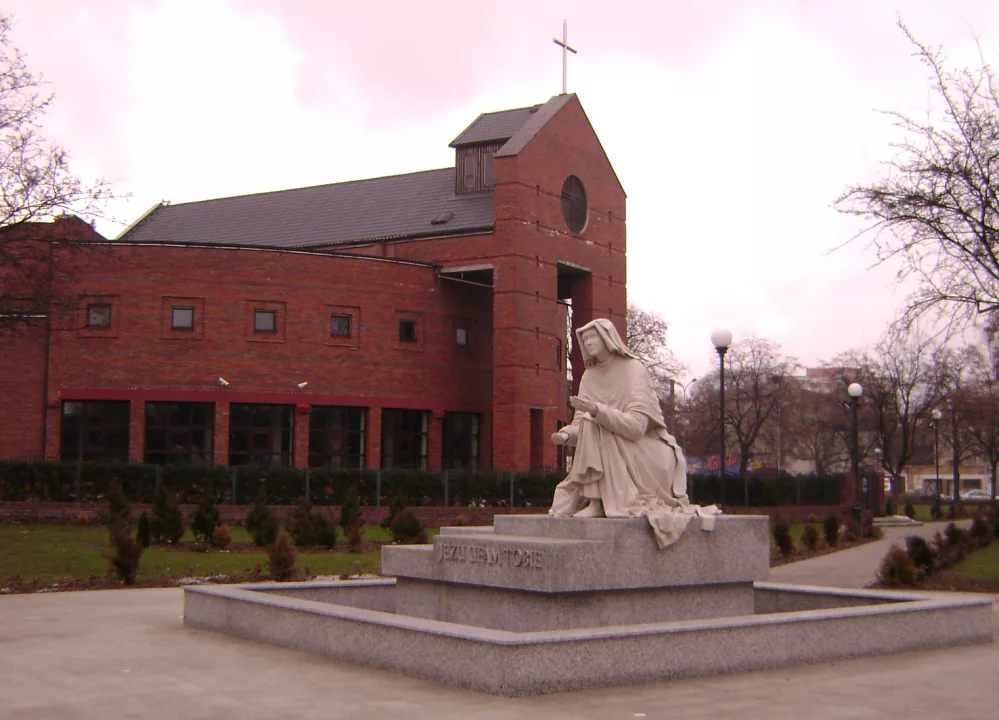
Some may not realize that the city was also connected to one of the saints – namely Saint Faustina. She is considered an outstanding mystic of the Catholic Church. She came to Łódź at the age of 17; it was in this city that she experienced a vision. However, her episode connected to the textile city ends there; according to the vision and the wish of Jesus, who was to speak to her in the Łódź cathedral, she left for Warsaw and entered a convent there. She later moved to Kraków and there she ultimately took the vows of chastity, poverty, and obedience and adopted the name Maria Faustyna. In 1993 she was beatified, and in 2000 – canonized.
Be the first! Add a comment.
You need to log in to add a comment.
Log in