
Every city has its most beautiful places and takes pride in its people and their accomplishments. Łódź also has plenty to boast about. Among the most remarkable figures in our city are many athletes, some of whom participated in the Olympics, and often achieved great success at such competitions.
A glance into the past
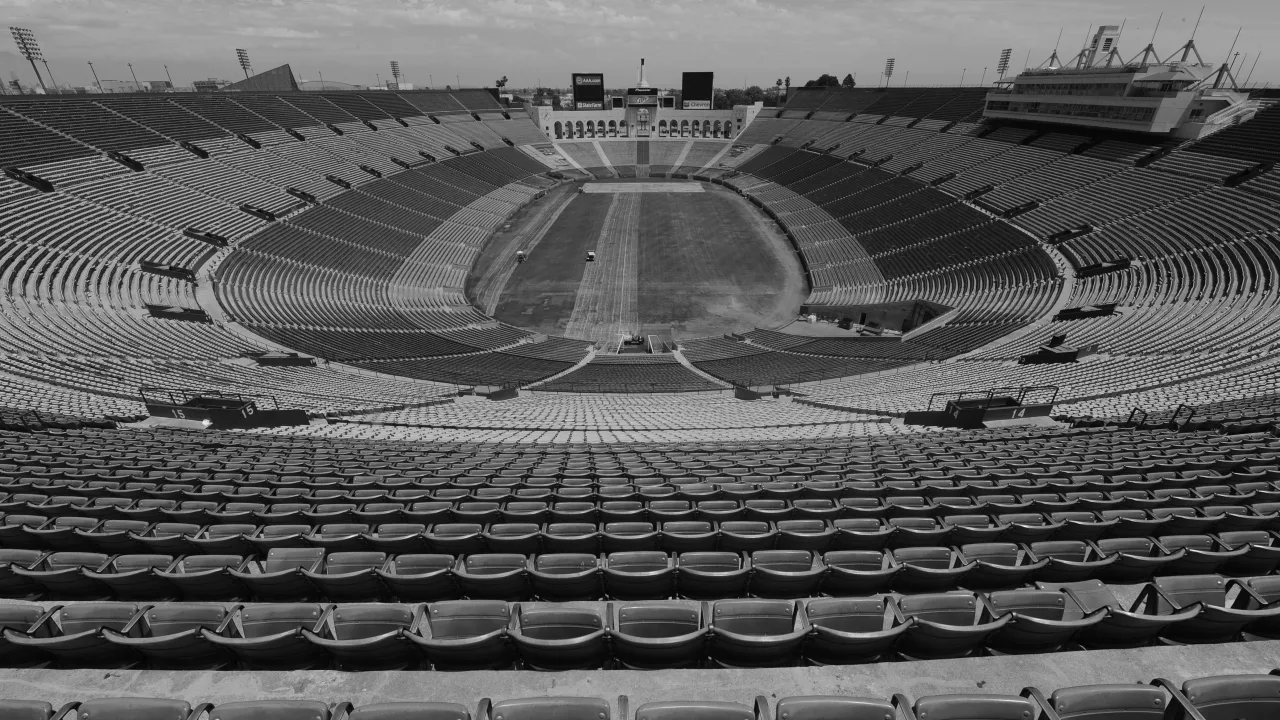
Before World War II, Łódź athletes proudly wrote their names in the pages of Olympic history. An example is Jadwiga Wajs, who in 1932 in Los Angeles won a bronze medal in the discus throw, and four years later in Berlin took second place and a silver medal in the same discipline. Another Olympian from Łódź from the interwar period was Roman Kantor, who excelled in fencing at the Wojskowy Klub Sportowy (Military Sports Club) and at Łódzki Klub Sportowy. He represented Poland at the games in Berlin in 1936, but failed to win a medal, being eliminated in the semi-finals. He was to represent Poland in Helsinki in 1940, but did not manage to do so – he died in Majdanek. Łódź commemorated this figure by placing a plaque at the corner of Piotrkowska and Traugutta streets.

Sport saves lives
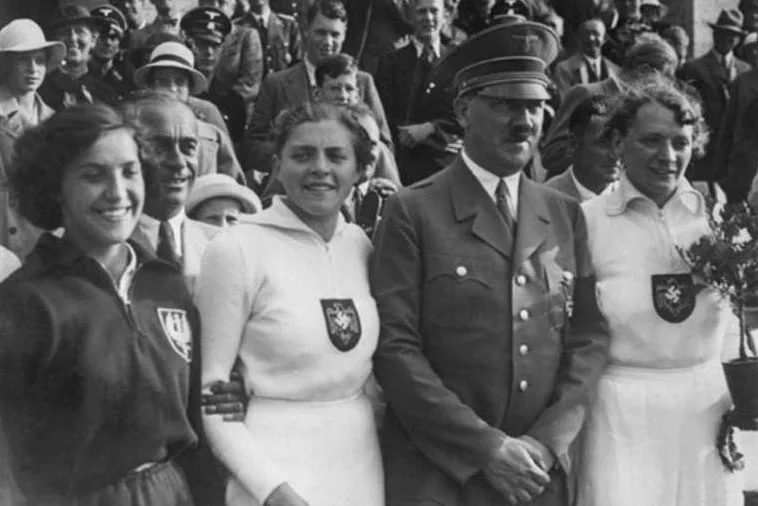
Particularly interesting is Maria Kwaśniewska, who also won a medal at the Berlin Olympics. Her discipline was javelin throw. In the years 1929-1932 she represented the Łódzki Klub Sportowy. Her adventure in Berlin is connected with Leni Riefenstahl's film "Olympia" – there you can see footage showing the performance of the 23-year-old Polish woman. She won bronze (the first medal in ŁKS history), and ahead of her were two German women. After the competition, she was invited to Adolf Hitler's box, who offered his congratulations to, as he put it, the "little Polish woman". Maria was 166 cm tall, and Hitler was 160 cm – who was shorter? Of course, Kwaśniewska did not hesitate to retort to the Führer's remark. The problem is that we don't entirely know what she said to him. Some sources say she stated: "You're not very tall either", in others we find accounts that Maria simply said she didn't feel smaller. The fact is, however, that this topic was taken up by the contemporary German press and propaganda. A photograph with the Nazi leader saved the Polish woman's life and not only hers. It became a pass for many prisoners of the camp in Pruszków after the Warsaw Uprising. Mrs. Maria took people out of this camp by showing the guards the photograph in question – she managed to save many people this way, including two writers: Ewa Szelburg-Zarębina and Stanisław Dygat. Had it not been for the actions of this brave sportswoman, these prisoners might have ended up on labor in Germany or in concentration camps.
Post-war Olympians
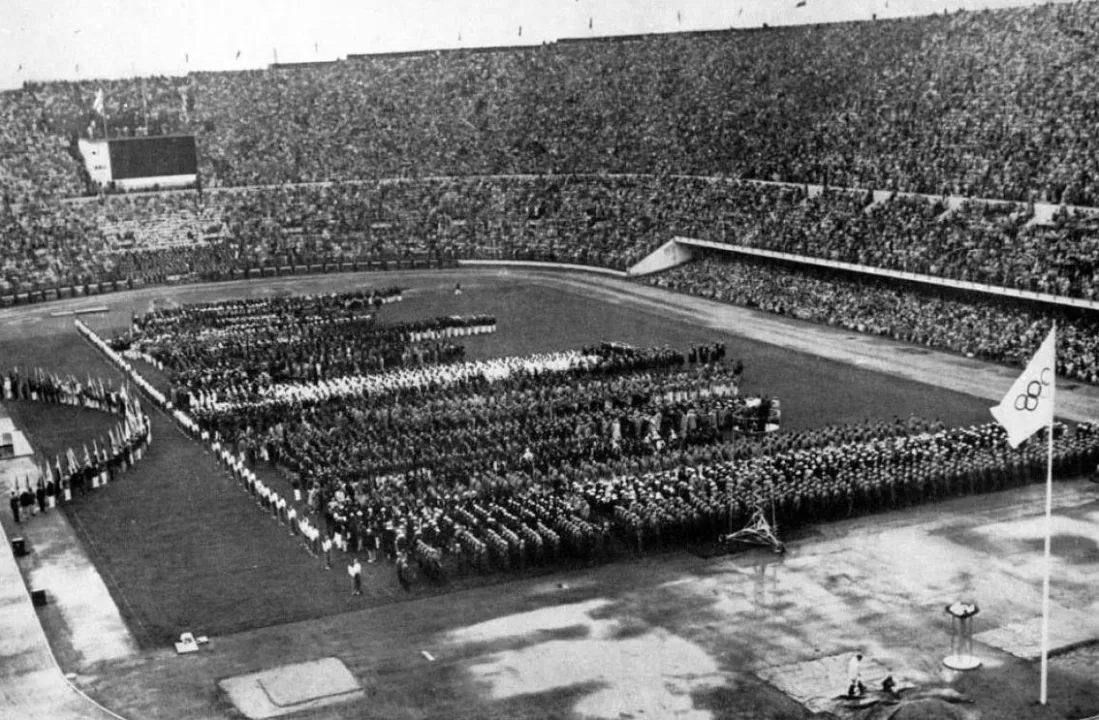
In London in 1948, Jadwiga Wajs represented Łódź. Four years later, Łódź swimmer Jerzy Boniecki went to Helsinki, unfortunately they failed to win a medal. Jan Kurda and Lucjan Józefowicz, Łódź cyclists who participated in the Olympics in Tokyo, also did not win any medals. Meanwhile, Mieczysław Nowicki, a cyclist from Widzew, was at the Olympics in Munich and Montreal. During the latter games he won two medals. One silver in the team competition – a 100 km time trial – and a bronze in the individual road race. Handball players in Montreal in 1976 won bronze, among them was the goalkeeper of Łódź's Anilana, Andrzej Szymczak – by his side fought teammates from the same club, Zygfryd Kuchta and Ryszard Przybysz. Andrzej Szymczak represented Poland four years earlier in Munich. It was at this 1972 Olympics that handball competitions took place for the first time.
Why not gold?
Everyone remembers Górski's Eagles. This wonderful coach led the Polish national team to the Montreal Olympics, where the Poles, after fierce competition, won second place and a silver medal. Among them was Jan Tomaszewski, who fiercely defended the Polish goal at the time. He recalls that the hard-fought medal led to dissatisfaction in the country. The coach, Kazimierz Górski, lost his job after the Olympics. This is a kind of oddity, especially since the next medal, also silver, was only won in Barcelona in 1992. Among the colors of the Polish national team were then Tomasz Wieszczycki from Łódzki Klub Sportowy, Tomasz Łapiński and Marek Bajor from Widzew.
Artur Partyka, a wonderful track and field athlete, won silver in high jump during the Olympics in Barcelona in 1992. In Atlanta in 1996, this product of ŁKS, won bronze. He is thus the third athlete in Łódź's history to be awarded medals at the Olympics twice.
Everyone writes their own history, and Łódź athletes wrote themselves into the pages of history as brave, courageous people. Some Łódź Olympians managed to win their dream trophies, others lived the adventure of a lifetime and forged new friendships. Sport unites, teaches solidarity, principles of fair play, and breaks down barriers.
Be the first! Add a comment.
You need to log in to add a comment.
Log in