
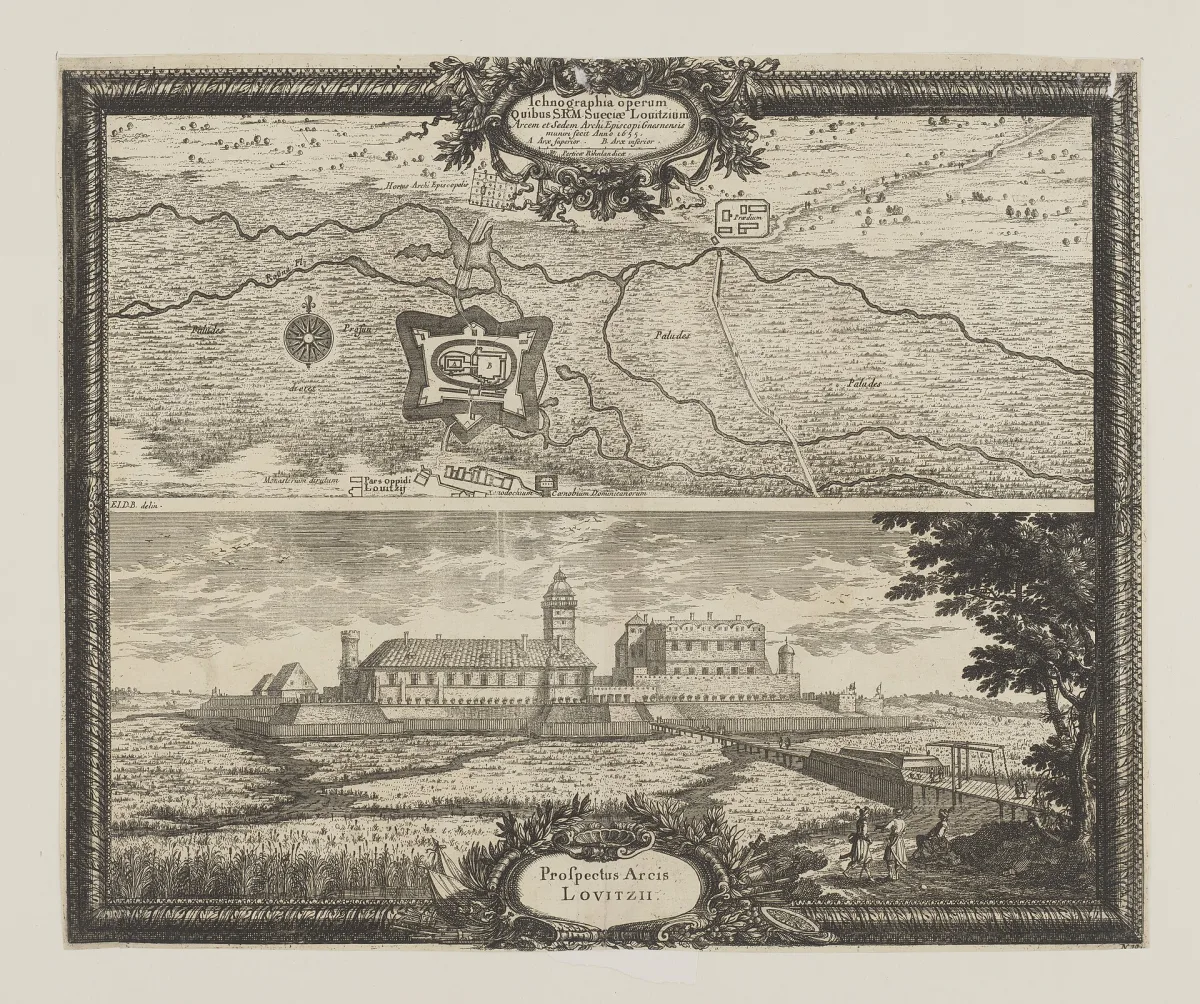
Anyone who knows Łowicz mainly from its colourful folk costumes and Corpus Christi processions may be surprised at how large a role this town played in old Poland. From the 15th to the late 18th century, it was the main residence of the archbishops of Gniezno, who, as the primates of Poland, took over real power in the country during every interregnum.
Why it was the primate who ruled Poland without a king
In the old Polish-Lithuanian Commonwealth, when a ruler died and the country waited for the election of a successor, someone had to formally act as head of state. This role, that of interrex, or "between-king", was taken up ex officio by the primate of Poland, the archbishop of Gniezno. He convened the election sejm, presided over the sessions of the senate, and represented the country abroad until the new monarch's coronation. Because the primates resided in Łowicz, it was there, rather than in Warsaw or Kraków, that state power actually concentrated at such moments.
Grants to the archbishops of Gniezno in Łowicz are already confirmed by a bull of Pope Innocent II from 1136, but the town's true rise as a centre of church and secular power began with the construction of the castle from 1359 onward. The residence owes its Renaissance splendour, among others, to Archbishop Jan Łaski, one of the most important statesmen and humanists of the turn of the 15th and 16th centuries.
What the primates' castle looked like
The archbishops' castle in Łowicz was one of the finest Gothic-Renaissance residences in Mazovia. It served not only as a residence but also as an administrative centre, from where the vast church estates were managed, important documents and treasures were kept, and, finally, decisions affecting the fate of the whole country were made during interregnums. Today the ruins of the Łowicz castle can be explored independently, while walking through the former courtyard of the residence.
Only fragments of the old stronghold's walls survive to this day, but their location and scale are impressive, it is easy to imagine that this place really was, for centuries, a centre of decision-making, not just a provincial seat of a clergyman.
What else shows Łowicz's former standing
The town's status as the seat of the primates is reflected in its sacred architecture - the Cathedral Basilica of the Assumption of the Blessed Virgin Mary and St Nicholas was a collegiate church founded and expanded under the patronage of successive archbishops of Gniezno, and its interior still holds the primates' tombs to this day - like the other historic churches and monasteries of the region, it is worth seeing from the inside, not only from the outside.
It is also worth visiting the Pałacyk Klickiego (Klicki Palace), one of the surviving residences from the time when Łowicz was an important centre of church administration, and walking through the historic town centre, which still retains a clear, old urban layout around the primates' seat. More historic monuments of the region and other topics from the past of the Łódź area can be found in the Poznaj Łódź (Discover Łódź) section.
Interregnum in Łowicz - an episode, not a constant
It is worth stressing that Łowicz was not a permanent capital, it became a centre of power only during interregnums, which recurred regularly in the history of the Commonwealth from the death of the last Jagiellon in 1572 until the partitions. Outside these episodes, the town functioned as a typical, if wealthy, bishop's seat. It is precisely this contrast, a provincial town that from time to time became the country's actual centre of decision-making, that makes Łowicz's history unique among the towns of the Łódź region.
How to visit the former primates' residence
Łowicz lies about an hour's drive north-east of Łódź and also has good rail connections with Warsaw and Łódź. Visiting the castle ruins, the cathedral basilica and the historic town centre comfortably takes half a day. Entry to the castle ruins themselves and the grounds of the former residence is usually free, while visiting the cathedral's interior with its burial crypts may require a small fee or an appointment with the parish, worth checking before your visit.
Be the first! Add a comment.
You need to log in to add a comment.
Log in