
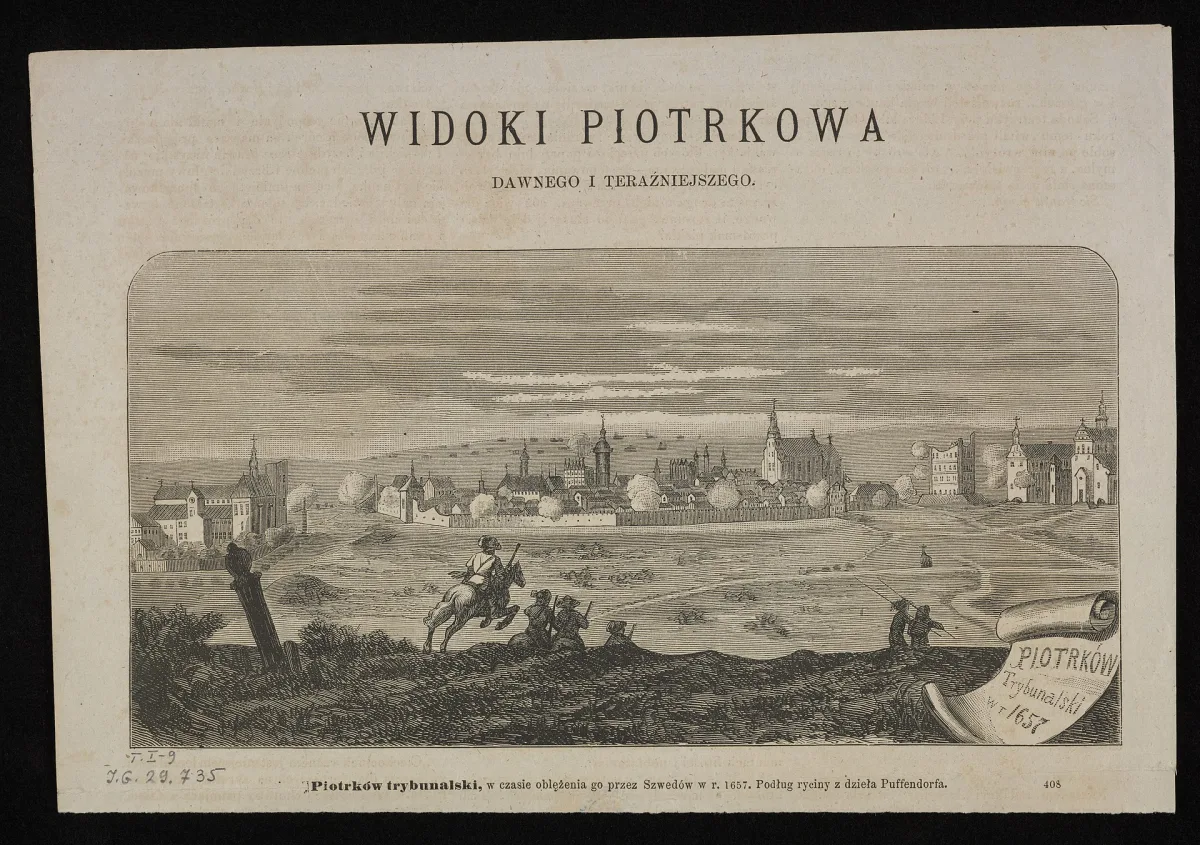
Anyone who has wondered where the second, official-sounding word in the name Piotrków Trybunalski comes from will find the answer in one of the more important chapters of the history of the old Commonwealth. The town in the Łódź region was, for over two centuries, a place where rulings were handed down with no right of appeal - and that was even before the country's highest court began sitting there.
What the Crown Tribunal was and why it ended up in Piotrków
The Crown Tribunal was established in 1578 by King Stephen Báthory - it was the highest court of appeal for the nobility of the Crown, from whose rulings there was no further appeal. Sessions were divided geographically: for Greater Poland, Masovia, Kuyavia and Royal Prussia, sessions were held in autumn and winter in Piotrków, while for Lesser Poland they were held in spring and summer in Lublin. This division lasted uninterrupted for 214 years, from 1578 to 1792, and it was from the Tribunal that the town took its nickname "Trybunalski".
The Tribunal ruled on the most important noble cases - property disputes, border disputes, inheritance disputes - and had a real influence on the fate of families across western and central Poland. For two centuries, judges, lawyers and litigants travelled to Piotrków from distant corners of the country, making the small town one of the more important centres of public life in the Commonwealth.
General Sejms - before the Tribunal even existed
Piotrków's role in Polish parliamentarism began earlier than the Tribunal itself. From the 15th century, general Sejms of the Kingdom of Poland were held here - the town was, alongside Kraków, one of the main venues for the deliberations of the parliamentary estates, before this function passed for good to Warsaw. It was for the needs of these deliberations that King Sigismund I the Old built a brick castle in 1512-1519, where he resided during the Sejms - according to surviving sources, he stayed there at least sixteen times.
Today the former royal castle houses the Regional Museum in Piotrków Trybunalski, where you can see the hall in which deliberations actually took place, as well as an exhibition devoted to the history of the judiciary and the Sejm in the town. It is one of the few castles in Poland that can be directly linked to specific events in the history of parliamentarism.
What still recalls the tribunal past today
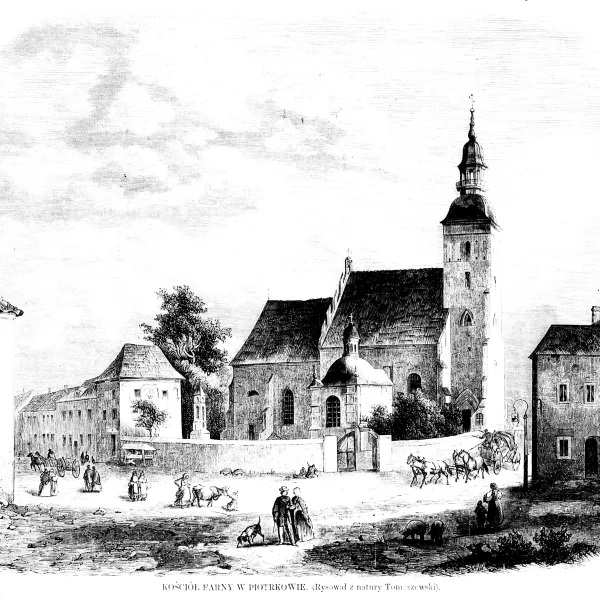
Piotrków's old town still has a legible medieval urban layout, with a market square at its centre, around which the life of the city of courts was concentrated. It is also worth walking through Castle Square, directly adjoining the former seat of the king and the Tribunal.
Piotrków was at that time a multicultural town - alongside the seat of the court and administration, a strong Jewish community was also active here, and traces of its presence, including the Great Synagogue, have survived to this day as a separate thread of the town's history. Anyone looking for more topics of this kind will find them in the "Poznaj Łódź" (Discover Łódź) section and among the historic sites of the region.
How to visit tribunal-era Piotrków today
Piotrków Trybunalski lies about 40 minutes' drive south of Łódź, and also has direct rail connections. Visiting the castle-museum with its historical exhibition usually takes an hour to an hour and a half, and a walk around the old town with Castle Square and the surrounding streets takes another hour. The museum charges admission, with a modest fee for full and reduced tickets - it is worth checking the current opening hours before your visit, as they vary in and out of season.

Be the first! Add a comment.
You need to log in to add a comment.
Log in