
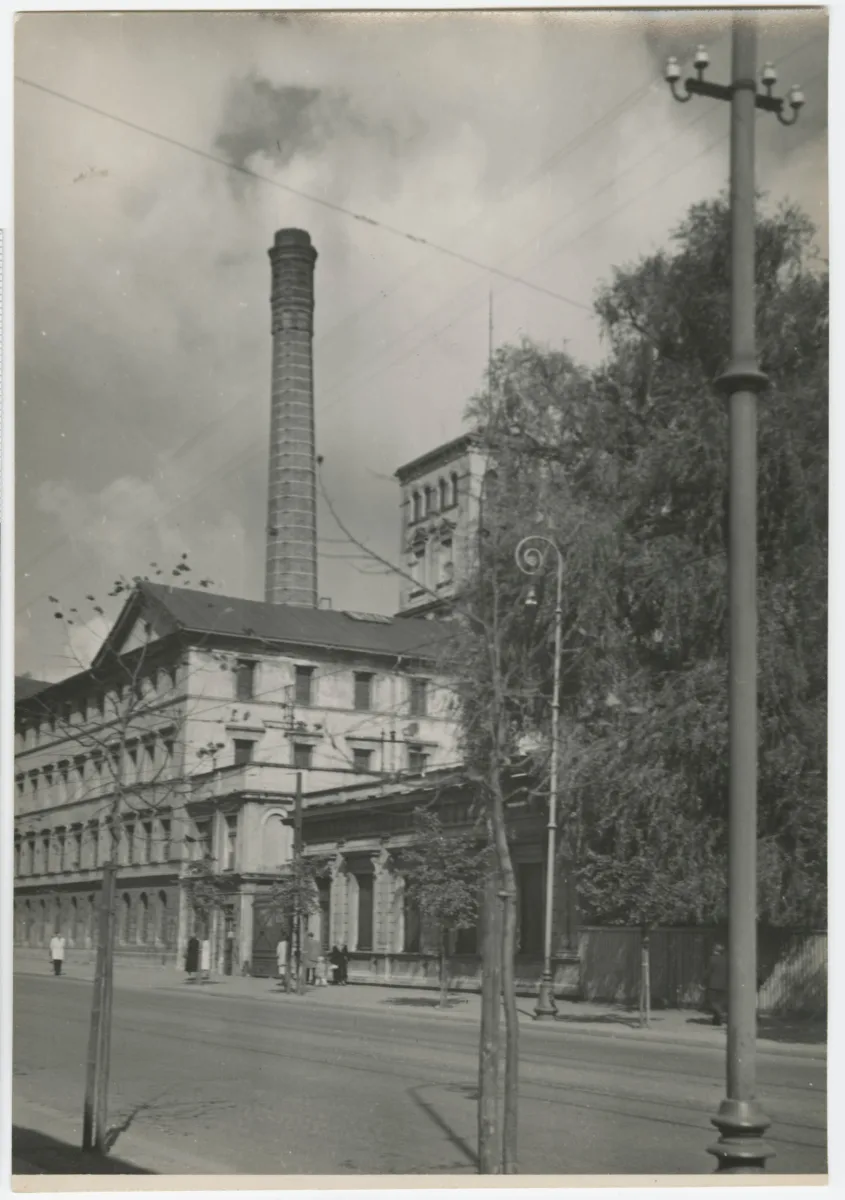
Łódź, which in the second half of the 19th century was turning from a small town into one of Europe's largest centres of textile industry, was being built fast - and, like many industrial cities of that era, lived under the constant shadow of fire risk. Wooden structural elements, warehouses full of cotton and wool, open flames in the workshops - all of this meant that a factory fire was not an unusual event in 19th-century Łódź.
Why the factories burned so easily
Early Łódź textile plants were often built with timber-frame construction, with wooden ceilings and floors, while huge quantities of raw material - cotton, wool, yarn - were stored inside, all of it exceptionally flammable. Steam-powered machines required open flames in the boiler rooms, and until the turn of the 19th and 20th centuries factory lighting relied on paraffin and gas lamps. Under these conditions, a single spark was enough for fire to engulf an entire production hall within a matter of minutes.
The fire at Ludwik Geyer's
One of the best-known industrial fires of old Łódź was the fire at the plant of Ludwik Geyer, the city's first great cotton manufacturer, whose Biała Fabryka (White Factory) on today's Piotrkowska street was, in the mid-19th century, one of the largest industrial plants in the Kingdom of Poland. Material losses after such fires were counted in tens of thousands of roubles of the time - sums equivalent to the annual budgets of more than one smaller town.
Kunitzer's spinning mill on Rokicińska road
A great fire also destroyed the worsted spinning mill of Juliusz Kunitzer, one of the leading Łódź industrialists at the turn of the 19th and 20th centuries and co-founder, among other ventures, of the Widzewska Manufaktura. The losses were then estimated at around 300,000 roubles - a sum that shows the scale of the investments manufacturers were putting into the growth of their plants, and, with it, the scale of the risk they were taking by building them at such a pace and in such dense clusters.
Twenty-two hours of firefighting on Piotrkowska
It was not only the factories themselves that burned - the memory of the Łódź fire brigade also holds the fire at the tenement house known as the Bazar Kaliskiego on Piotrkowska street, fought without a break for 22 hours by all three of the city's fire brigade units at the time. The scale of that operation shows well what a difficult opponent fire was in the densely built industrial centre of Łódź, where tenement houses and factory buildings stood almost wall to wall.
How this changed the city
The series of great fires in the second half of the 19th century sped up the development of a professional fire brigade in Łódź and the gradual replacement of wooden structural elements in factories with brick and iron ones. Newer plants, built already at the turn of the century, were put up with greater care for fire safety - thicker walls, iron roof structures, separate raw-material warehouses set apart from the production halls. This legacy can still be seen today in the city's surviving industrial architecture, for example in the former factory complex at Manufaktura, where 19th-century halls survived precisely thanks to their solid, fire-resistant construction.
Where to see traces of that era today
The history of the Łódź textile industry, including the dangers faced by manufacturers and workers, is best explored at the Centralne Muzeum Włókiennictwa (Central Museum of Textiles), housed in Geyer's former Biała Fabryka - a building that itself survived more than one crisis in its history. It is also worth visiting the Muzeum Fabryki (Factory Museum) on the grounds of Manufaktura.
The exhibition shows the everyday working life in Łódź plants at the turn of the 19th and 20th centuries, and it is also worth visiting the historic Dom Towarzystwa Akcyjnego Ludwika Geyera. A walk through the former factory district along Piotrkowska street and the surrounding streets still lets you tell which buildings are older, built of wood and brick, and which went up only after the series of fires, in more fire-resistant construction. More historical routes through the city can be found in the Poznaj Łódź (Discover Łódź) section.
Be the first! Add a comment.
You need to log in to add a comment.
Log in