
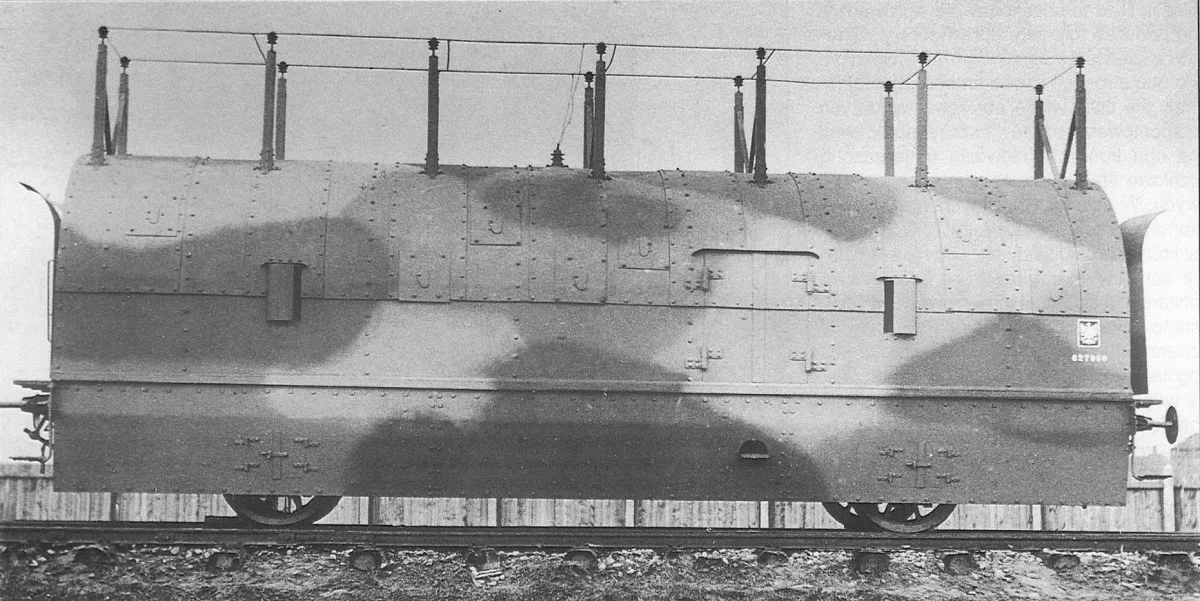
On the first day of the Second World War, south of what is now the Łódź voivodeship, one of the best-known battles of the September campaign took place. Around the village of Mokra, a few kilometres north of Kłobuck (administratively already part of the neighbouring region), Polish cavalry spent an entire day resisting a German armoured division.
Who fought at Mokra?
On the Polish side, the Wołyńska Brygada Kawalerii (Wołyń Cavalry Brigade) defended under the command of Col. Julian Filipowicz - about 4,000 soldiers in total, including three uhlan regiments, a mounted rifle regiment, horse artillery and the armoured train "Śmiały" (Bold). Facing it stood the German 4th Panzer Division under Gen. Georg-Hans Reinhardt, with a far larger and better-armed armoured force, supported by air power.
How did the battle unfold?
Between 10:00 and 17:00, the Germans carried out four main attacks on the Polish positions. A railway embankment played a key role in the defence, effectively limiting the German tanks' ability to break through. Despite the enemy's overwhelming technical advantage, none of the attacks managed to break through the Polish defence that day.
What were the losses on both sides?
Polish losses amounted to about 530 soldiers killed, wounded and missing, along with 5 artillery pieces, 4 anti-tank guns and about 500 horses. German losses are estimated at 900-1,200 killed and wounded and about 40 tanks destroyed, with a further several dozen damaged. The Germans needed two days to repair their equipment before they could continue their advance in this direction.
Did the cavalry really charge the tanks?
The Battle of Mokra is often cited as an argument against the myth of "Polish cavalry charging German tanks". In reality, the Polish cavalry fought mainly on foot, from the ground, using the terrain and the railway embankment as natural cover. The cavalrymen's counterattacks were directed against infantry and retreating vehicles, not against massed tanks - this was an effective, deliberate defensive tactic, not a reckless, suicidal charge.
What commemorates the event today?
At the cemetery in nearby Miedźno there is a collective grave of Polish soldiers killed at Mokra. In 1975 a monument to the battle was unveiled, and in 2010 a small memorial room with a modest museum exhibition was opened there too. A green tourist trail now runs across the former battlefield.
Although the battlefield itself lies outside the borders of the Łódź voivodeship, the region has other places commemorating the defenders of September 1939 - among them the Pomnik Bohaterów 1939 (Monument to the Heroes of 1939) in Sieradz, the town closest to the former battlefield.
How to plan a visit?
Miedźno and the area around Mokra lie about an hour's drive from Sieradz - it is most convenient to combine such a trip with a visit to Sieradz itself and the region's other memorial sites. The monument and the memorial room are open to visitors during the day, though it is worth checking the current opening hours of the memorial room beforehand, as they can be limited.
More on the events of September 1939 in the Łódź region can be found in other articles in the Poznaj Łódź (Get to know Łódź) section.
Be the first! Add a comment.
You need to log in to add a comment.
Log in