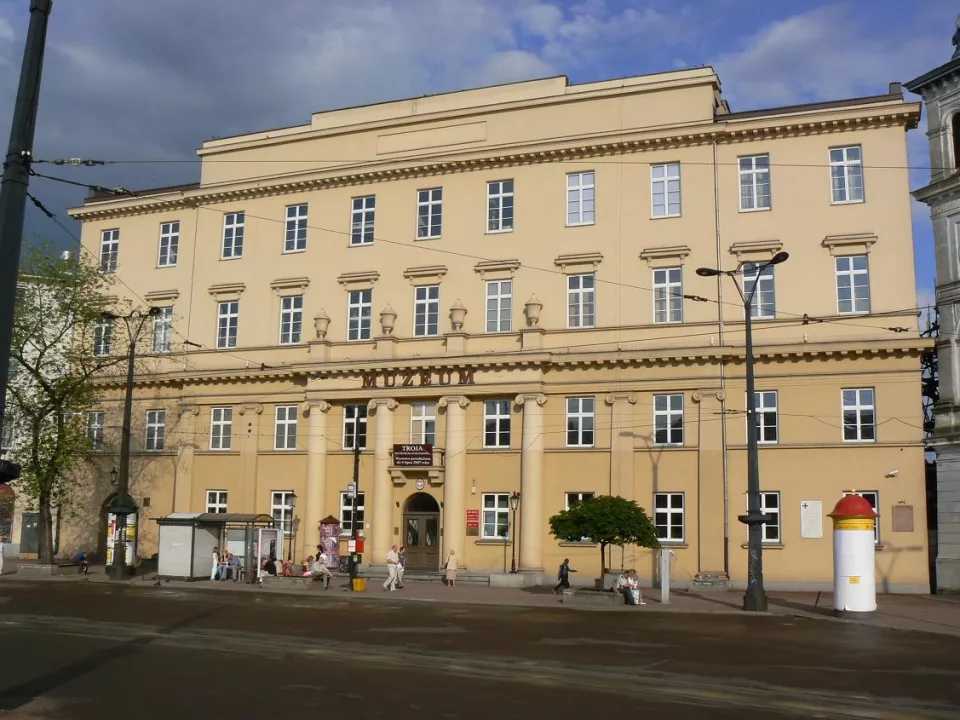
The largest museum in Łódź, with over 260,000 catalogued objects covering archaeology, ethnography, numismatics and puppet theatre, has been undergoing a major exhibition overhaul since 2025.
The Archaeological and Ethnographic Museum in Łódź is the largest museum in the city, housing 260,354 catalogued objects in the fields of archaeology, ethnography, numismatics and puppet theatre. The institution is divided into six departments: Archaeological, Ethnographic, Numismatic, Puppet Theatre Friends, Scientific and Educational, and Conservation and Monument Research. The building housing the museum is a listed heritage site – a school from 1856 – which underwent revitalisation and has been the institution's seat since 1956.
The institution has roots reaching back to 1918, when the Municipal Museum was established. After World War II, in 1945, separate archaeological and ethnographic institutions were created. They were finally merged on 1 January 1956 into a single Archaeological and Ethnographic Museum, which took up residence in the building at Plac Wolności. The first director from 1956 to 1979 was Prof. Konrad Jażdżewski, an outstanding scholar and archaeologist. For decades the museum conducted active scholarly and educational work, amassing one of the largest historical collections in Poland.
The collections of the Archaeological and Ethnographic Museum comprise objects from around the world, with emphasis on the history and culture of Poland and Europe. The Archaeological Department contains artefacts from various historical periods. The Ethnographic Department documents folk traditions, crafts and everyday life. The Numismatic collections present coins and medals from different periods. A special area of the museum's interest is puppet theatre – the Puppet Theatre Friends – which constitutes a unique collection and laboratory for dramatic theatre. In 2025 the museum received the Bronze Medal "Deserving of Culture Gloria Artis" for its contribution to Polish culture.
Built in 1856 on Plac Wolności, the building is a heritage site representing 19th-century school architecture. Upon designation as the museum's seat it was adapted to new functions while retaining its historical character. Over the years of the institution's management the building underwent regular refurbishment. The latest phase of modernisation has been underway since 2025, when the permanent exhibitions are undergoing thorough rebuilding and reorganisation.


Be the first! Add a comment.
You need to log in to add a comment.
Log in