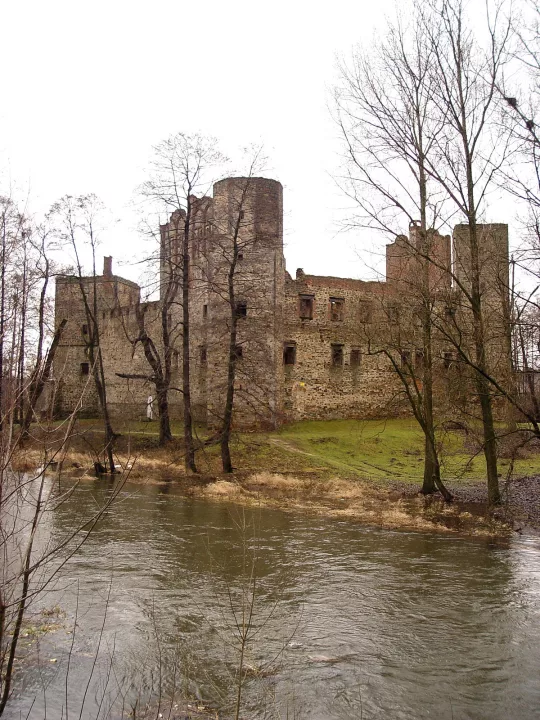
Archbishop's Castle in Drzewica is a historic residence with a rich history, surrounded by greenery. It is worth visiting for its architecture and the opportunity to walk around the palace grounds and learn about the history of the archbishop's seat.
Archbishop's Castle in Drzewica is a ruin of a Gothic-Renaissance defensive and residential castle from the 16th century, built by the Archbishop of Gniezno Maciej Drzewicki and destroyed by fire in 1814.
The castle was built in 1527–1535 at the initiative of Archbishop of Gniezno Maciej Drzewicki, in a style combining Gothic with Renaissance, as a fortified residence above the Drzewiczka river. The building was surrounded by two moats separated by an earthen rampart, and its corners were adorned with four square towers. Such a defensive layout, rarely seen in this form in the region, made the castle one of the more important noble residences of Lesser Poland at the time.
After the founder's family, the castle passed successively into the hands of the Sołtyk and Szaniawski families. At the end of the 18th century, the building was handed over to the Bernardine nuns, whose earlier monastery had burned down – the order had been active in this area since 1630. It was during the time when the castle served the nuns that an event occurred which determined its future fate.
In 1814, the castle was destroyed by fire, which according to local tradition was caused by candles not being properly extinguished after the rorate masses. The building was never rebuilt. The ruins have been preserved to the height of the wall crown and, as never significantly rebuilt after their period of glory, are today considered one of the better-preserved residences from the first half of the 16th century in Poland. The castle was entered in the register of monuments under number 47A, with the date of entry 28 April 1980.
The castle ruins are being secured, and the area around them, called Podzamcze, is used for open-air events organised with the Drzewica municipality, including knight picnics with combat demonstrations and the opportunity to visit. The castle remains one of the larger tourist attractions in the region, although access to the walls themselves may be periodically restricted due to securing work, so it is worth checking the current visiting rules before your visit.


Be the first! Add a comment.
You need to log in to add a comment.
Log in