A cone-shaped mound with a moat and rampart in a forest near Rawa Mazowiecka, remains of the stronghold that gave rise to the town; the name Anielska Góra comes with legends of a hermit and demons.
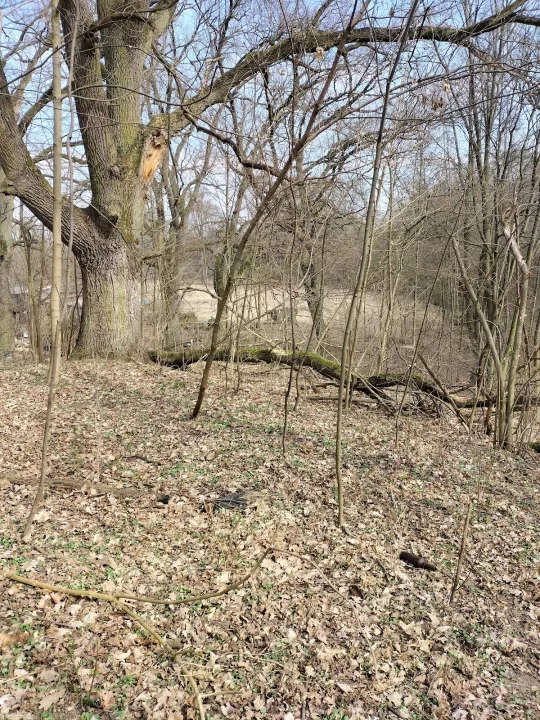
A cone-shaped defensive mound, surrounded by a ditch and rampart, lies hidden in woodland about 1.5 kilometres south of the market square in Rawa Mazowiecka. It is a remnant of the stronghold from which the town originated.
The mound is linked to the original location of the Rawa stronghold, which functioned from the second half of the 13th century until the end of the 14th century, before the town was relocated to its present centre with the town hall and market square. At its base, the mound is approximately 75 metres in diameter, tapering to around 40 metres at the summit, with a height of about 11 metres. It is surrounded by a well-preserved ditch and rampart approximately 20 metres wide.
Investigations conducted by Jerzy Augustyniak in 1968 and in the years 1986–1988 and 1990 confirmed three phases of use of the stronghold and revealed remains of wooden log-built structures. Among the finds were fragments of pottery, weapon components, tools, animal bones, a silver Prague penny from 1311–1346 and a jeweller's hammer. Fragments of medieval pottery can still be seen on the surface of the plateau amongst leaf litter, though amateur excavations there are prohibited.
The mound bears two local names: Anielska Góra, formerly apparently Diabelska Góra, and Szwedzki Okop. These are associated with legends of a hermit driving demons from the place and of a brigand serving the devil. Archaeological excavations have not confirmed these accounts, but the names themselves have survived to this day.

Be the first! Add a comment.
You need to log in to add a comment.
Log in