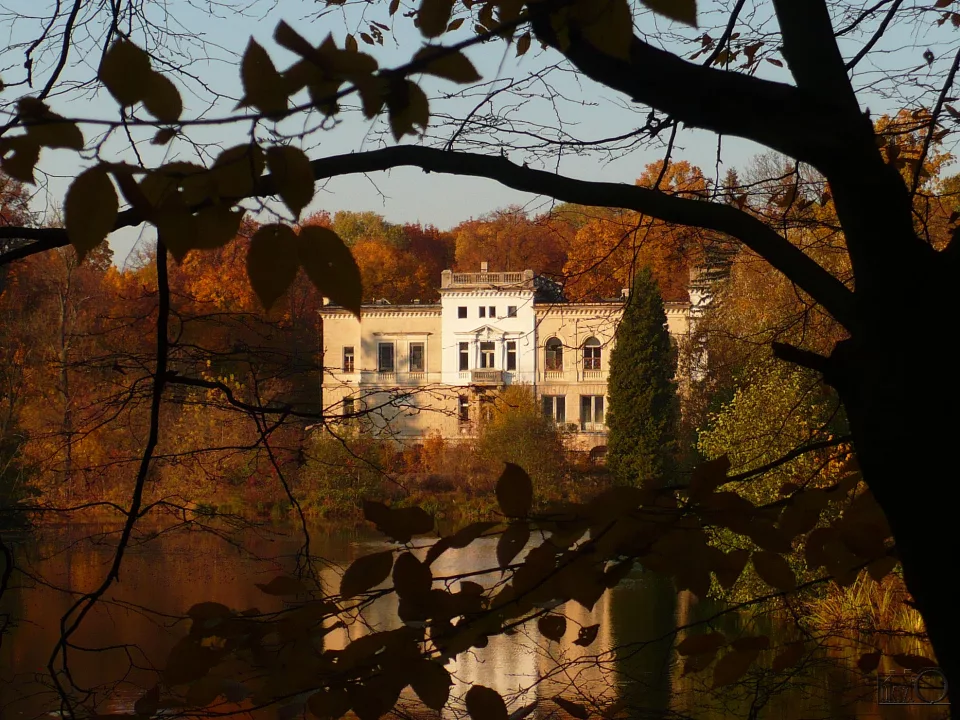
The Heinzel family's Neo-Renaissance residence from 1898-1899 in Łagiewniki, later a military school and a TB hospital, now closed off and awaiting restoration.
The Palace in Łagiewniki is a Neo-Renaissance residence of the Heinzel family, one of the wealthiest families of Łódź industrialists at the turn of the 19th and 20th centuries. The building passed through German occupation, a military school and a tuberculosis hospital, and today awaits revitalisation.
The name of the object bears Juliusz Heinzel, creator of a Łódź industrial empire, but he died in 1895 and did not manage to build the residence in Łagiewniki. The palace was constructed in 1898–1899, probably at the initiative of his son, Ludwik Heinzel, who married Countess Maria Colonna Walewska. The official heritage register uses the name "Palace of Juliusz Heinzel", however.
The project was prepared by architect Franz Schwechten, known for his work in Germany, and Ignacy Markiewicz. The palace was designed in Neo-Renaissance style with elements of eclecticism, and was built from brick. An extensive complex surrounded the building: a park with a pond, tennis courts, stables, a carriage house, a farm building, greenhouses, an orchard and a pheasantry, which testifies to the scale of the residential estate.
During the Second World War the palace was seized by the German occupiers. According to available sources it served as a residence for Hans Frank, the General Governor of the occupied Polish territories, which shows the status given to this place at that time.
After the end of the war a Military School operated in the building, which significantly damaged it. From 1947 the palace was designated as a tuberculosis and lung disease hospital. Currently the building is registered in the heritage register, and plans have been discussed for its conversion into a high-end hotel.
The Heinzels were one of several families who left impressive residences in Łódź and the surrounding area. A similar story of industrial fortune and palace architecture is shown by the Herbst Palace Museum and the Palace of Edward Herbst, which belonged to the Herbst family.


Be the first! Add a comment.
You need to log in to add a comment.
Log in