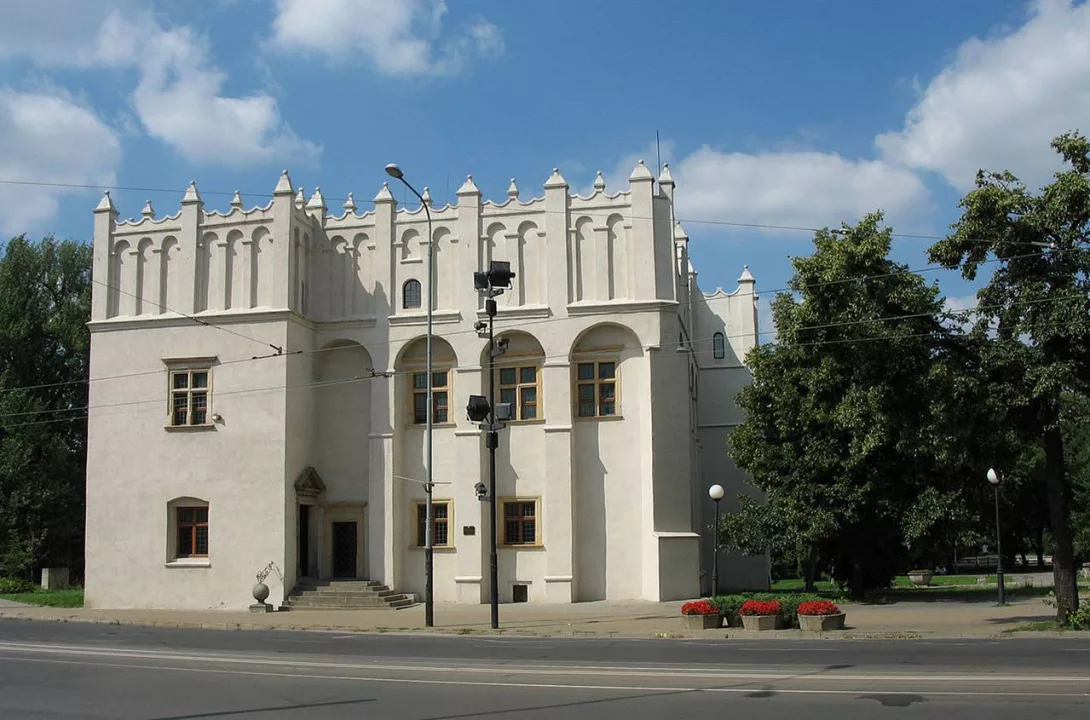
The oldest cultural institution in Pabianice occupies a Renaissance fortified manor of the Kraków chapter from 1565-1571, the city's oldest brick building, known to locals as the Castle, with archaeology, history and nature exhibitions.
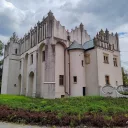
Pabianice City Museum is located on Stary Rynek, in a Renaissance defensive manor of the Kraków chapter, the oldest brick building in the city, which residents have long called simply "the Castle". It is the oldest cultural institution in Pabianice, with exhibitions on archaeology, history, art and nature of the region.
The present building was erected in 1565-1571 (some sources give 1566-1571) according to the design of architect Wawrzyniec Lorek, on the initiative of Kraków canon Stanisław Dąbrowski. It was to serve the canons of the Kraków chapter, to which Pabianice then belonged, as an administrative seat for their estates. Previously a medieval wooden manor stood on the same site, which burned down in a fire in 1532.
The building's fortunes changed with the city's history. After the partitions of Poland, from 1795 it came under Prussian rule. From 1822 weavers and cloth makers worked in it, and from 1833, for over a hundred years until 1945, it served as the Pabianice city administration. During the Second World War it was occupied by the authorities of the German occupation administration.
The history of the institution dates back to 1907, when it was established as a museum section at the Polish Educational Foundation on the initiative of Dr Witold Eichler, a doctor, entomologist and ethnographer. A memorial to him can be seen today by visiting the Witold Eichler Villa in Pabianice. Only in 1945 did the city authorities transfer the 16th-century manor for museum purposes, and the first exhibitions opened in May 1948. Between 1997 and 2005 the building underwent thorough conservation, after which it was opened to visitors in its present form. In 1972 the museum acquired a second building, the former primary school no. 3 from 1886 at Stary Rynek 2, where exhibitions including furniture and ethnographic collections are presented today. Since 1990 the museum has had the status of a municipal cultural institution, financed by the Pabianice Municipality.
The museum has a multi-departmental structure: an archaeological department, a historical department and a department of material culture with collections of art, ethnography and natural history. It runs permanent and temporary exhibitions, and its permanent offer also includes a sculpture exhibition and art collections displayed on the first floor of the manor. The institution also conducts educational activities: thematic workshops, for example in palaeontology or sculpture, and seasonal events such as the "Summer in the Museum" cycle and participation in European Heritage Days.
The manor is listed in the record and register of immovable monuments under two separate entries of the National Heritage Institute, classified as a Renaissance brick building, and is considered the most valuable monument in Pabianice.
The manor stands directly at the Pabianice Stary Rynek, the historic centre of the city, forming together with the surrounding buildings a historic town-centre ensemble, which makes the museum a natural starting point for exploring the area. While in Pabianice it is also worth seeing the Church of St Florian the Martyr, as well as traces of the industrial era such as Pałac Kruschego or Willa Saengerów.
| Monday | Closed |
| Tuesday | 10:00 – 15:00 |
| Wednesday ← today | 10:00 – 15:00 |
| Thursday | 10:00 – 15:00 |
| Friday | 10:00 – 18:00 |
| Saturday | 12:00 – 17:00 |
| Sunday | Closed |
Hours per Google Places - may change on public holidays.

Be the first! Add a comment.
You need to log in to add a comment.
Log in