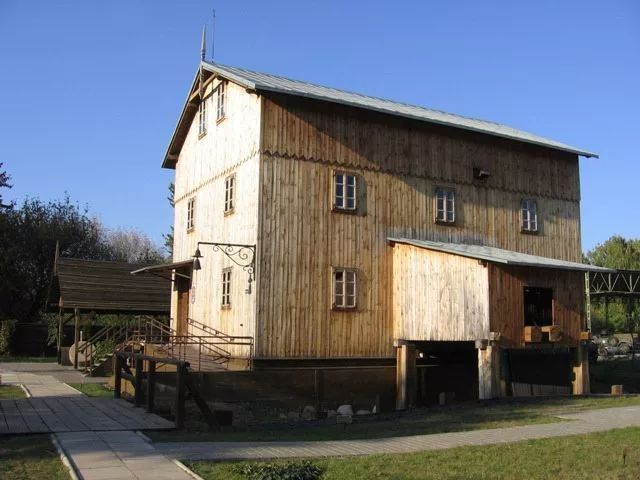
The open-air museum in Tomaszów Mazowiecki, the first in Poland devoted to a river, displays a historic barge ferry, a replica of the steamboat Pilica and a relocated 19th-century watermill.
The Pilica River Open-Air Museum is Poland's first open-air museum devoted to a river, dedicated to promoting the history, natural values and cultural space of the Pilica and its tributaries. The open-air ethnographic museum in Tomaszów Mazowiecki [a city in central Poland] gathers and presents artefacts related to milling, river transport, military history and the region's architecture.
The Friends of Pilica and Nadpilicze Association, led by Andrzej Kobalczyk, founded the museum in 1999 jointly with local authorities. Since 19 April 2005 the institution has operated as a municipal cultural facility answerable directly to the City Office in Tomaszów Mazowiecki. The transfer by the Association to the Municipal Centre of Culture was important for ensuring long-term operation and further development of the collection.
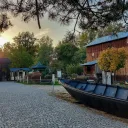
The jewel of the collection is an authentic century-old Pilica bakar, a historical barge, and a replica of the steamship Pilica from 112 years ago. Both vessels sailed on the Pilica river and bear witness to intensive river transport from that era. The exhibits demonstrate both the technology of transport and its role in the region's economy. Original barges were of great importance for trade in timber, grain and other goods between towns.
The main exhibition building is a wooden water mill relocated from the village of Kuźnica Żerechowska to the Luciąża river. The mill contains exhibitions on the history of village mills and regional bridges – a heritage of great importance to areas where rivers provided sources of energy and transport. The museum holds Poland's largest collection of grain mills, numbering hundreds representing different regions and periods.
A notable building is the railway station from Czarnocina (from 1896). The history of this structure is remarkable – it originates from the Warsaw-Vienna railway and originally served as an exhibition pavilion at the All-Russian Industrial and Artistic Exhibition in Nizhny Novgorod. After being brought to Poland it was adapted as a station, and later moved to the museum.
The museum's exhibitions include military artefacts and fortifications from the Second World War period, recovered from the bed of the Pilica river. Finds from this period provide unique testimonies to front-line battles in the region and demonstrate the deep connection between the river and the country's history. Recovered weapons, uniforms and fortification elements are conserved and displayed under appropriate conditions.
| Monday | Closed |
| Tuesday | 09:00 – 16:00 |
| Wednesday | 09:00 – 16:00 |
| Thursday ← today | 09:00 – 16:00 |
| Friday | 09:00 – 16:00 |
| Saturday | 09:00 – 16:00 |
| Sunday | 09:00 – 16:00 |
Hours per Google Places - may change on public holidays.

Be the first! Add a comment.
You need to log in to add a comment.
Log in