
For most of its modern history, Pabianice was associated with one thing: weaving. The city grew alongside its cotton factories, and its residents, mostly men and women employed at the looms, built the city's identity just as much as the factory owners themselves. Sernik pabianicki grew directly out of this everyday life: a simple, creamy cake based on curd cheese (twaróg) that required no expensive ingredients or elaborate technique.
Spinners on the roof, sernik on the table
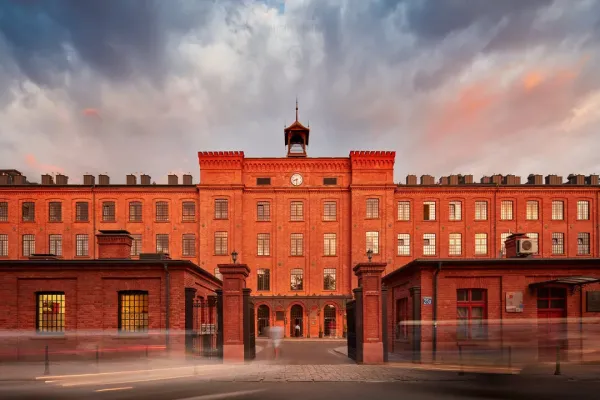
The symbol of the city's industrial past is still, to this day, the sculpture of the spinners decorating the former Krusche and Ender factory, one of the most recognisable historic sites in Pabianice. It is precisely this image of a city of labour, not a city of leisure, that forms the natural context for sernik: a dessert that was never meant to be refined, only filling and affordable every Sunday.
What makes it "the" sernik
Local recipes for sernik pabianicki emphasise a creamy, delicate texture and simple ingredients: curd cheese, sugar, eggs, butter, with a shortcrust or biscuit base. What sets it apart from hundreds of other regional sernik variants in Poland is not a single secret ingredient, but precisely its lasting association with one specific city; just as zalewajka soup is associated with working-class Łódź, sernik has for generations been associated with Pabianice.
Is it an official traditional product
Here it is worth being honest: unlike some other Łódź-region specialities, sernik pabianicki does not appear on the National List of Traditional Products kept by the Ministry of Agriculture. Its status is different: it is a delicacy alive in the memory and everyday practice of the city's residents, described in local media and recalled alongside the industrial history of Pabianice, but without a formal entry in the register. This does not diminish its popularity; it simply shows that not every local flavour goes through the official registration procedure.
A city with more than one delicacy
Alongside sernik, Pabianice is also known for a local apple szarlotka made with apples from surrounding orchards, and for żurek, a sour rye soup served with sausage and egg; like Łódź's zalewajka, this dish has roots in the region's simple, working-class cuisine. In the holiday season, pierogi with various fillings join this list too, from curd cheese with potatoes to cabbage with mushrooms, a typical festive dish in many of the city's homes, regardless of whether a family has working-class roots or not.
A city of weavers, not only spinners
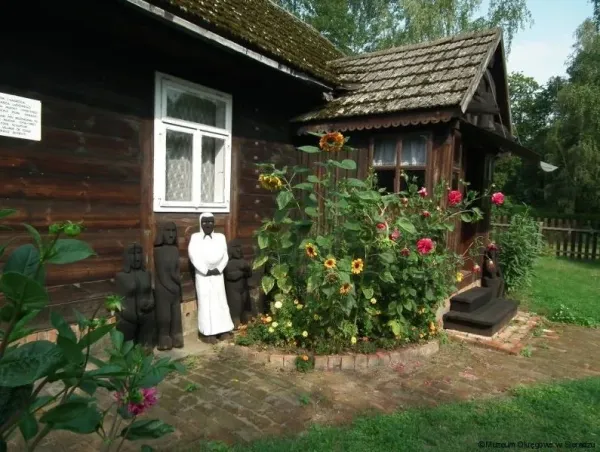
It is worth remembering that the spinners' sculpture is only one symbol of Pabianice's industrial past. The city grew up around several large textile plants at once, and its workers lived in the characteristic weavers' houses (domy tkaczy) still preserved today: low, timber-and-brick buildings with large windows meant to light the loom workstations set up inside the home. It was in houses like these, after a full day at the workshop, that everyday cooking and baking, including sernik, took place.
Where to learn the history behind this flavour
The best starting point is the former Krusche-Ender factory itself, with its characteristic sculpture of the spinners, around which the urban identity of Pabianice grew.
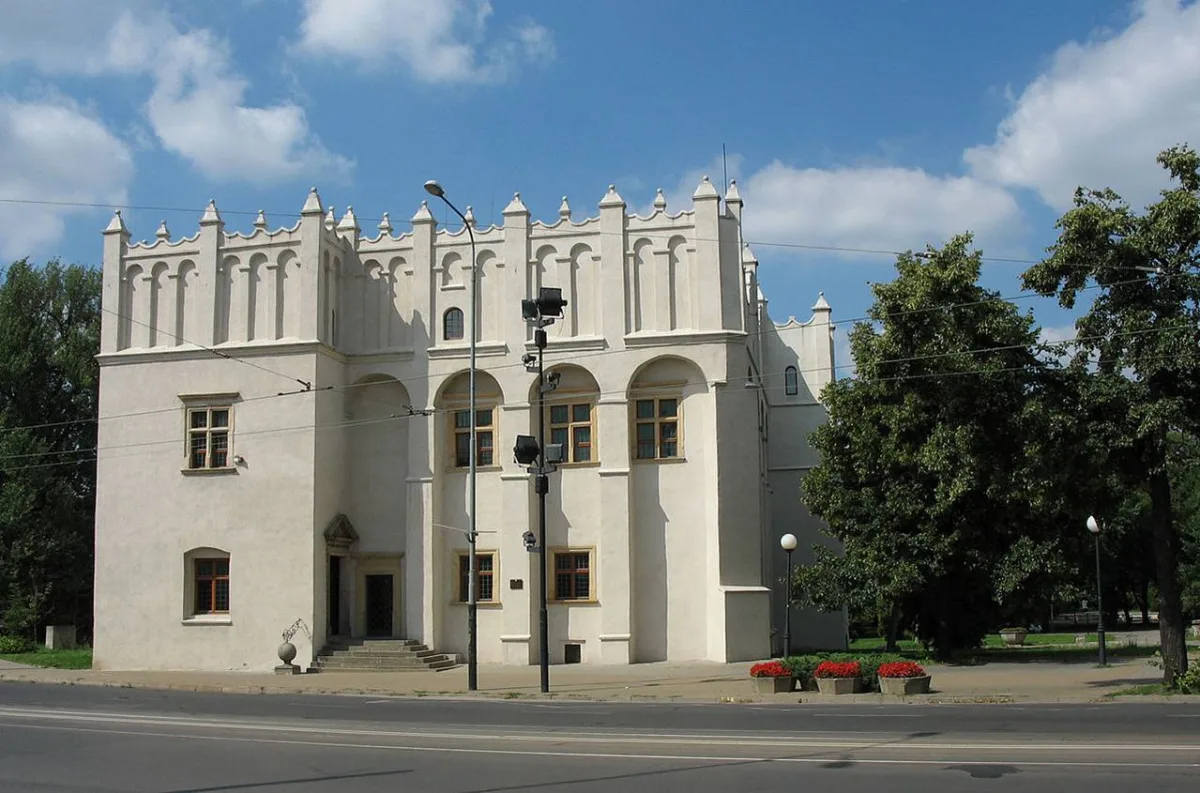
The historical context is best rounded out by the Museum of the City of Pabianice, housed in the Kraków Chapter Manor House (Dwór Kapituły Krakowskiej), where the everyday life of a city of working hands is shown.
It is also worth walking around the Old Market Square in Pabianice and visiting the surviving weavers' houses, the typical buildings of the city's former craftsmen's families.
In practice
Look for sernik pabianicki in local pastry shops and bakeries in the city, not in chain stores; this dish remains largely home-made and artisanal. The best opportunities for tasting it come at city fairs and markets, whose dates can be checked in the Events section. More about the region's other flavours can be found in the Poznaj Łódź (Discover Łódź) section.

Be the first! Add a comment.
You need to log in to add a comment.
Log in