
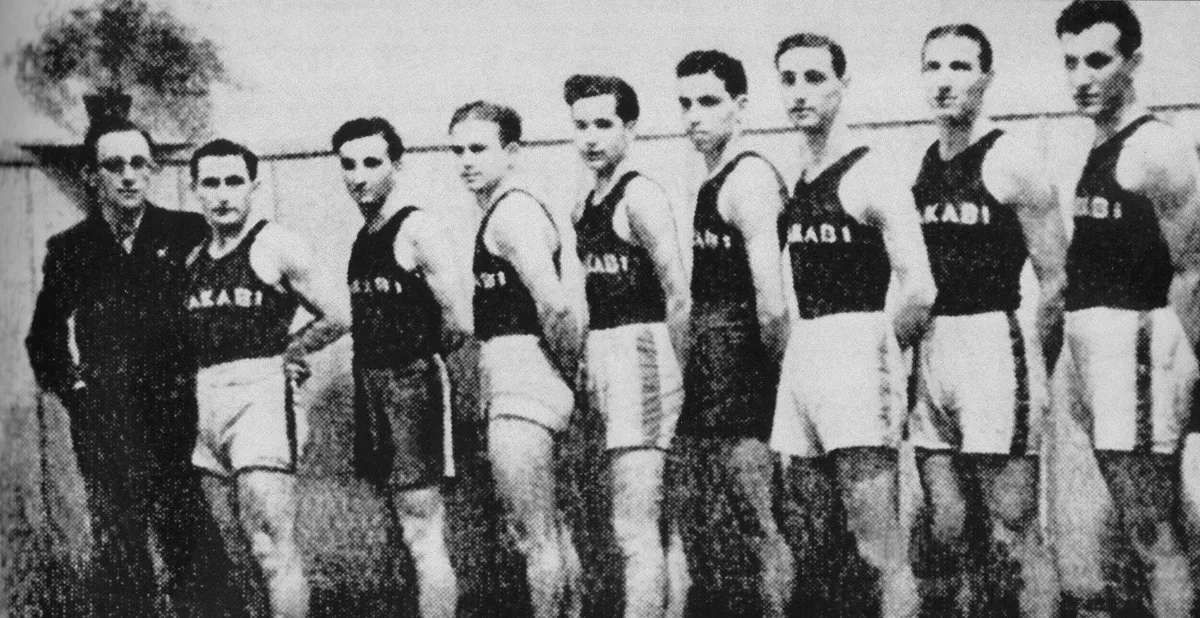
When we think of the sporting history of pre-war Łódź, the first associations are usually ŁKS and RTS Widzew - clubs that have survived to this day and still stir the emotions of fans. Few people remember, however, that in the same city, in the same years, thriving Jewish sports clubs were also active, with their own sections, champion-level athletes and even their own sports press.
ŻTGS Bar-Kochba - a club with tradition since 1917
The most important Jewish sports club in Łódź was the Żydowskie Towarzystwo Gimnastyczno-Sportowe Bar-Kochba (Jewish Gymnastics and Sports Society Bar Kochba), active since 1917 and based at what is today Cegielniana street 63. The club ran a wide range of sports sections - gymnastics, boxing, athletics, football and cycling, as well as table tennis. Its name referred to the leader of the Jewish uprising against the Romans in the 2nd century AD. Like many other Jewish sports clubs of the period in Europe, Bar Kochba combined sport with the idea of strengthening the physical and national identity of the Jewish community. The scale of that era is also well shown by Łódź's present-day industrial zabytki (landmarks), built in the same period as the club's headquarters.
Champions of Poland in the club's colours
Among Bar Kochba's members were athletes who achieved success at national level - among them Majer Wajngarten and Jehuda Minc, champions of Poland in weightlifting and athletics respectively. This shows that the club was not merely a local, amateur initiative, but a real sporting force, capable of producing athletes who competed with the best in the country.
Club Hakoah - the other side of Jewish sport in Łódź
Alongside Bar Kochba, the club Hakoah was also active in the city - its name, derived from the Hebrew word for strength, was popular at the time among Jewish sports clubs in many European cities, from Vienna to Łódź. Although sources on Łódź's Hakoah are scarcer than for Bar Kochba, the presence of two separate, large Jewish clubs in one city shows well the scale of organised sporting life in Łódź's Jewish community in the interwar period.
The world's first Yiddish-language sports papers
Łódź can also boast another curiosity, unique on a world scale, connected with Jewish sport: it was here that the world's first Yiddish-language sports magazines were published - "Erszte Judisze Szach-Cajtung", devoted to chess, and "Erszte Judisze Sport-Cajtung", reporting on sporting events in Yiddish. Their existence confirms that pre-war Jewish Łódź had a developed, independent sporting culture, with its own press, its own heroes and its own language for reporting events - alongside, not in the shadow of, national sporting life.
What remains of that history
After the war, none of the Jewish sports clubs of pre-war Łódź resumed activity - most of their members died in the Holocaust or emigrated. Today the memory of Bar Kochba and Hakoah lives on mainly in historical studies and press archives, but it is worth knowing about while walking through the former Jewish districts of Łódź or visiting the Muzeum Miasta Łodzi (City of Łódź Museum), where the exhibition devoted to the city's history also shows the diversity of social life in pre-war Łódź, including its sporting dimension.
The context of the everyday life of the pre-war Jewish community is well complemented by a visit to the Synagoga Reicherów (Reicher Family Synagogue), the only synagogue in Łódź to survive the war.
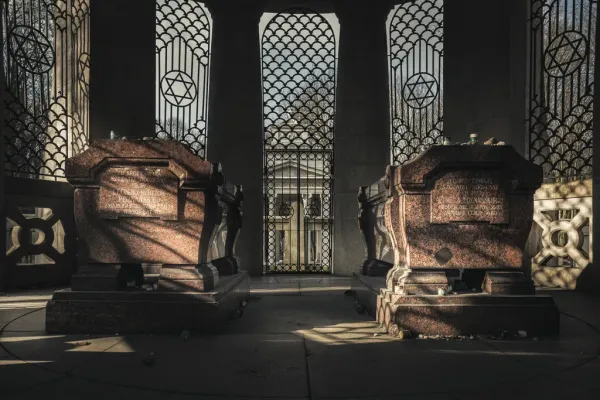
It is also worth walking through the Jewish cemetery on Zagajnikowa street. You will find more material on the history of sport and Jewish Łódź in the Poznaj Łódź (Discover Łódź) section.
Be the first! Add a comment.
You need to log in to add a comment.
Log in