
Today Bałuty is an ordinary, the most populous district of Łódź, with about 190,000 residents, housing estates and tenement houses without any particularly distinctive character. Before the war it was different. It was here, around the Old Market Square, that the heart of Jewish Łódź beat, a city that at the time was home to more than 300,000 Jews, nearly a third of all its residents.
The Old Market Square and Park Śledzia
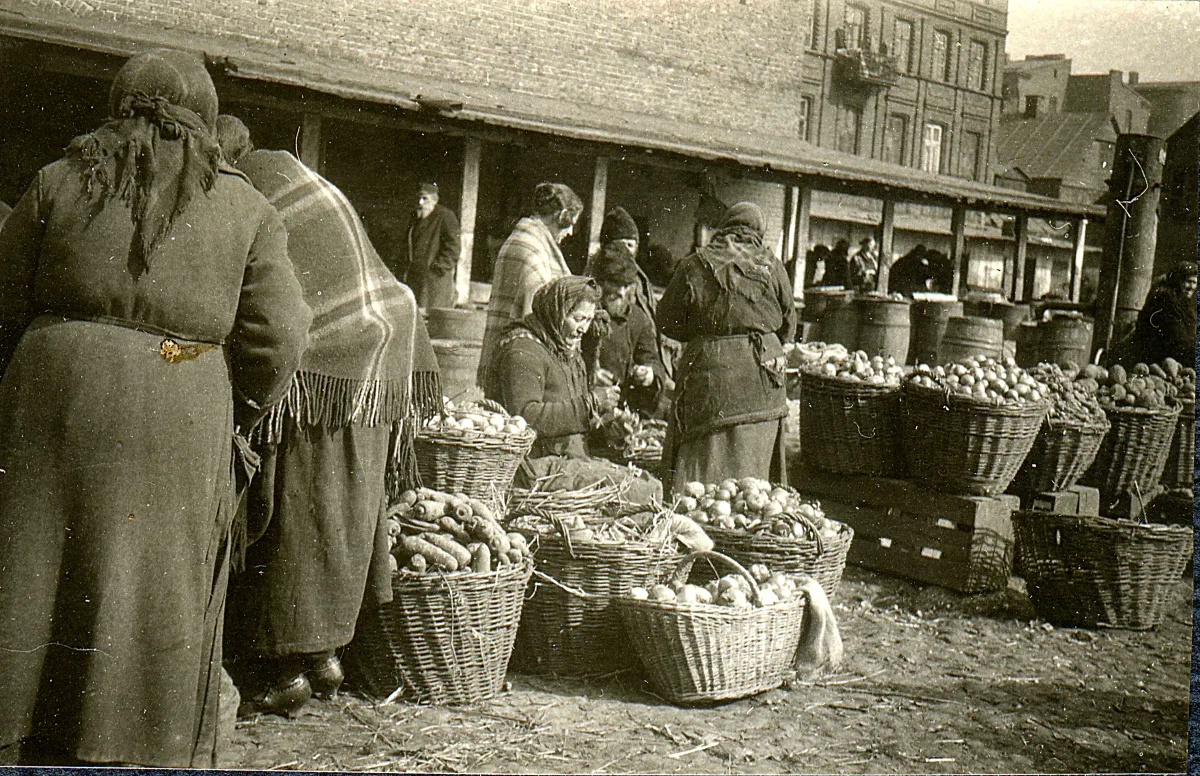
The district's commercial and social centre was the Old Market Square and the neighbouring Park Śledzia (Herring Park), a place that owed its name to the stalls selling herring, considered the best in the city. It was always busy and crowded here - accounts from those times describe a place living to its own rhythm, where trade, gossip and everyday matters mixed together from morning to evening.
Today neither the Old Market Square in that form nor Park Śledzia exist - this is a fragment of the city that literally disappeared from the map, built over and transformed in the post-war decades. Only photographs and memories remain of it.
Religious life and education
Before the war, about 250 synagogues and prayer houses operated across Łódź, a number that is hard to imagine today when looking at the only surviving building of this kind, the Synagoga Reicherów (Reicher Synagogue). Bałuty and the neighbouring districts also had an extensive Jewish school system: the Hebrew gymnasium Tarbut, the Mizrachi gymnasium, the secular Yiddish school Borochow, and the Łódź branch of Bejt Jaakow, a network of orthodox schools for girls founded in 1917 in Kraków by Sara Schenirer, all operated here. By 1937, the movement ran about 250 schools across Poland with 38,000 pupils, and the Łódź branch already had its second graduating class in 1934.
Press and sport
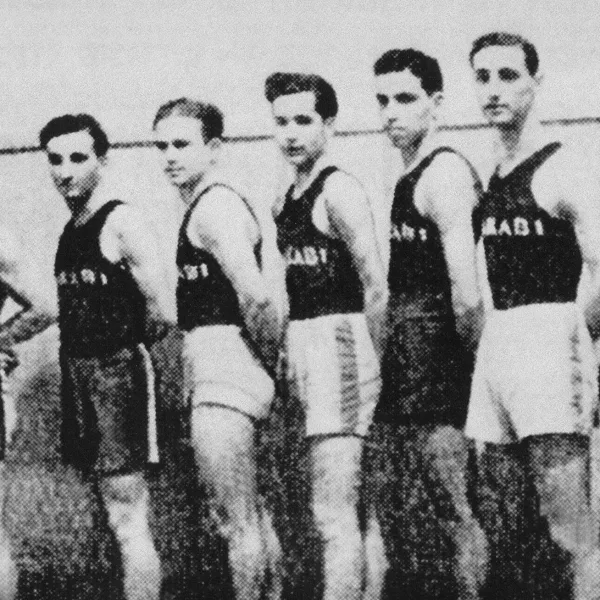
Jewish Łódź also had its own press - Yiddish-language dailies published here included Lodzsher Togblat (the oldest Yiddish daily in Poland outside Warsaw, published from 1908 to 1936), Najer Folksblat and Hajnt. Jewish sports clubs were active too, among them Hakoach, with gymnastics, boxing and football sections, drawing hundreds of members and fans.
All of this, schools, newspapers, clubs, synagogues, formed a self-contained, complete social world right at the heart of Łódź, functioning alongside the rest of the city but closely tied to it economically and socially.
A ghetto on the site of the former district
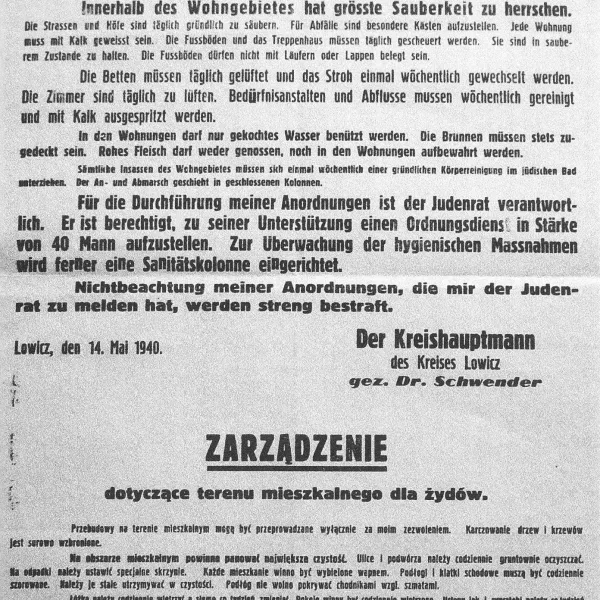
In February 1940, the Germans set up a ghetto for the Jews of Łódź on the site of Bałuty, also known as the Litzmannstadt Ghetto. The non-Jewish residents were expelled, and Jewish people from the rest of the city were moved in to replace them, followed in time by Jews from other European countries and from ghettos being liquidated across occupied Poland. The world described above, the schools, newspapers, sports clubs, ceased to exist almost overnight, and the district itself became, for the following years, a site of the Holocaust, which is described in more detail in the history of Stacja Radegast, from where ghetto residents were deported to the death camps.
What still recalls that world today
Few physical traces of pre-war Bałuty remain, most of the district's buildings were destroyed or rebuilt in the following decades. Memory of that world survives today mainly through archival photographs, recollections and the work of historians reconstructing the topography of a vanished district. This is a topic that requires imagination, one has to look at today's blocks of flats and streets and picture what stood here before.
Where to look further
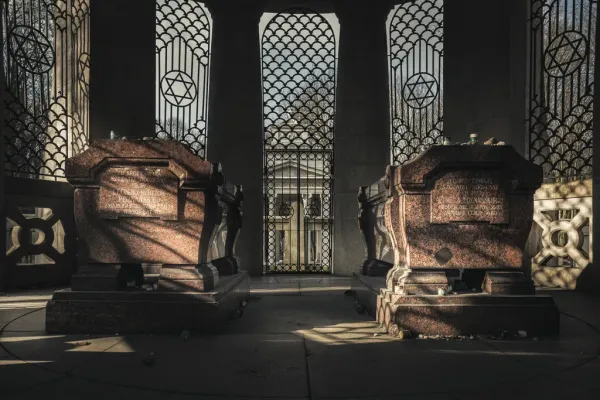
Anyone who wants to better understand the scale of what disappeared should visit the New Jewish Cemetery on ulica Bracka, where representatives of nearly every stratum of pre-war Jewish Łódź are buried, and Park Ocalałych (Survivors' Park), created close to the former ghetto as a contemporary place of remembrance.
More on the history of 20th-century Łódź can be found in the Poznaj Łódź (Discover Łódź) section, and other historic sites and places of remembrance in the city among the historic monuments of Łódź.
Be the first! Add a comment.
You need to log in to add a comment.
Log in