
Decision of February 8, 1940
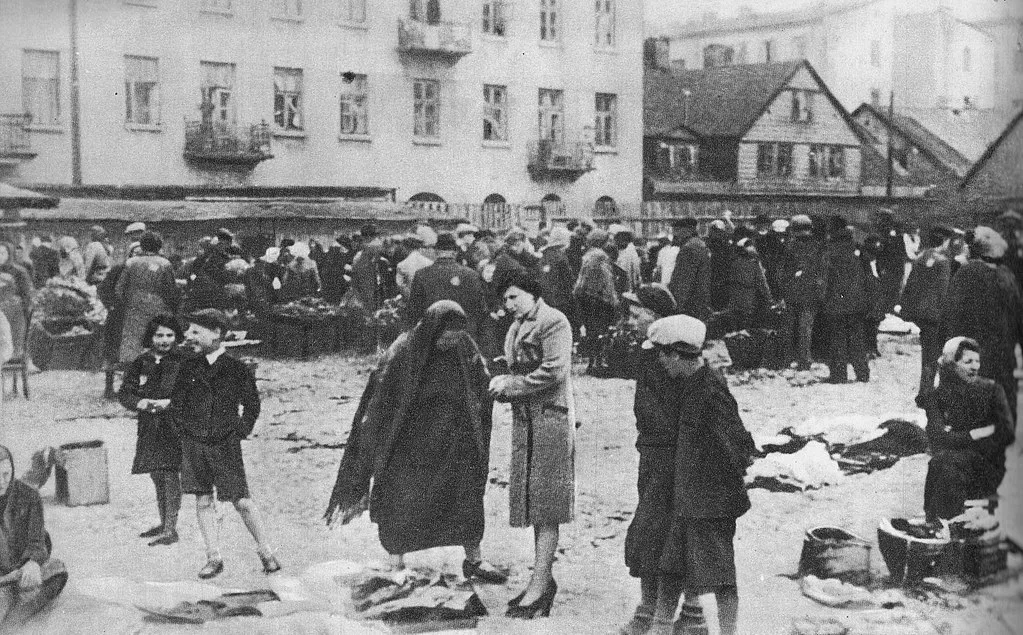
The decision to create a sealed-off Jewish district in Łódź was made in December 1939. Relocations began in early January of the following year. All practitioners of Judaism from throughout the Warthegau were to be sent to the ghetto. The most neglected parts of the city: Bałuty, Stare Miasto (Old Town), and Marysin officially became a sealed-off area as a result of the decision of February 8, 1940. By April, this area was already surrounded by a fence, barbed wire entanglements, and guarded by sentries who had the right to shoot anyone who dared approach the borders of Litzmannstadt Ghetto. On the territory encompassing four thousand square meters, 160,000 people were confined. During subsequent operations, the ghetto population was increased to 200,000 people.
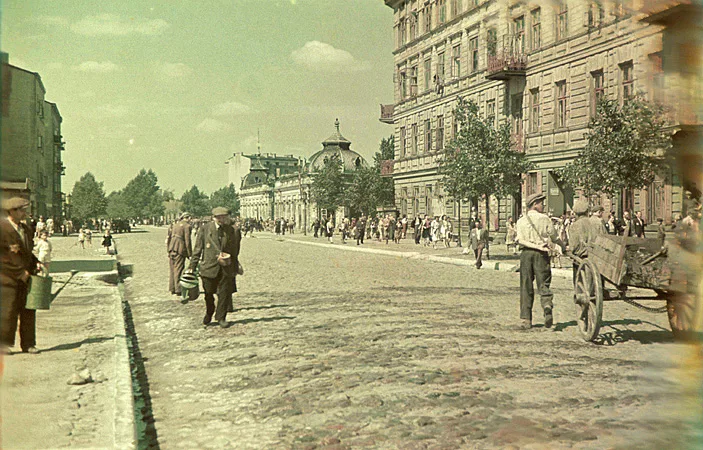
Jews in hunger, humiliation and poverty
Thanks to the chronicle of the ghetto, kept from January 12, 1941 to the end of July 1944, we can learn what daily life was like for the ghetto residents, their food rations, everyday occupations, as well as emerging loves, weddings, and births of children. Browsing through the pages of the chronicles, it is hard not to get the impression that satisfying hunger became a matter of primary importance. Humiliated and stripped of dignity, Jews could satisfy their needs only according to the occupier's top-down regulations. Food rations initially amounted to 1800 calories for an adult and consisted of: 30 dg of meat, 20 dg of sausage, 35.5 dg of potatoes and 32 dg of bread. These products were supplemented with 10 ml of vinegar, 20 ml of oil, 2 matches, and even 5 cigarettes and half a can of preserves. Over time, however, these allocations were gradually reduced to 600 calories.
What does the ghetto cook?
In the chronicles, one can find extensive descriptions devoted to the culinary practices of ghetto residents. For example, how turnips could pass for apples, cake ingredients, how to make soup from it, and even imitation asparagus or carrots (according to preferences), adding gelatin and marmalade. Jews who had left their native countries tried to recreate the taste of traditional dishes in the ghetto, but due to the lack of ingredients and spices, the menu became uniform. However, there was no lack of creativity, thanks to which a recipe for "babka" – a cake imitating cake – was created. Due to the inability to bake, the paste made from finely grated potatoes, saccharin, baking soda, vinegar, flour and coffee was cooked in water.
Cocoa made from ground brick
Over time, the descriptions become increasingly dramatic. Basic ingredients began to run out. People therefore reused potato peels or rummaged through kitchen waste, hoping that something from the discarded trash could still be suitable for reuse. Deaths of family members were not reported to ghetto administrators so that they would not further reduce food rations. There are also fragments testifying to the storage of bodies that might be suitable for eating. Wanting to ensure survival, people even cooked what had previously been considered inedible. Such products included, for example, onion powder – ground husks – or so-called cocoa, which was actually ground brick. Vegetable scraps swept from market squares were also used.
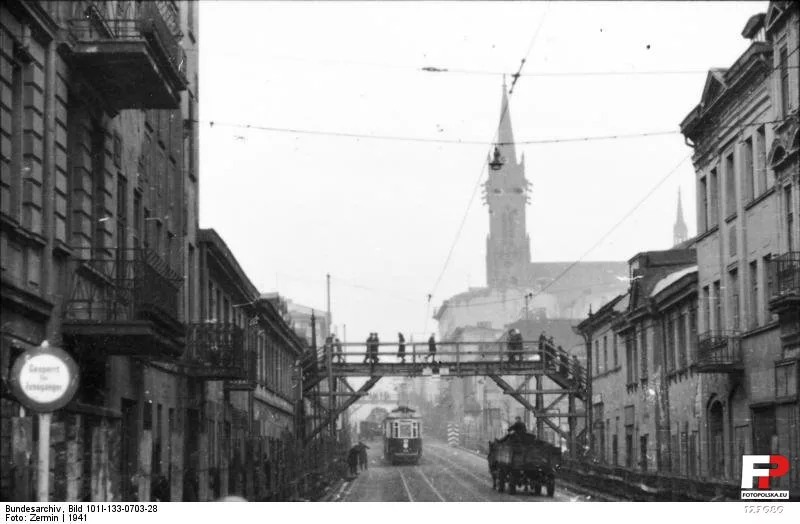
Strategy for survival
Food rations were dependent on the position held in the ghetto structure. The most was received by representatives of Jewish leadership – people trusted and belonging to the closest circle of the leader of the Jewish Council in Litzmannstadt Ghetto, Chaim Rumkowski. They received, among other things, vouchers for sausage, meat, or wine. Next in line were hard-working laborers who could count on an extra portion of food. However, they could not share it with their family because they were obligated to consume the extra portion of soup at their workplace. Work thus provided not only money but also a chance for survival.
In 1944, as many as 70,000 people worked in the Łódź ghetto. They were engaged in production for the Wehrmacht's needs. Ironically, thanks to the Jews employed in the factories, the Wehrmacht could send one additional unit to the Eastern Front. The ghetto was involved, for example, in preparing so-called straw shoes, which were to serve soldiers struggling with severe frosts in the east.
The decision to liquidate the ghetto was made in May 1944. The last transport taking Jews to Auschwitz departed on August 29 of that year. At that time, 1,500 people remained in Litzmannstadt Ghetto, of which 800 were to be engaged in organizing the area. The rest were sent to a labor camp in Königswusterhausen (located near Berlin) and factories in Dresden. It is estimated that of the 200,000 confined to the ghetto, only 5,000–10,000 people survived.
Be the first! Add a comment.
You need to log in to add a comment.
Log in