
In December 1942, on the grounds of the Łódź ghetto, on Przemysłowa street, the Germans set up a camp intended solely for children and young people. Unlike most places connected with the occupation history of this part of the city, the victims here were not Jews but Polish children - a fact worth stating clearly, since the camp was built on ground closed off a year earlier for the Jewish population, and it is easy to make the mistake.
Who was sent to the camp
Children aged from two to sixteen were sent to the camp. They included orphans from children's homes in the territories incorporated into the Reich and from the General Government, as well as children of parents who had been arrested, imprisoned or otherwise persecuted by the occupier. Some of the minor prisoners ended up here for minor offences by German standards - stealing food, truancy, membership of banned youth organisations.
Conditions in the camp were extremely harsh: hunger, work beyond their strength, illness, lack of medical care and corporal punishment. Mortality among the youngest prisoners was high, though exact victim numbers are still the subject of historical research.
The scale of the tragedy
In total, around five thousand children and young people passed through the camp on Przemysłowa street. About 900 of them survived. The camp operated until 1945, practically until the end of the German occupation of Łódź - longer than the Łódź ghetto itself, on whose grounds it had been set up.
A place of memory
In 1971, in the nearby Park im. Szarych Szeregów (Grey Ranks Park), a monument to the victims of the camp was unveiled, known as the Broken Heart. It is a quiet, green place, today functioning mainly as a city park - but it is worth knowing, when walking through it, what history the monument standing there carries.
The Museum of Polish Children - Victims of Totalitarianism
Since 2021, the history of the camp and its prisoners has been documented by a dedicated institution - the Museum of Polish Children - Victims of Totalitarianism, located on Piotrkowska 90, on the second floor. The museum is still gathering and cataloguing exhibits, so it does not yet have a permanent exhibition - instead it runs lectures, guided tours and outdoor exhibitions. It is open Monday to Friday, 10:00-15:00. Before visiting it is worth checking the current programme on the museum's website, as the way the collection is made available may change as the institution develops.
Traces in the city's space
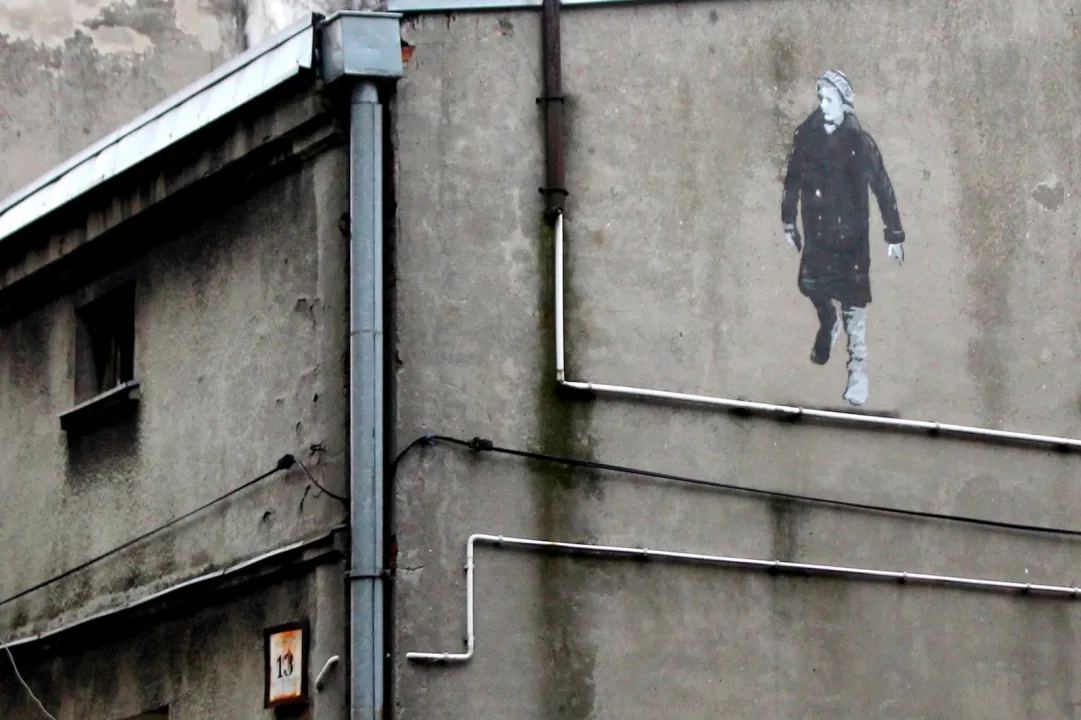
The history of the camp is recalled today also by murals in Łódź devoted to its youngest prisoners - depicting child victims and child prisoners of the camp, by Piotr Saul and Damian Idzikowski. This is an unusual form of remembrance, woven into the contemporary fabric of the city, alongside traditional monuments and plaques.
Why it is worth knowing about this
The camp on Przemysłowa street is one of the lesser-known chapters of the city's wartime occupation history, even among residents of Łódź themselves. It completes the picture of Łódź during the war - not only as the site of the Holocaust of the Jews in the ghetto, but also as a place where Polish children suffered, deported here from other regions of the country. This is a subject that calls for a factual, calm telling, without added embellishment - the sheer scale of the numbers speaks for itself.
The subject of the camp on Przemysłowa street is a good complement to knowledge of the Stacja Radegast (Radegast Station), from where residents of the neighbouring Łódź ghetto were deported, and of the Park Ocalałych (Park of Survivors), commemorating Poles who saved Jews during the occupation. More places of this kind can be found among the museums of Łódź and the city's parks, and the full picture of the region's history in this period is gathered in the Poznaj Łódź (Get to know Łódź) section.
Be the first! Add a comment.
You need to log in to add a comment.
Log in