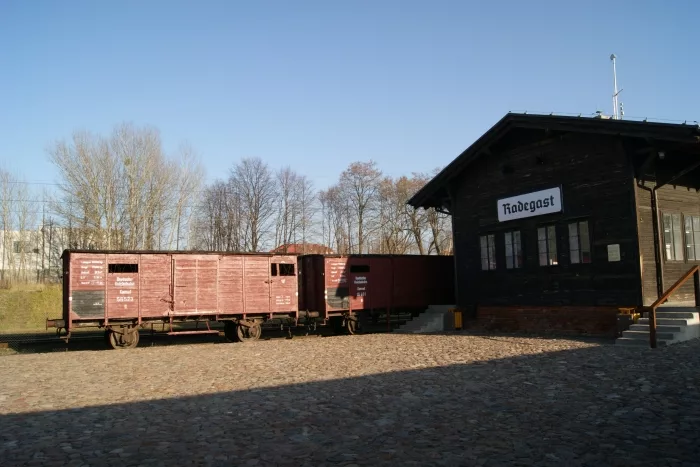
Radegast Station, the former railway Umschlagplatz of the Łódź ghetto, commemorates the deportation of over 140,000 people to the Kulmhof and Auschwitz-Birkenau camps.
The Radegast Station Branch, at al. Pamięci Ofiar Litzmannstadt Getto 12 in Łódź, is housed in a building of the former railway station from which the Jewish population of the Łódź ghetto was deported to extermination camps during the German occupation. It is a branch of the Museum of Independence Traditions in Łódź.
The building belonged to Radegast railway station, previously called Marysin, on the Łódź-Widzew to Zgierz line. From January 1942 it served as an Umschlagplatz, a loading point where the Jewish population was loaded into freight wagons. From here transports departed beyond the ghetto boundaries.
Over 140,000 people were deported from Radegast Station, the vast majority Jews from the Łódź ghetto. Transports were directed primarily to the extermination centre at Kulmhof (Chełmno nad Nerem) and to Auschwitz-Birkenau camp. Mass deportations to Kulmhof began in January 1942, and by September of the same year over 70,000 people had been murdered there.
After the end of the war the station served various economic functions before, following years of renovation, coming under the management of the Museum of Independence Traditions and being opened to visitors as a place of remembrance. The renovation work preceding the opening of the branch lasted approximately one year.
For the inhabitants of the Łódź ghetto, Radegast station was the place through which successive groups of people were deported, wagon after wagon, beyond the ghetto boundaries. This was where the journey from a home in the ghetto to a freight wagon bound for an extermination centre ended.
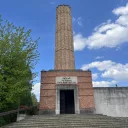
The viewing route leads through the symbolic Tunnel of the Deported and a hall in the shape of a chimney. Inside are fragments of deportation lists, objects found at mass graves, and a map of Europe showing the cities from which Jews brought to the Łódź ghetto originated. Every year this place hosts commemorations honouring Holocaust victims, attended by survivors.
| Monday | 10:00 – 16:00 |
| Tuesday | 10:00 – 16:00 |
| Wednesday | 10:00 – 16:00 |
| Thursday | 10:00 – 16:00 |
| Friday ← today | Closed |
| Saturday | 10:00 – 17:00 |
| Sunday | 10:00 – 17:00 |
Hours per Google Places - may change on public holidays.

Be the first! Add a comment.
You need to log in to add a comment.
Log in