
On 11 March 1968, students in Łódź began a protest action as part of a nationwide wave of demonstrations that broke out after the play "Dziady" (Forefathers' Eve), directed by Kazimierz Dejmek, was taken off the bill at the National Theatre in Warsaw, and after the brutal breaking up of a rally by students of the University of Warsaw. The following day, 12 March, a rally with more than a thousand participants was held in front of the university library building in Łódź, at which a resolution "To the Society of Łódź" was adopted, protesting against the repression of students and against unreliable reporting to the public about the events in Warsaw.
The largest March demonstration in Łódź
The culmination of the Łódź protests was a second rally, on 19 March 1968. Students marched through the city centre, among other streets along Piotrkowska and Narutowicza, watched by thousands of residents, all the way to the building of the University of Łódź library. Historians studying this period judge that the Łódź students' protest was particularly dynamic compared with other academic centres in the country - one of the larger demonstrations of March 1968 outside Warsaw, recalled today among other things at exhibitions in Łódź museums.
Repression against the protesters
As a result of the demonstrations, almost 500 people were detained in Łódź. Eleven of them were placed under pre-trial detention, and more than 150 cases were referred to petty offence boards. The leaders of the student protests, including Szczęsny, Makatrewicz and Kapała, were sentenced to prison terms ranging from 8 months to a year and a half.
The antisemitic campaign
The student demonstrations were accompanied, as in Warsaw and other cities, by an antisemitic campaign organised by radical party circles, conducted under the banner of anti-Zionism. In Łódź, journalists of Jewish origin employed at local newspapers were dismissed from their jobs. Doctors at the Łódź ophthalmology clinic were asked for baptismal certificates - a practice intended to force people to reveal their origin and to intimidate anyone suspected of Jewish roots, regardless of their actual faith or views.
The end of organised Jewish life in the city
The effects of the 1968-1969 campaign were exceptionally severe in Łódź. This city had survived the occupation and the Holocaust as a centre to which around 46,000 Jews returned after the war - for a short time it became the largest Jewish community in postwar Poland. March 1968 forced almost the entire Jewish community still remaining in Łódź, numbering 3,500-4,000 people, to emigrate. This was practically the end of organised Jewish life in the city, which for over a century had been one of the most important Jewish centres in Central Europe.
Why this is an important chapter in the history of Łódź
March 1968 closes a certain chronology: the prewar flourishing of Jewish Łódź, the Holocaust in the ghetto, the brief postwar rebuilding of the community, and finally its final end, caused not by the occupier but by the policy of the Poles' own state. This is a chapter less well known than the history of the ghetto, but just as important for understanding why today's Jewish Łódź is so small compared with its prewar size.
Places connected with this history
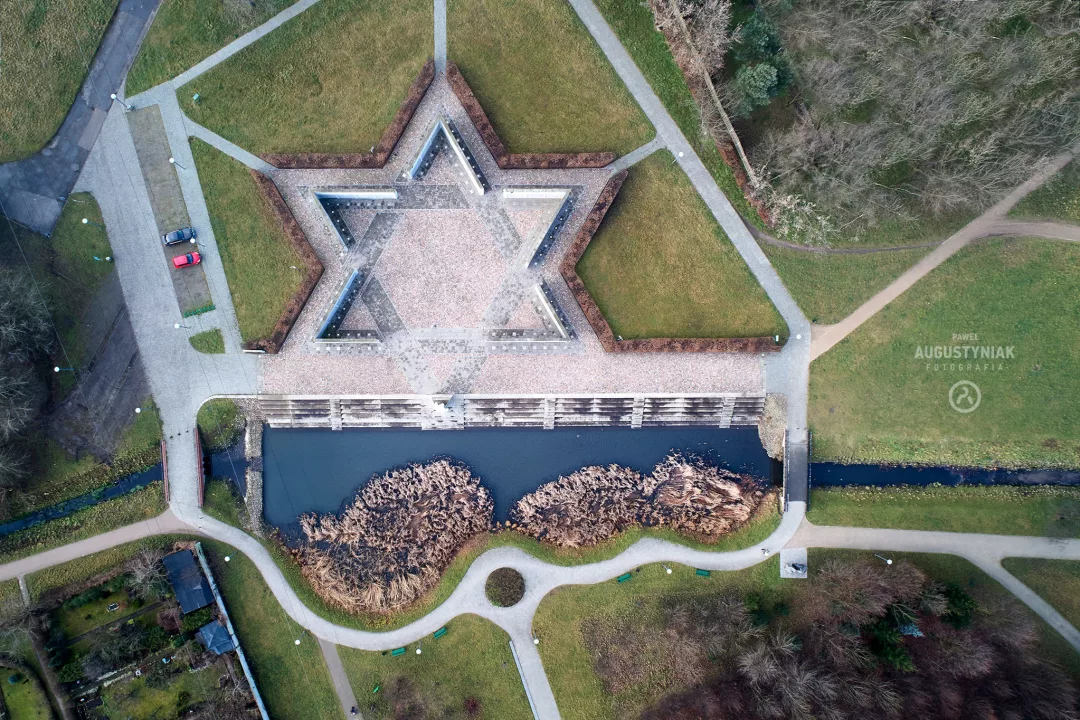
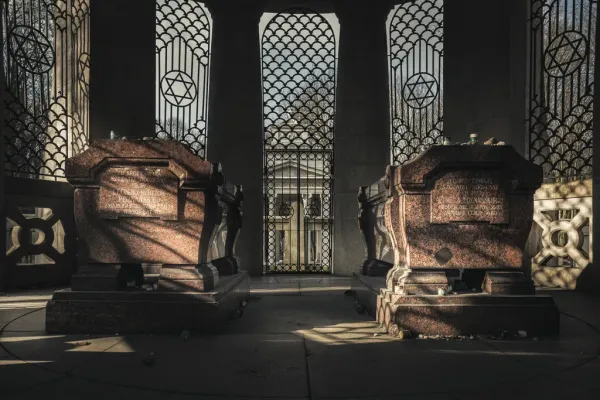
Today the only trace of the living Jewish community that survived until 1968 is the Synagoga Reicherów (Reicher Synagogue) in the city centre - rebuilt after the war, still active, though today it serves a much smaller community than before March 1968. The earlier chapters of Jewish Łódź are brought closer by the Nowy Cmentarz Żydowski przy Brackiej (New Jewish Cemetery on Bracka street) and the Park Ocalałych (Park of Survivors) with its monument to the Righteous Among the Nations.
More on the 20th-century history of Łódź can be found in the Poznaj Łódź (Get to know Łódź) section and among the city's museums devoted to this period.
Be the first! Add a comment.
You need to log in to add a comment.
Log in