
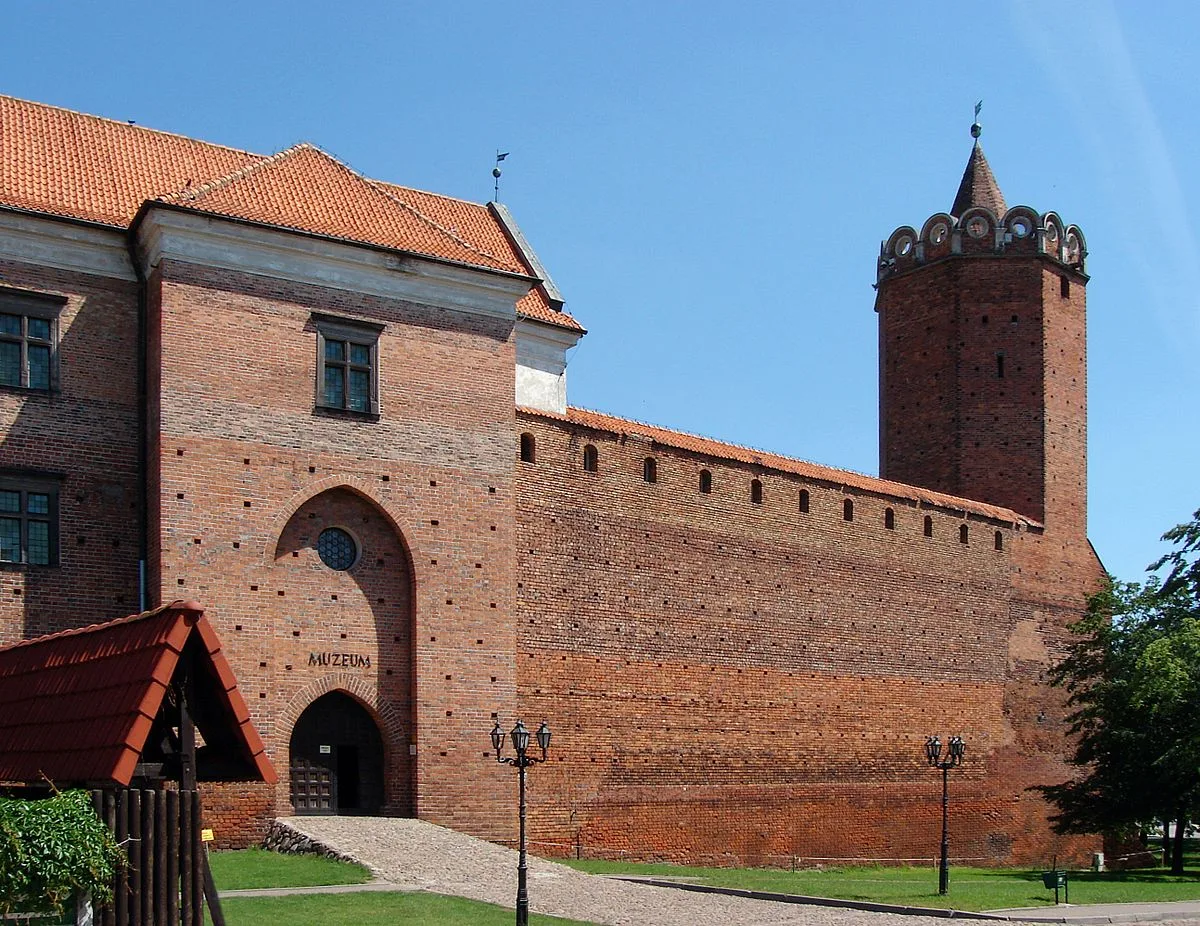
The Lodz region is not associated with the Swedish Deluge as strongly as Częstochowa or Warsaw, yet it was through exactly here, through the three most important centres of today's voivodeship, that the troops of Charles X Gustav passed between 1655 and 1660. The castle in Łęczyca burned down, Piotrków was seized twice, and collections were carried off from Sieradz and Piotrków that are still held in Swedish libraries today.
Why did the Swedes march through exactly here
In the summer of 1655, the Swedish army entered the Polish-Lithuanian Commonwealth from the direction of Pomerania and Greater Poland, taking advantage of the capitulation of the Polish nobility at Ujście. The route from Poznań through Łęczyca, Piotrków and further south was one of the main roads linking the west of the country with Lesser Poland, so the towns of the region found themselves almost automatically on the army's march route, before any organised resistance had even been mounted.
The castle in Łęczyca - seized and burned
The castle in Łęczyca, built in the 14th century by Casimir the Great, had survived earlier Teutonic invasions and numerous wars, but it did not come through the Swedish Deluge unscathed. Swedish troops occupied the town and the stronghold, and fighting together with deliberate arson badly damaged the building. The castle never regained its former glory - the following centuries brought further decay, until a partial reconstruction in the 20th century, when a museum was set up inside it.
Piotrków seized twice
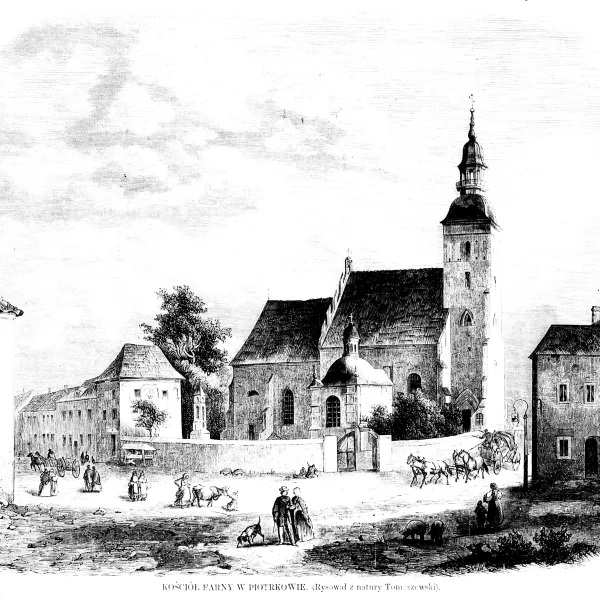
Piotrków, then the seat of the Crown Tribunal and one of the more important towns of the Crown, was occupied twice by the Swedes - in 1655 and again in 1657. The second time, the town suffered noticeably more: burgher townhouses and church buildings were plundered, and part of the local archives were carried off. Today fragments of these collections, seized by Charles Gustav's army from Piotrków, are held in the university library in Uppsala - one of many examples of so-called "Swedish loot", still formally belonging to Sweden despite efforts by Polish diplomacy to secure their return.
Despite the damage, the Old Town of Piotrków has largely kept its medieval urban layout, and a walk around today's Plac Zamkowy (Castle Square) lets you picture what the heart of the town looked like at a time when one army after another was passing through it.
Sieradz and the lost archive
A similar fate befell Sieradz, one of the oldest strongholds in the region, already mentioned in the mid-12th century. The town, repeatedly destroyed before by Teutonic invasions, again found itself on the route of the Swedish army during the Deluge, which occupied it and plundered the local collections. As in the case of Piotrków, some of the documents carried off at the time ended up in Sweden and never returned to Poland. Today, all that remains of the former Sieradz castle, finally dismantled in the 18th century, is a hill, on which an open-air museum space has been set up.
What remains of those events today
The Swedish Deluge did not leave the Lodz region with spectacular ruins on the scale of Jasna Góra, but its traces can be seen in the fate of the three most important castles in this part of the country. The stronghold in Łęczyca, despite the 17th-century destruction, survived as a landmark and today houses a museum with an exhibition devoted, among other things, to the region's history and the legend of the devil Boruta, with which the castle is associated just as strongly as with the Swedish wars. Piotrków, despite two occupations, kept its role as the country's centre of the judiciary until the partitions, and today's seat of the Regional Museum in the former royal castle brings this history closer to visitors.
Practically: how to visit the Swedish Deluge route
All three towns - Łęczyca, Piotrków Trybunalski and Sieradz - lie within an hour to an hour and a half's drive of Łódź and can be visited as a one-day trip, though it is more comfortable to spread the sightseeing over two days. The castle in Łęczyca and the Regional Museum in Piotrków are open daily except Mondays, with admission tickets usually in the range of a dozen or so to several dozen zloty; it is however worth checking prices and opening hours before setting off, on the websites of the individual institutions. The Cultural Park on Castle Hill in Sieradz can be visited independently, with no charge for entry to the grounds themselves.
Be the first! Add a comment.
You need to log in to add a comment.
Log in