
Before Łódź became associated mainly with the textile industry and the great fortunes of its factory owners, it was also one of the more important centres of Jewish culture in Poland - including theatre performed in Yiddish. The history of the Jewish stage in the city reaches far back before the interwar period, although it was that period that brought it its greatest flourishing.
First performances as early as 1868
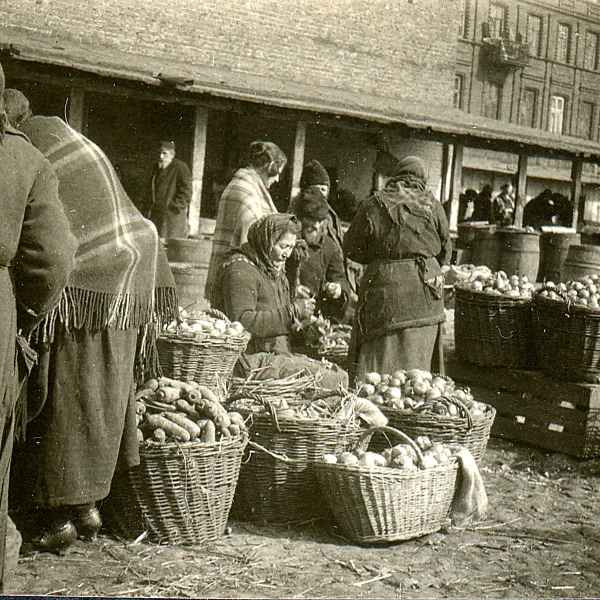
The first documented performances by Jewish troupes in Łódź date back to 1868 - it was then that, in a city only just gathering pace in its industrial development, travelling troupes performing in Yiddish began to appear, above all comedies and melodramas, aimed at the growing Jewish community that, along with the development of the Łódź industry, was flowing into the city from across the region.
The golden age of Jewish theatre in Poland
The interwar period is a time that theatre historians call the golden age of Jewish theatre in Poland - an era in which Yiddish language stages developed in parallel in several large cities: Warsaw, Vilnius, Kraków and Łódź itself, together creating a culture whose reach extended far beyond the country's borders. The repertoire covered the whole spectrum - from the classics of Jewish drama and light musical comedy to ambitious, experimental theatrical avant-garde, inspired by the latest European directions in stage art.
The Habima Dramatic Studio
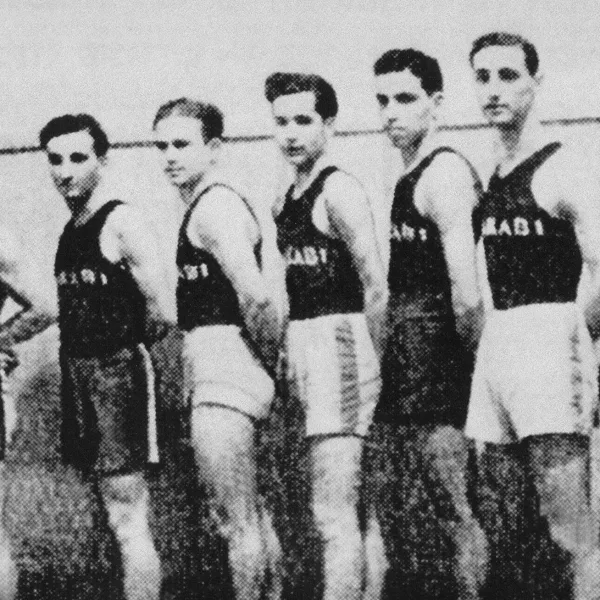
One of the most important Łódź stages of this period was the Habima Dramatic Studio, where in 1928 Yitzhak Katzenelson began working - a poet, playwright and educator, one of the most important figures of pre-war Jewish culture in the city. Habima in Łódź drew on the name and artistic ambitions of the famous Hebrew theatre, which had its roots in tsarist Russia and later became one of the foundations of theatre in Israel - the Łódź stage was a local, less well known, but genuine offshoot of the same wider movement to revive Hebrew and Yiddish theatre in Central Europe.
What remains of that stage
The war and the Holocaust brought an end to the activity of all the pre-war Jewish stages in Łódź - most of the actors, directors and audiences perished in the Łódź Ghetto or in the extermination camps. After the war, during the brief period of rebuilding the Jewish community of Łódź, theatrical activity was nevertheless resumed - ensembles were formed then that gave rise to today's Jewish Theatre, which also operates partly in Łódź, though based mainly in Warsaw. It is a rare example of continuity, though heavily interrupted and marked by the Holocaust, between the pre-war and contemporary Jewish culture of the city.
Where to look for that history today
No theatre building directly associated with the pre-war Jewish stages has survived in Łódź itself - most of them operated in rented halls, today rebuilt or no longer existing. The best way to learn about the context of that era is to visit the Museum of the City of Łódź, whose collections document the cultural diversity of the pre-war city, and the Reicher Synagogue, the only synagogue in Łódź to survive the war, around which the religious and partly cultural life of the city's Jews was centred.
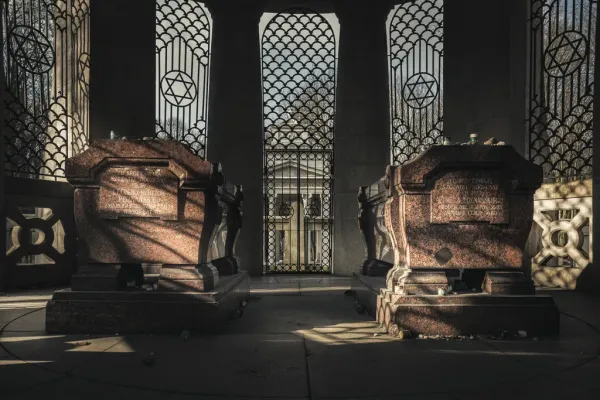
It is worth complementing this visit with a walk through the Jewish cemetery on Zagajnikowa street, where some figures connected with the city's pre-war cultural life are buried. More material on the Jewish history of Łódź can be found in the Discover Łódź section.
Be the first! Add a comment.
You need to log in to add a comment.
Log in