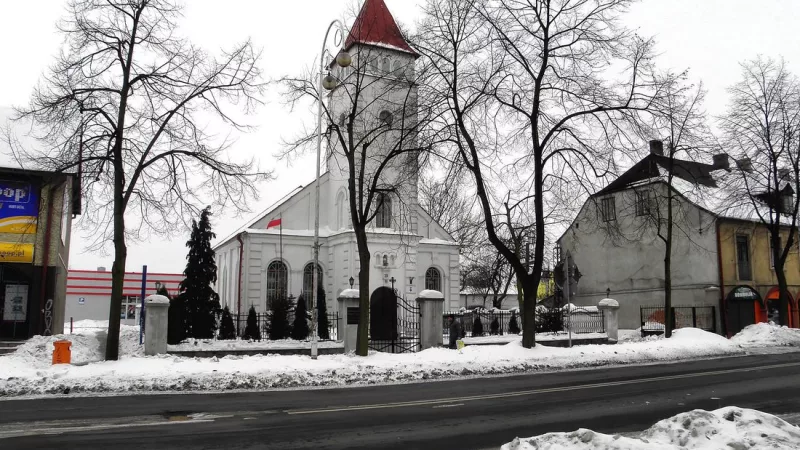
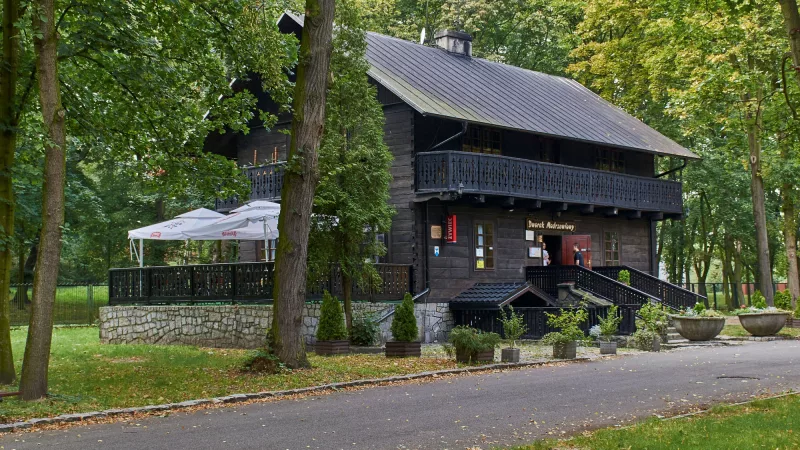
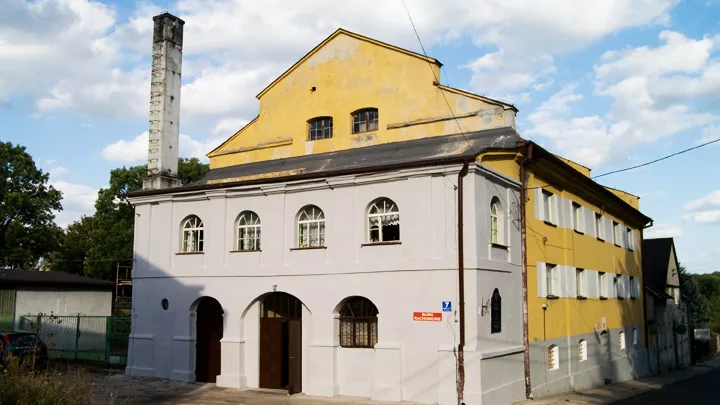
Sieradz has preserved buildings from almost every era: a Gothic basilica and an early Gothic Dominican church from the 13th century, neoclassical tenements from the turn of the 18th and 19th centuries, a wooden manor house in Swiss style, and a former neo-Romanesque Evangelical church. The architecture of Sieradz gives a cross-section of eight hundred years of building on a small area around the market square and the Warta river valley.
Which sacred buildings are the oldest?
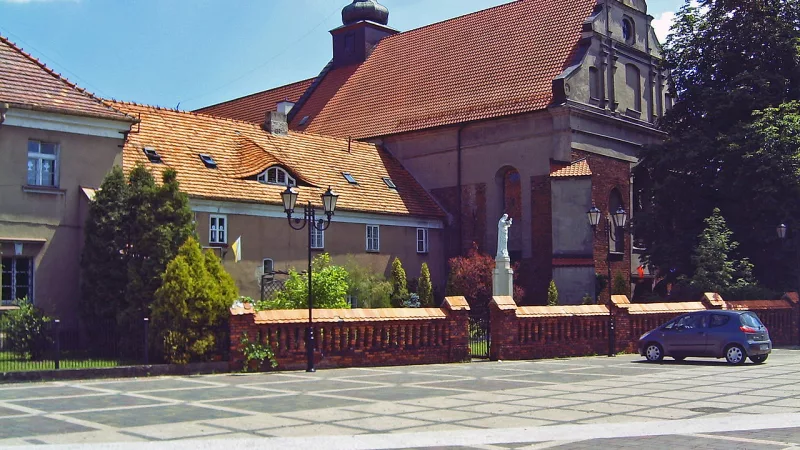
The Collegiate Basilica of All Saints on Kolegiacka 11 is a Gothic church built in 1370 on the orders of Casimir the Great, holding the title of minor basilica since 2018. Even older is the Church of St. Stanislaus in Tum near Sieradz, built between 1233 and 1245 as one of the first Dominican churches in Poland, today home to the Ursuline sisters.
Why does Sieradz have a neo-Romanesque garrison church?
The church on Kościuszki 19 was built at the end of the 19th century, between 1889 and 1897, as an Evangelical church in neo-Romanesque style with neo-Gothic elements. Only since 2001 has it served as the garrison church of the Ordinariate of the Polish Armed Forces, dedicated to Christ the Redeemer and the Most Holy Name of Mary.
What does the city's wooden architecture look like?
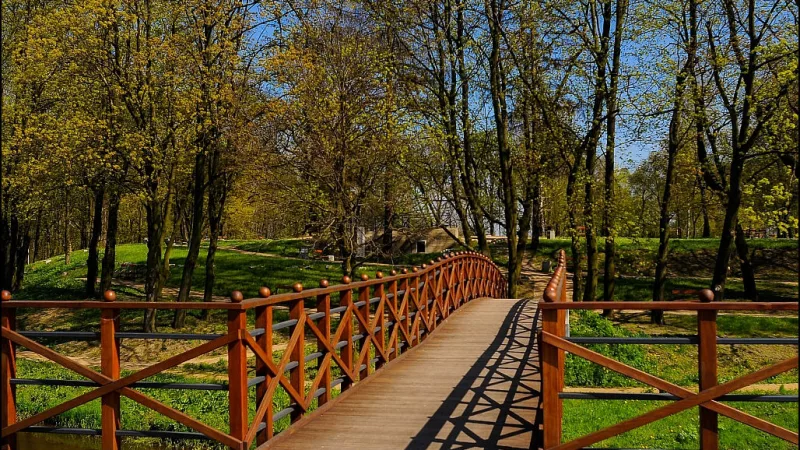
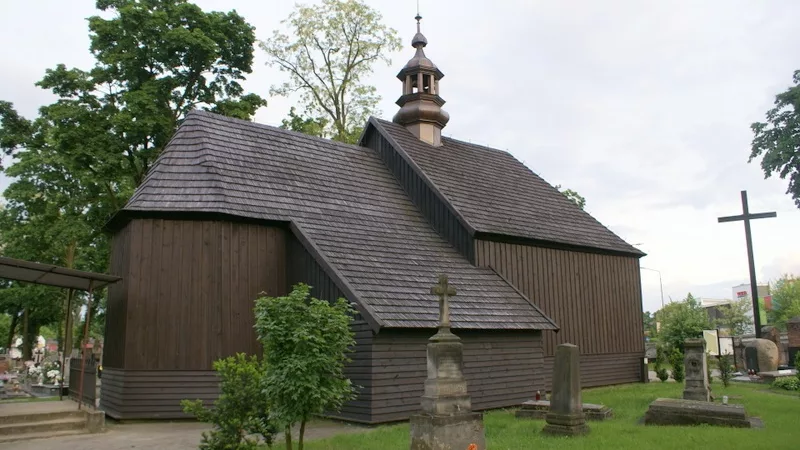
The Holy Spirit cemetery church is a timber-framed, weatherboarded little church, probably built in 1417 and moved to the parish cemetery grounds in 1853 - one of the oldest surviving sacred buildings in the city. The Dworek Modrzewiowy (Larch Manor House) in Park Staromiejski is, in turn, a wooden building from 1860 in Swiss style, moved to Sieradz from the village of Wrząca in the 1960s.
What is worth knowing about secular architecture by the market square?
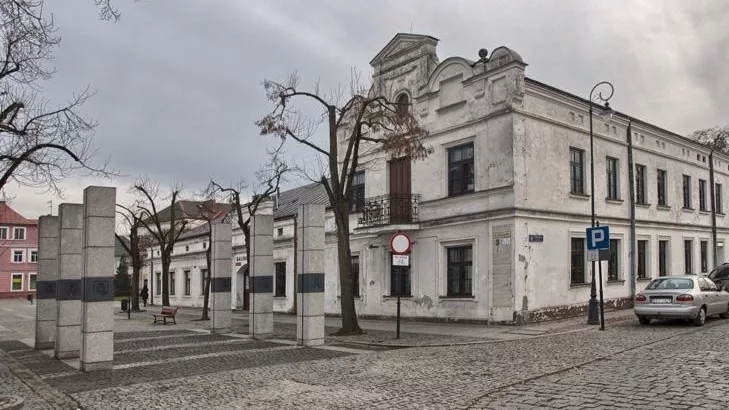
The former Zajazd Pocztowy (Post Inn) on Kościuszki Street, a 19th-century building once standing on the route used by travellers and postal deliveries, has housed a contemporary art gallery since 1989. On a rise above the Warta river stands Wzgórze Zamkowe (Castle Hill), where fragments of walls survive from the medieval castle of Casimir the Great, destroyed during the Swedish Deluge.
What is the history of the historic synagogue?
The Synagogue in Sieradz on Wodna Street is a neoclassical synagogue from 1819-1824, probably built to a design by Hilary Szpilowski. The brick building, rectangular in plan with an annex to the west, once had richly decorated interiors; today it houses offices and craft businesses, with a plaque on the facade recalling its former function.
Frequently asked questions about the architecture of Sieradz
Which sacred monument in Sieradz is the oldest?
The Church of St. Stanislaus in Tum, built between 1233 and 1245, is one of the oldest Dominican churches in Poland.
Can the Dworek Modrzewiowy be visited?
The building has been under renovation since 2024, so it is worth checking accessibility for visitors just before your visit.
Is the synagogue in Sieradz open to visitors inside?
No, the building today houses offices and private businesses, and from outside you can see its shape and a commemorative plaque.
Where can you see the remains of the castle in Sieradz?
Fragments of the castle walls and an archaeological site are located on Wzgórze Zamkowe, today a cultural park with a small archaeological museum.
More of the city's historic sites from a different angle are shown on the page historic sites in Sieradz, and architecture from the whole region on the page architecture in the Łódź region.

 Churches & Monasteries
Open
Closed