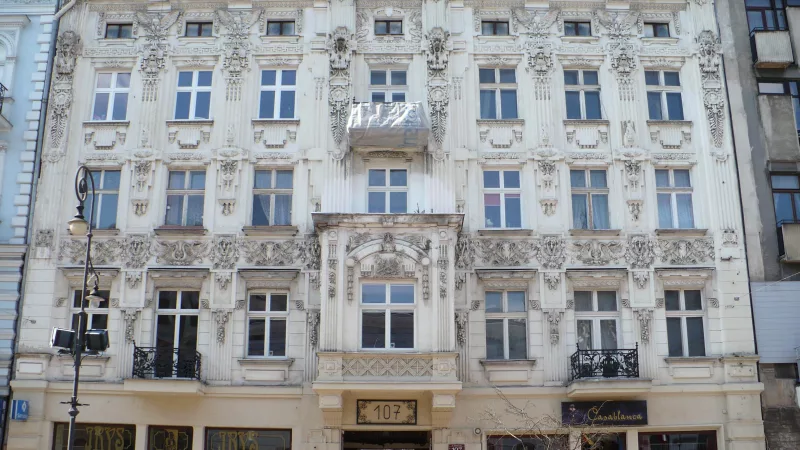
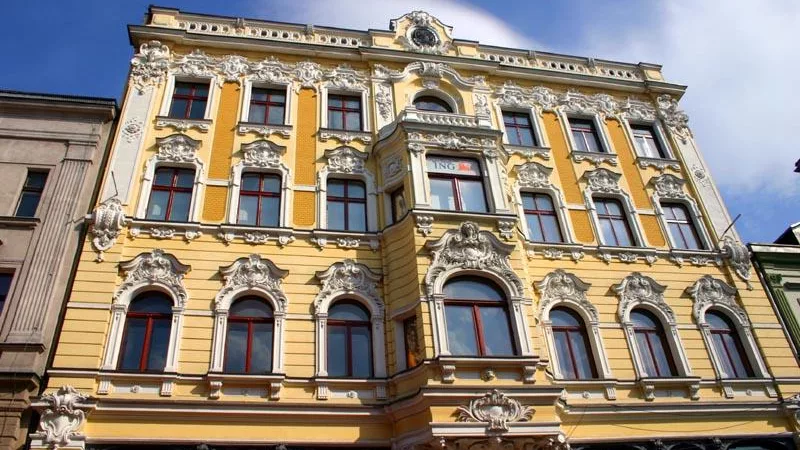
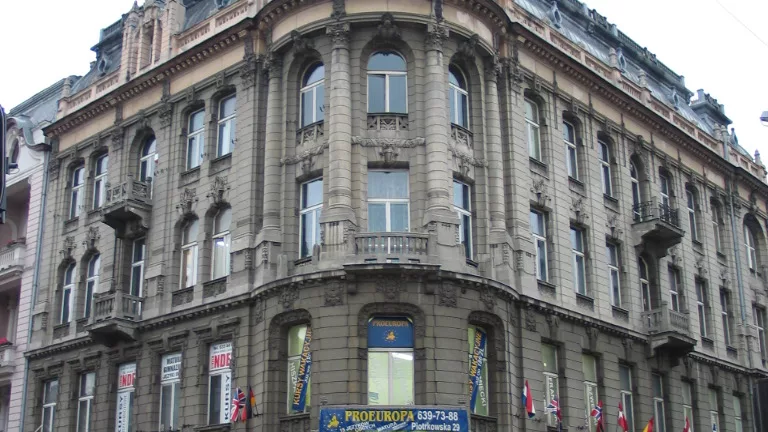
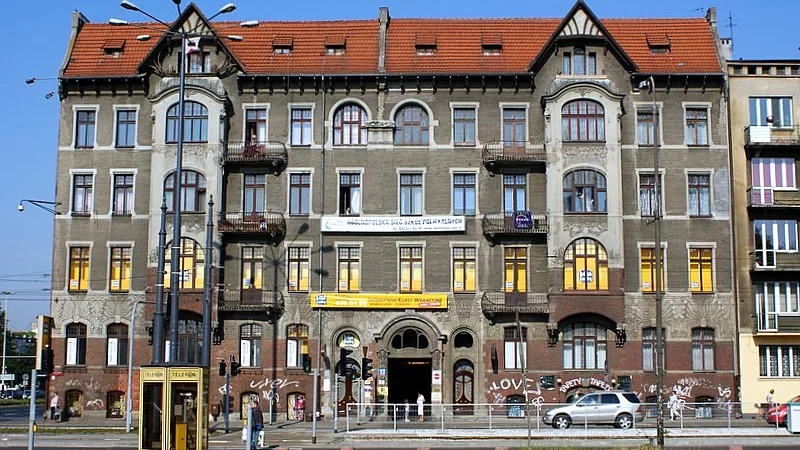
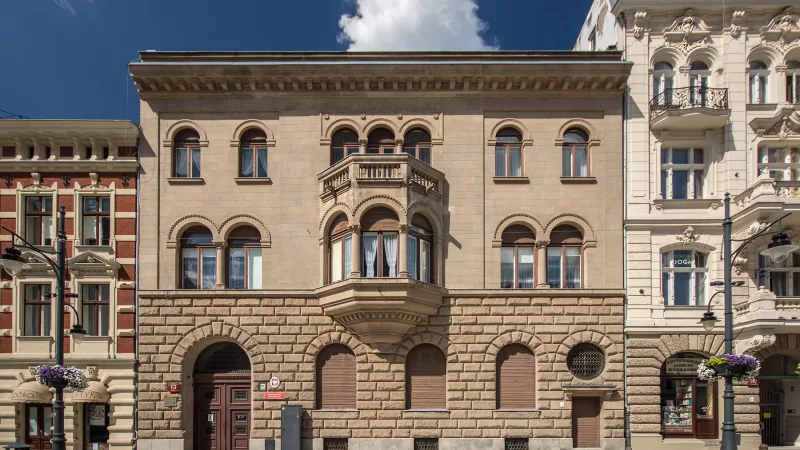
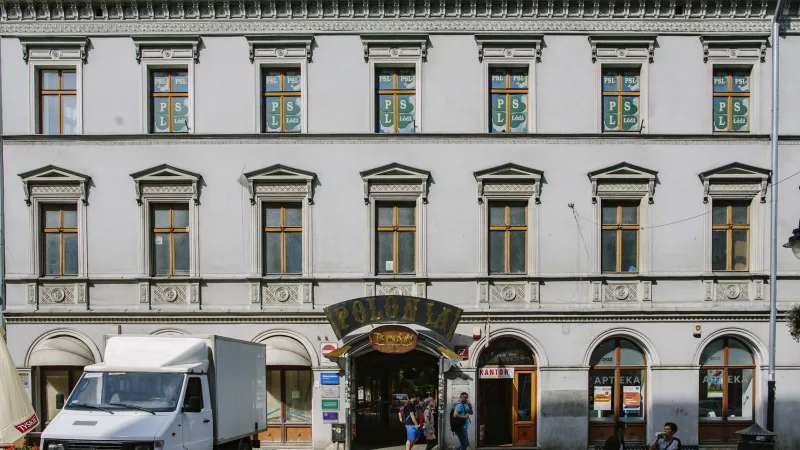
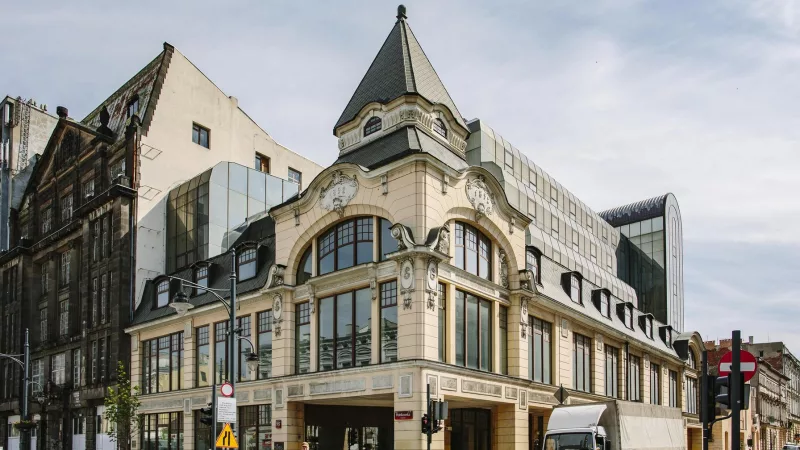
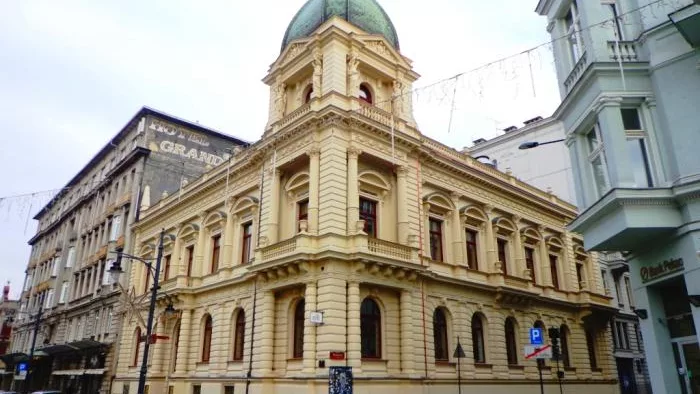
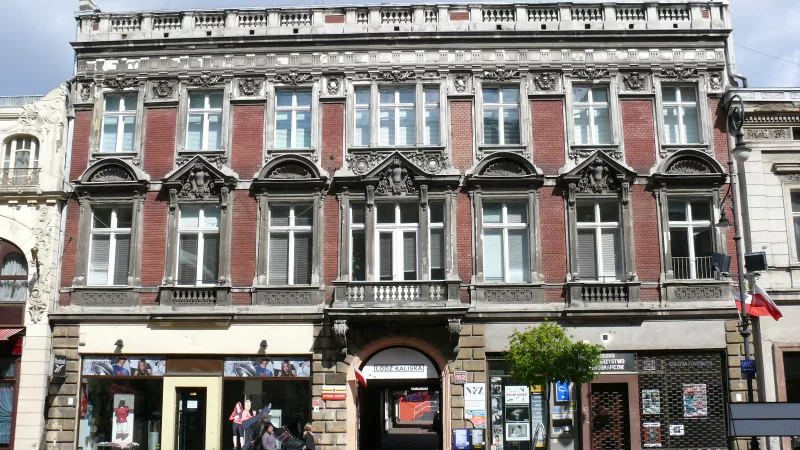
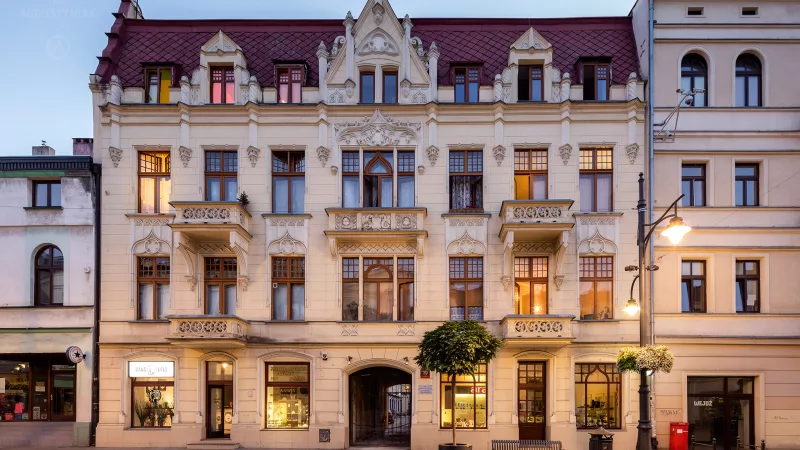
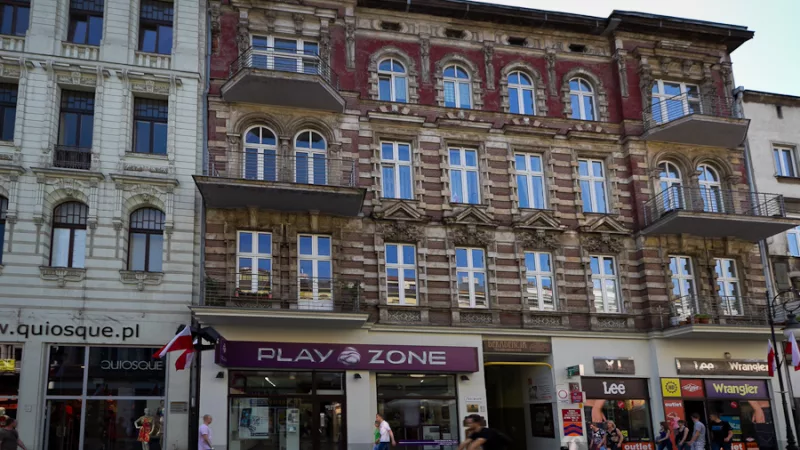
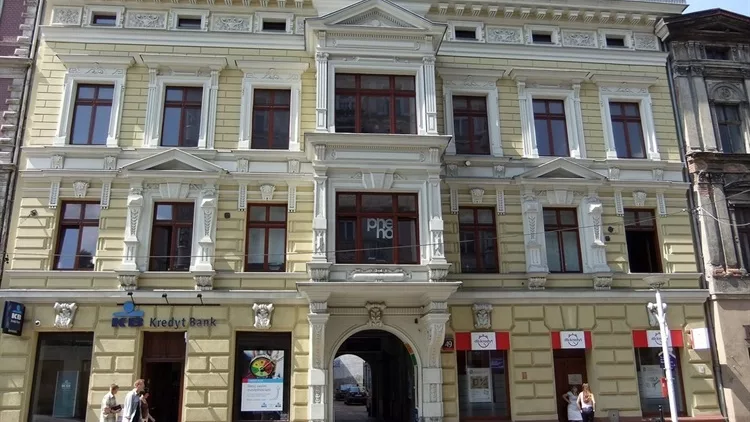
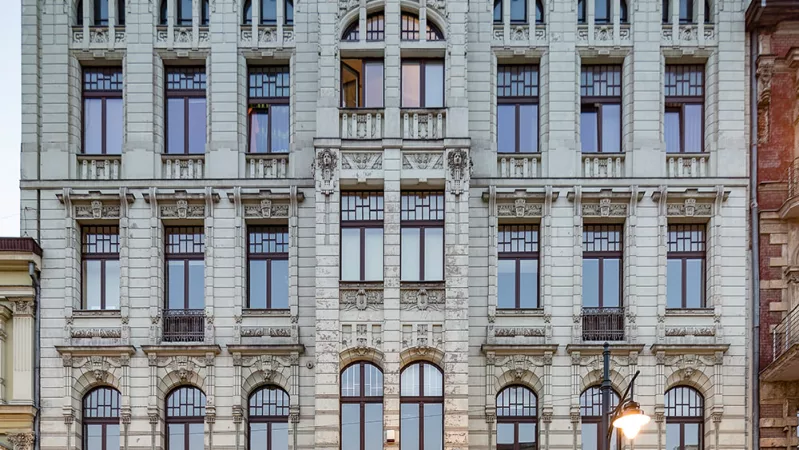
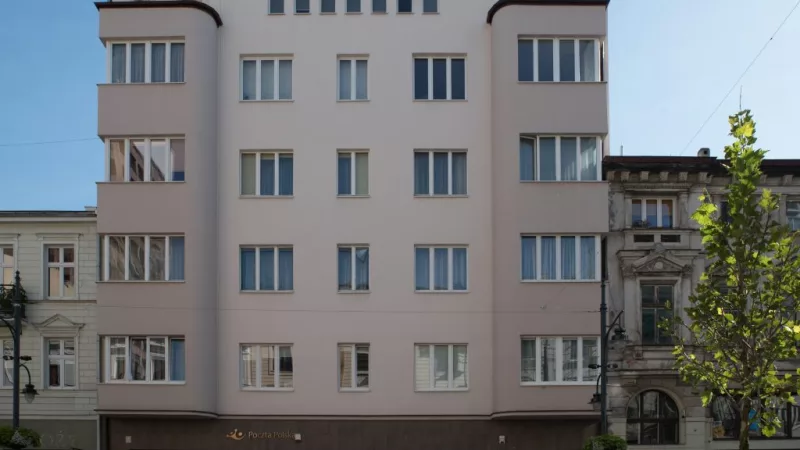
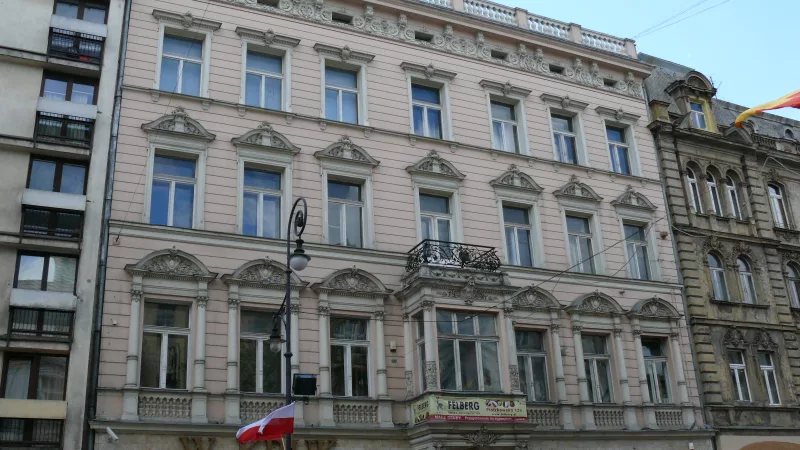
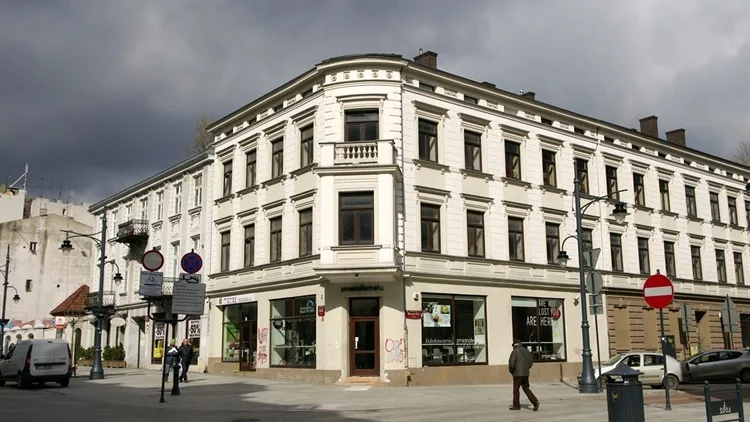
The historic sites of Śródmieście are in practice the historic sites of Piotrkowska and the nearest side streets - this is where the city's densest concentration of tenements and factory owners' palaces from the turn of the 19th and 20th centuries stands. Below is a route along the street, from Plac Wolności towards Plac Niepodległości, with addresses to find along the way.
Start of the route: Plac Wolności and the first tenements
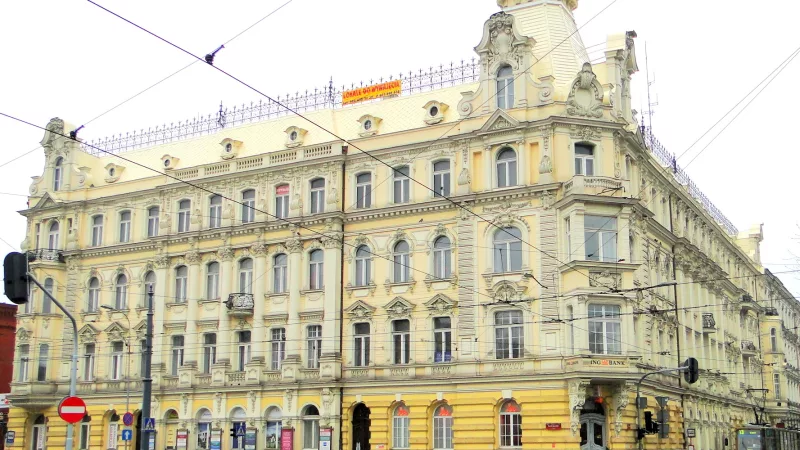
Close to Plac Wolności stands the Kamienica Abrahama Prussaka (Abraham Prussak Tenement) at number 5, with an eclectic facade combining Renaissance, Baroque and Empire styles. A few numbers further, at 29, rises the Kamienica Wilhelma Landaua (Wilhelm Landau Tenement), a former bank building with a rotating neon sign from 1962 - the first of its kind in Łódź. The Kamienica Józefa Czapiewskiego (Józef Czapiewski Tenement) at number 39 is Neo-Baroque, built after a fire destroyed an earlier wooden house.
Art Nouveau and the first synagogue courtyards
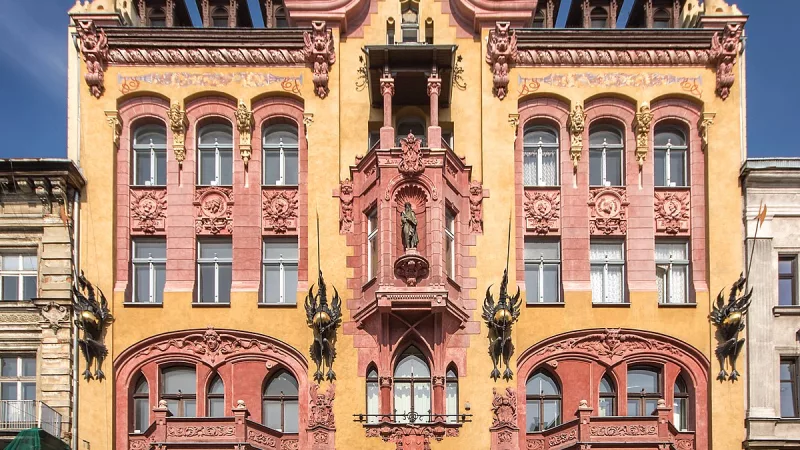
The Kamienica Oszera Kohna (Oszer Kohn Tenement) at number 43 is regarded as Łódź's first Art Nouveau tenement - a former synagogue once stood in its courtyard. The Dom Rafała Sachsa (Rafał Sachs House) at 44 belonged to a family that produced paints, glues and matches, and the Dawny szynk Bartosza Wencla (Former Bartosz Wencel Tavern) at 45 stands on the site of the first tavern of the Łódka weaving settlement from 1827. At number 46 is the Dom Fryderyka Müllera (Fryderyk Müller House), which in 1897 hosted Władysław Reymont as he gathered material for his novel about Łódź.
The Poznański tenement and the Rubinstein monument
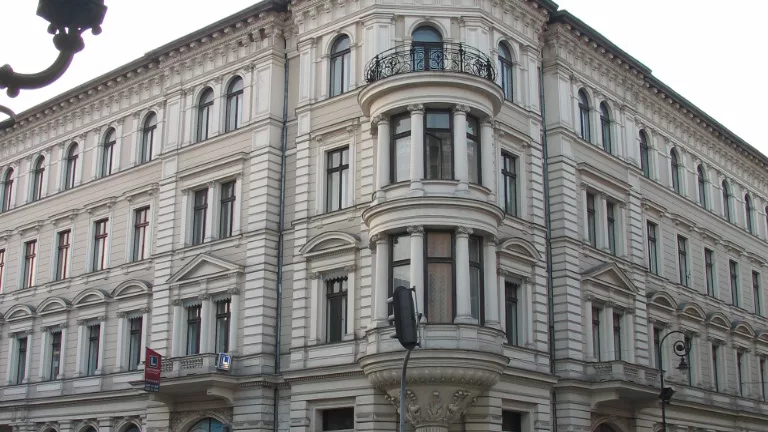
The Kamienica Izraela Poznańskiego (Izrael Poznański Tenement) at number 51 was rebuilt in 1895 for the city's biggest factory owner. A few steps further, at 78, stands the Kamienica Izraela Rosenblatta (Izrael Rosenblatt Tenement), where the pianist Artur Rubinstein spent his childhood - his monument stands in front of the building, one of the more popular photo spots on the route.
Facades with a history of craft and business
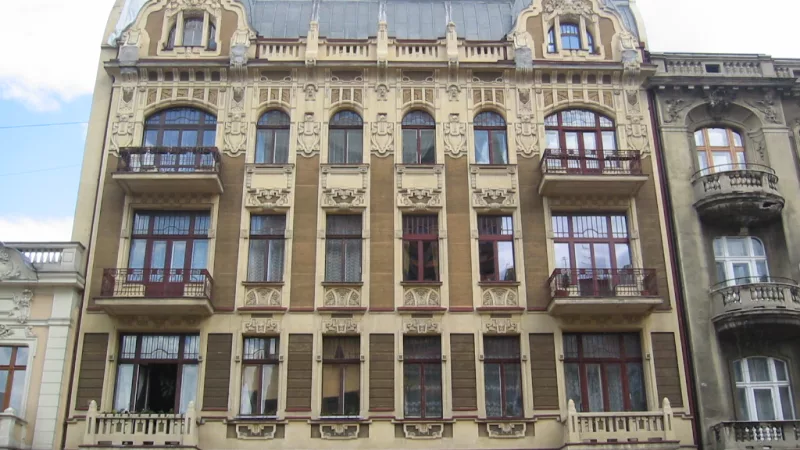
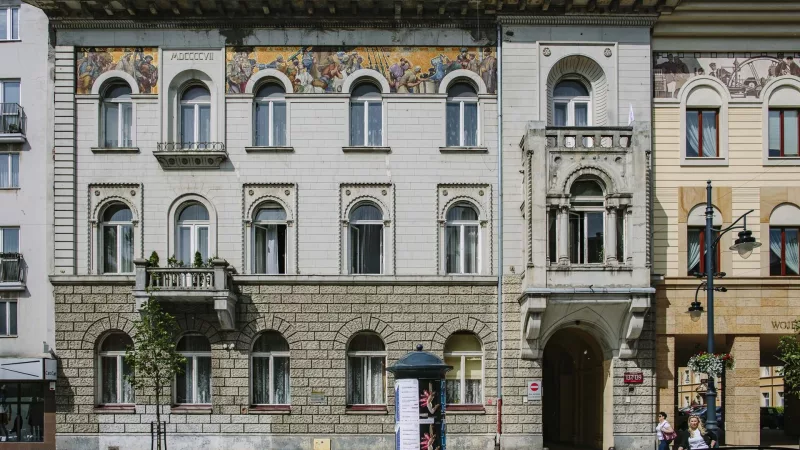
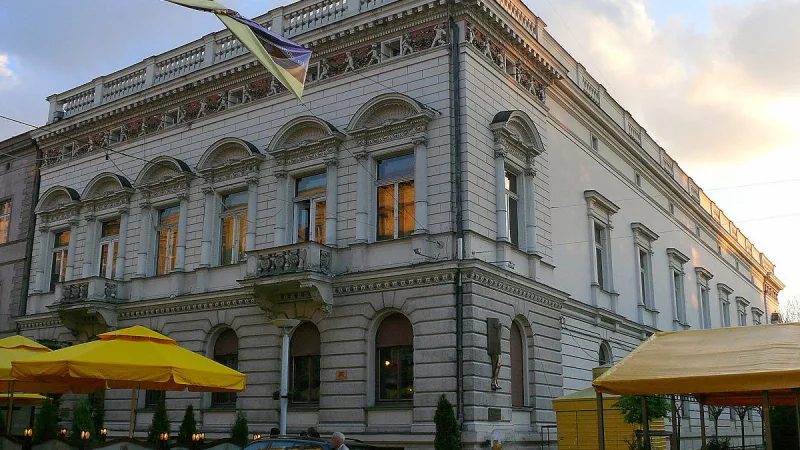
The Kamienica Franciszka Fiszera (Franciszek Fiszer Tenement) at 54, decorated with lion heads, was renovated in 2015-2016. The Kamienica Juliusza Pfeiffera (Juliusz Pfeiffer Tenement) at 71 has a mural on its wall from 2000 depicting 31 well-known residents of Łódź. The Pałac Maksymiliana Goldfedera (Maksymilian Goldfeder Palace) at 77, a former bank building, was for decades home to the legendary student club Siódemki. The Kamienica Alojzego Balle (Alojzy Balle Tenement) at 87 sits next to the popular photo spot, the Pomnik Misia Uszatka (Uszatek the Bear monument).
Side streets: Jaracza and Kościuszki
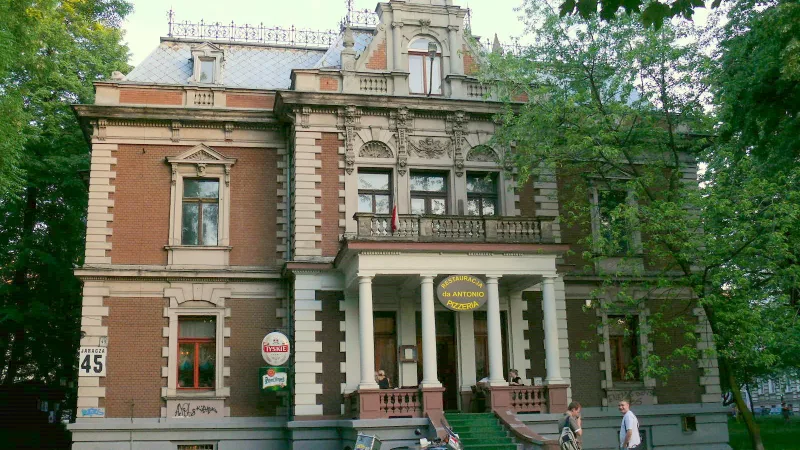
Beyond Piotrkowska itself, it's worth taking a detour to Jaracza, where at number 45 stands the Pałac Arnolda Stillera (Arnold Stiller Palace), a factory owner's mansion rebuilt many times, combining Neo-Renaissance, Gothic and Art Nouveau elements. On Kościuszki at number 4 is the Pałac Jakuba Hertza (Jakub Hertz Palace), a residence given by Izrael Poznański to his daughter, today the rectorate of a medical university.
Good to know: how to walk the Śródmieście historic route
The whole route lies within a few hundred metres along Piotrkowska, so you can walk it in two to three hours, depending on how many stops you want to make. The facades are best viewed in afternoon light. Parking in this part of Śródmieście is paid within the city-centre zone - it's easier to leave the car on the edge and walk in.
Frequently asked questions about the historic sites of Śródmieście in Łódź
How long does it take to see the historic sites of Piotrkowska?
A walk with stops at the most important tenements alone takes two to three hours, without going inside.
Are the interiors of the Piotrkowska tenements open to visitors?
Most are still residential or office buildings, so mainly the facades are on view. The exceptions are those that today house institutions open to visitors, like museums or galleries.
Where does the Artur Rubinstein monument stand in Łódź?
At Piotrkowska 78, next to the Izrael Rosenblatt tenement, where the pianist spent his childhood.
Is visiting the historic sites of Śródmieście free?
Yes, walking the route and viewing the facades costs nothing.
See also
More on the architecture of the whole of Łódź is on the attractions in Łódź page and in the historic sites in the Łódź Voivodeship category. See also the separate page on tenements of Łódź and on the architecture of the city, and if you're looking for museums in former palaces - culture in Łódź.

 Historic Sites