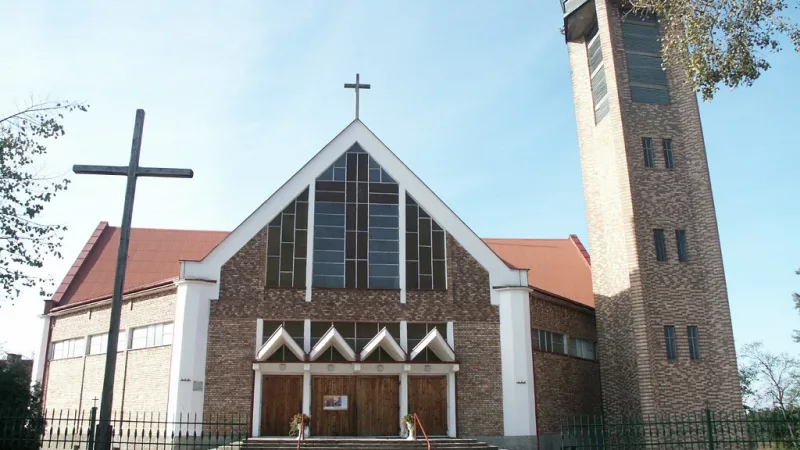
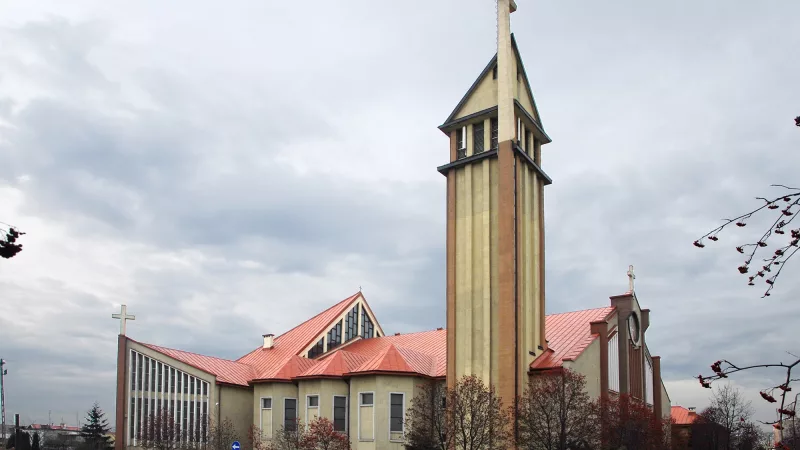
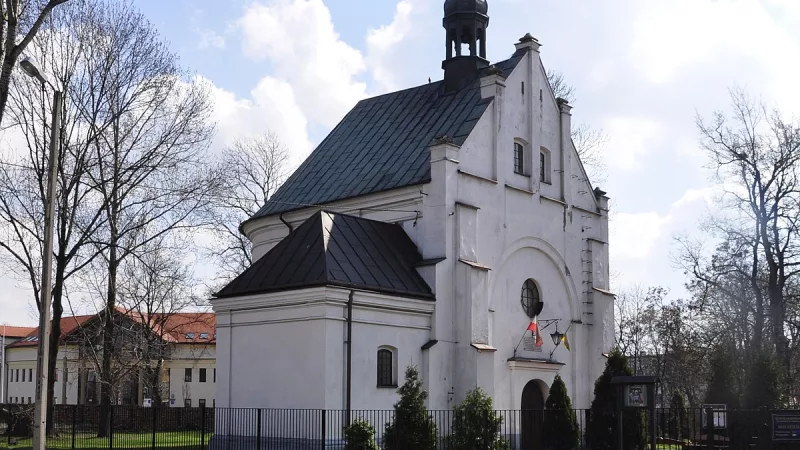
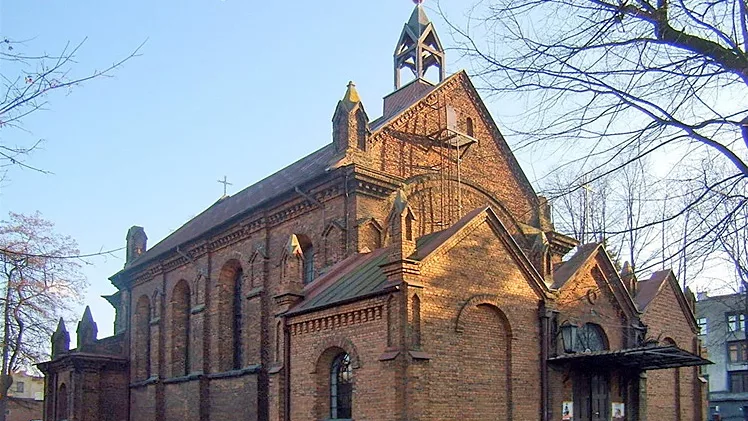
Churches and monasteries in the Łódź region are not just places of worship, they are also the oldest monuments in the area: a Romanesque basilica nine centuries old in Tum, a fortified Cistercian abbey in Sulejów, and Orthodox churches with iconostases from St. Petersburg in Łódź. Below are specific sites with addresses and what you will see there, from the regional capital to Piotrków Trybunalski, Łowicz and Pabianice.
Which churches in the Łódź region are worth seeing first?
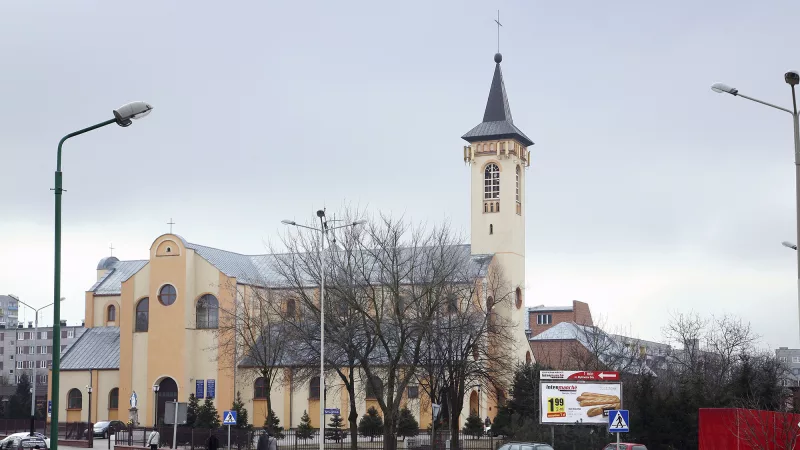
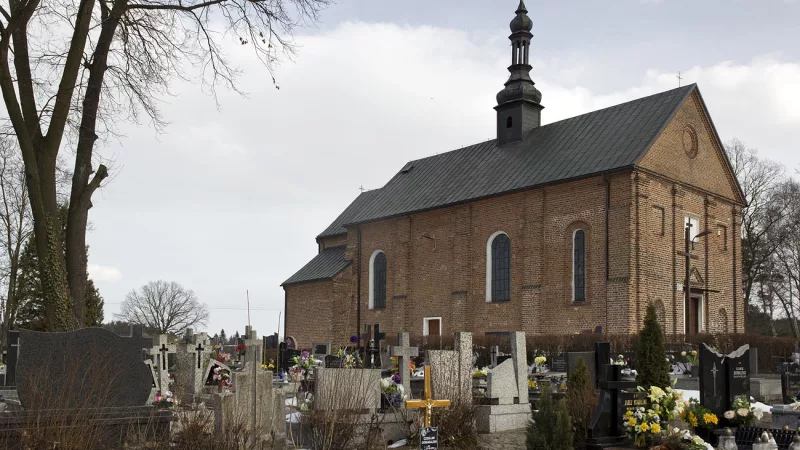
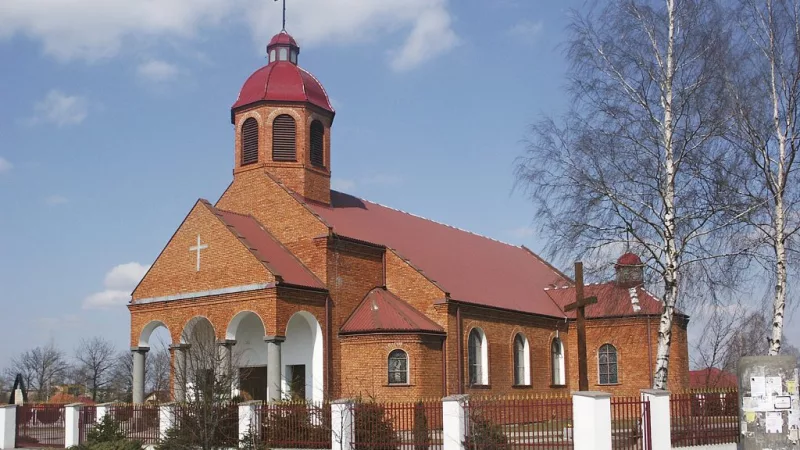
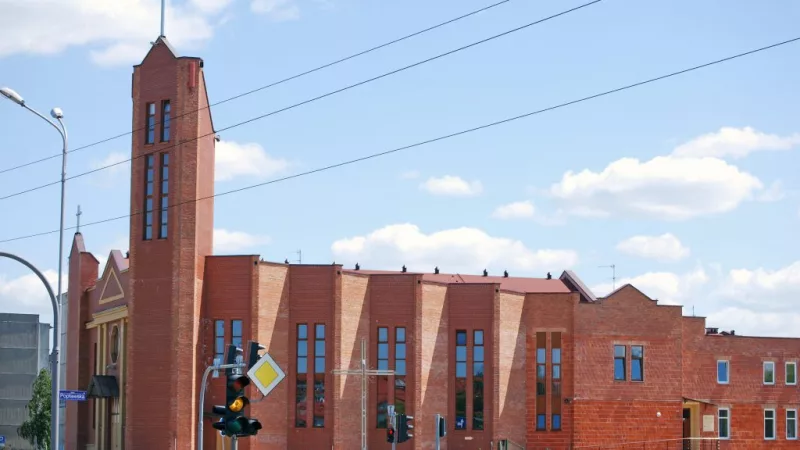
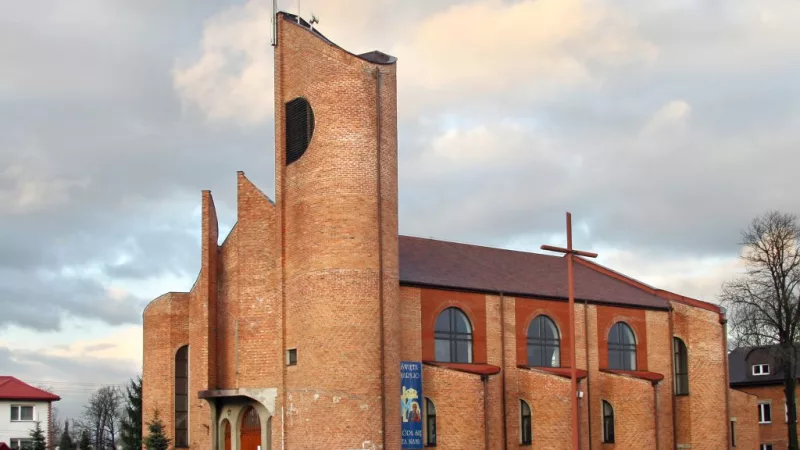
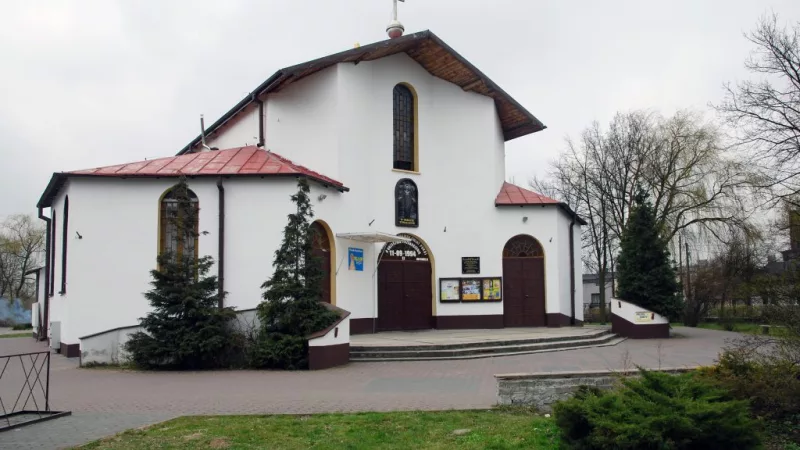
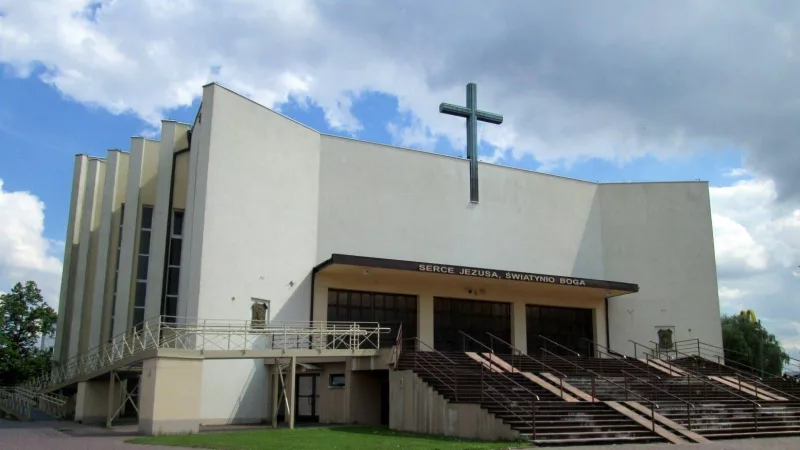
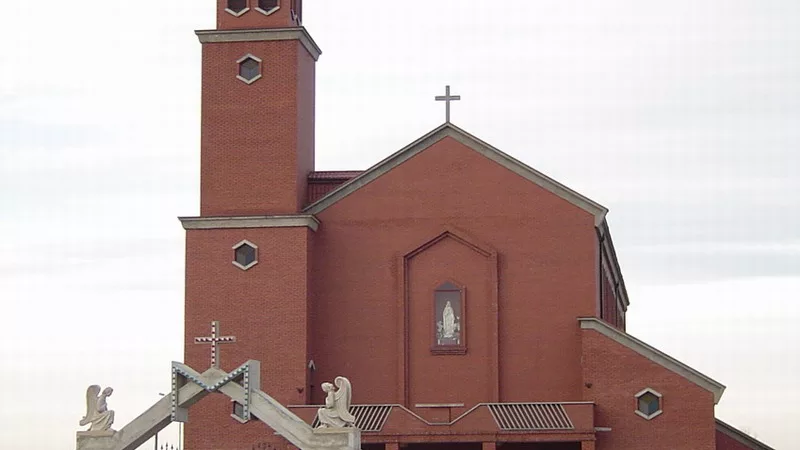
Łódź has the largest number of churches and the richest sacred architecture - a full overview of the city's churches is on the page about churches and monasteries in Łódź. The wider region has its own important addresses too: the Romanesque collegiate church in Tum, the Cistercian abbey in Sulejów, and the cathedral in Łowicz with the crypts of Poland's primates.
Which churches in Łódź are worth seeing first?
The symbol of the city is the Archcathedral Basilica of St. Stanislaus Kostka - a neo-Gothic church with a tower over a hundred meters tall, built between 1901 and 1912, the tallest building in Łódź and the seat of the city's bishops since 1920. Close to the center stands the Church of the Descent of the Holy Spirit (Kościół Zeslania Ducha Świętego) at Piotrkowska 2, a Neoclassical church from 1828 recognizable by its orange dome, originally built for the Protestant community. Also worth seeing is the Church of the Exaltation of the Holy Cross (Kościół Podwyzszenia Świętego Krzyza), whose main altar and 31-stop organ were funded by the industrialist Karol Scheibler.
Where in Łódź can you see Orthodox churches?
As a city of many faiths, Łódź has several active Orthodox churches. The Cathedral of St. Alexander Nevsky (Sobor sw. Aleksandra Newskiego) in the Bałuty district, built in 1880-1884, houses an iconostasis brought from St. Petersburg, and since 2022 has been undergoing renovation that is uncovering 19th-century wall paintings. The Church of St. Olga (Cerkiew sw. Olgi), next to the former Orthodox orphanage, has a single golden onion dome. The Church of the Dormition of the Most Holy Mother of God (Cerkiew Zasniecia Najswietszej Maryi Panny) at the Orthodox cemetery in the Doły district is a cemetery church from 1904, one of four Russian Orthodox churches in Łódź preserved intact from before 1914.
What historic churches and monasteries are there in the Łódź region?
The oldest sacred monument in the region is the Collegiate Church of the Virgin Mary and St. Alexius (Archikolegiata NMP i sw. Aleksego) in Tum near Łęczyca - a Romanesque basilica with two towers, consecrated in 1161, one of the most important examples of Romanesque architecture in Poland. Similarly old is the Church of St. Giles in Inowłódz (Kościół sw. Idziego), a stone Romanesque building from 1082 that once also served a defensive role and today is open mainly in summer. On the Pilica River, in Sulejów, stands the Cistercian Abbey from the 12th century: one of the best-preserved Cistercian complexes in Poland, with six defensive towers and the ruined abbot's palace on an escarpment.
In Piotrków Trybunalski, the former seat of the Crown Tribunal, churches connected to the court's sessions have survived: the Jesuit church with the painting of Our Lady of the Tribunal, patroness of Polish judges and deputies, and the Parish Church of St. James the Apostle (Kościół farny sw. Jakuba Apostola) with its 55-meter tower, where deputies have had to attend morning mass before sessions since 1578. In Łowicz, once the seat of Poland's primates, stands the Baroque cathedral by the Old Market Square, whose crypts hold the remains of twelve primates.
Which sanctuaries and pilgrimage sites are worth knowing?
The Sanctuary of St. Anthony of Padua in Łagiewniki is a Baroque Franciscan church, built over more than twenty years from 1701, a double sanctuary of St. Anthony and Blessed Rafal Chylinski, surrounded by the Łagiewniki forest. The Sanctuary of Our Lady of the Holy Family in Poswietne, also known as the church in Studzianna, has drawn pilgrims for centuries to its crowned image of the Holy Family. In Wieluń, the Collegiate Church of Corpus Christi by the market square holds a 17th-century image of Our Lady of Consolation crowned in 1971, while in Zduńska Wola the Basilica of the Assumption of the Virgin Mary is a sanctuary linked to St. Maximilian Kolbe, who was baptized there in 1894.
Where can you see monasteries with roots in the Middle Ages?
The Franciscan Monastery in Radomsko was founded in 1297 by King Wladyslaw Lokietek, and in 1384 the parliament that elected Queen Jadwiga met here. The former Dominican monastery in Sieradz, an early-Gothic church from the 13th century, is among the oldest Dominican churches in Poland. The former Dominican monastery in Łęczyca from the 14th century was turned into a prison after the order was dissolved, operating until 2006, and today can be visited with a guide. The Bernardine Monastery in Piotrkow, a sanctuary of the crowned image of Our Lady of Piotrkow, was closed by the tsarist authorities for 58 years.
Churches and Orthodox churches tied to the history of industrial Łódź
Łódź's factory owners funded not only palaces but also houses of worship of various faiths. The Lutheran Church of St. John (Kościół luteranski sw. Jana) on Sienkiewicza street was financed by Karol Scheibler, its Neo-Romanesque red-brick structure designed by Louis Schreiber - today the church is run by Jesuits. The Scheibler Family Chapel (Kaplica Rodziny Scheiblerow) on Ogrodowa street, a neo-Gothic mausoleum from 1885-1888, ranks among the greatest works of cemetery architecture in the world and has been restored after being vandalized. The Great Synagogue in Piotrków Trybunalski, built in 1791-1793, is one of the best-preserved synagogues in Poland, today home to the State Archive.
More Łódź parishes and regional monuments worth a visit
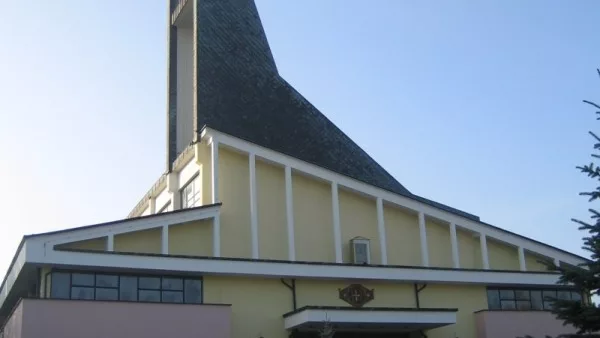
Several other Łódź churches have their own stories. The Church of the Assumption of the Virgin Mary on Koscielna street in Bałuty is the city's oldest parish, with a Gothic triptych on its altar, and nearby on Ogrodowa street stands the wooden 18th-century Church of St. Joseph (Kościół sw. Jozefa). In the Stare Polesie district, the Church of Our Lady of Victory (Kościół Matki Boskiej Zwycieskiej) on Lakowa street was built as a votive offering for the 1920 Battle of Warsaw, and on Świętego Jerzego street stands the Garrison Church of St. George - a former Orthodox church whose onion domes were removed after 1919. On Kopcinskiego street, the Church of St. Teresa is a postwar Salesian church built on a Greek cross plan. In the wider region: in Radomsko, the Collegiate Church of St. Lambert has five altars, in Uniejów the Gothic Collegiate Church of St. Florian holds the sarcophagus of Blessed Bogumil, in Łęczyca the Church and Monastery of the Immaculate Conception has Baroque wall paintings, in Wieruszów the Pauline sanctuary keeps an image that survived a fire in 1612, and in Piotrków Trybunalski the Church of All Saints serves as an Orthodox co-cathedral.
Churches with an unusual history or detail worth knowing
Beneath the Jesuit church in Rawa Mazowiecka, crypts with the mummified remains of monks have survived and can be visited, with the Garden of Dialogue and its fifteen chapels standing nearby. In Spycimierz near Uniejów, the parish and residents lay out a carpet of flower petals for Corpus Christi that can stretch up to two kilometers - the tradition has been added to the UNESCO list of intangible cultural heritage. The Collegiate Church of St. Nicholas in Wolborz, a Gothic structure from the 15th century, has wooden altars with paintings by Franciszek Smuglewicz. The Church of St. Adalbert (Kościół sw. Wojciecha) in the Chojny district of Łódź has towers modeled on St. Mary's Basilica in Krakow and is a Marian sanctuary with the image of Our Lady of Chojny. The Gothic Basilica of All Saints in Sieradz, built in 1370 with funding from Casimir the Great, has also served as a sanctuary of St. Joseph since 2023.
Churches and monasteries for a rainy day
Most places on this list are indoor spaces open regardless of the weather. The exceptions are sites open seasonally, such as the Romanesque church in Inowłódz - it is worth checking the current opening hours before visiting.
What to keep in mind when planning a church visit?
Parish churches are usually open around service times and for part of the day in between, but visiting outside of mass is best planned ahead, especially in smaller towns in the region. Some sites, such as the crypts beneath the Jesuit church in Łódź or monastery basements, are only accessible with a guide or on selected days. Admission to most churches is free, with fees mainly charged for guided tours or access to viewing towers.
Frequently asked questions about churches in the Łódź region
What are the most beautiful churches in Łódź?
Among the most often mentioned are the Archcathedral Basilica of St. Stanislaus Kostka with the tallest tower in the city, the Church of the Descent of the Holy Spirit with its distinctive orange dome, and the Cathedral of St. Alexander Nevsky with its iconostasis from St. Petersburg.
How many churches are there in Łódź?
As a multi-faith city, Łódź has several dozen Catholic churches, a few Orthodox churches, a Lutheran church and a former synagogue - the exact number depends on whether chapels and filial churches are counted too.
What is the difference between an archcathedral and an ordinary church?
The Archcathedral Basilica of St. Stanislaus Kostka has been the seat of the Archbishop of Łódź since 1920, which sets it apart from parish churches - it is the main church of the archdiocese.
Do you need to buy a ticket to visit the churches?
Most parish churches are free to enter during opening hours. Guided tours, entry to viewing towers or to crypts are sometimes paid - as is the case with some sites in Piotrków Trybunalski.
Which churches outside Łódź, in the region, are worth seeing?
The most often recommended are the Romanesque Collegiate Church in Tum, the Cistercian abbey in Sulejów and the cathedral in Łowicz with the crypts of Poland's primates - three different eras of sacred architecture not far from the city. There are also separate listings for churches in Piotrków Trybunalski and churches in Pabianice.
How many churches are there in Łowicz?
Łowicz, once the seat of Poland's primates, has several historic churches in the center, with the Baroque cathedral by the Old Market Square as the main landmark, and the Piarist church with frescoes by Michelangelo Palloni is worth adding to the route too.
Related pages: historic monuments in the Łódź region, culture in the region, cemeteries and monuments, attractions in Łódź and get to know Łódź.

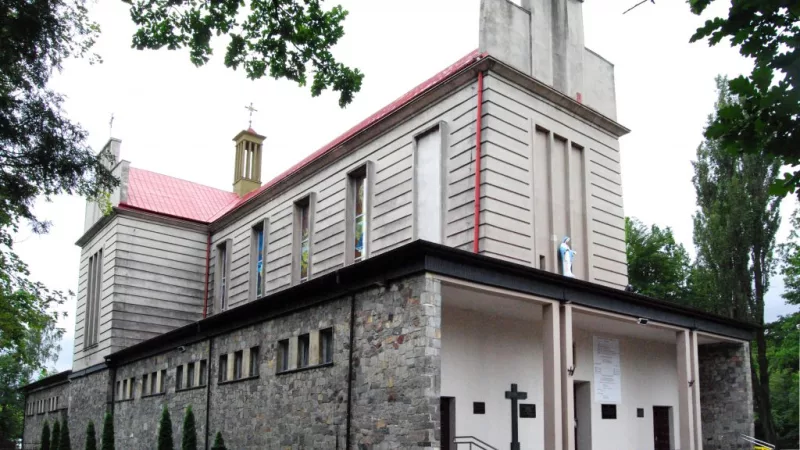 Churches & Monasteries
Closed