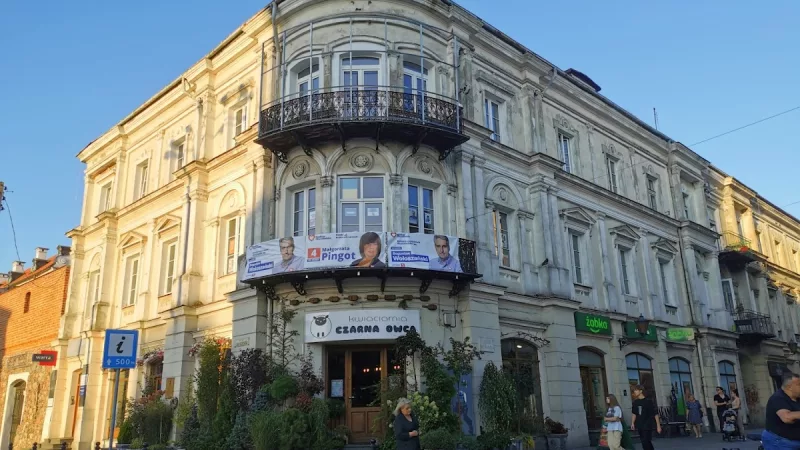
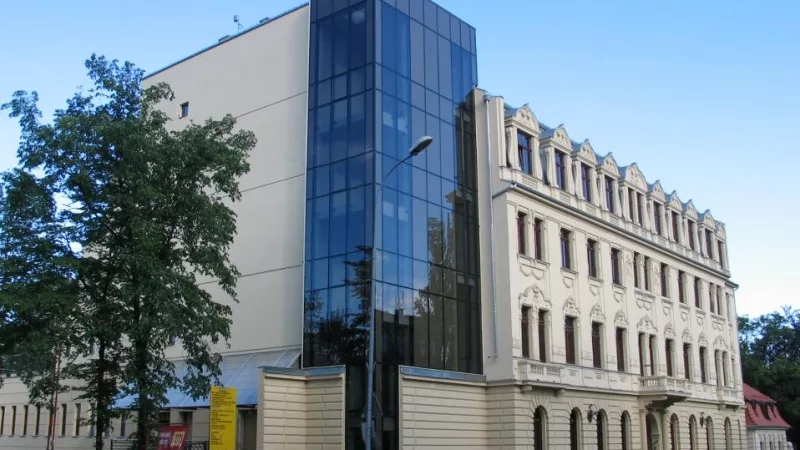
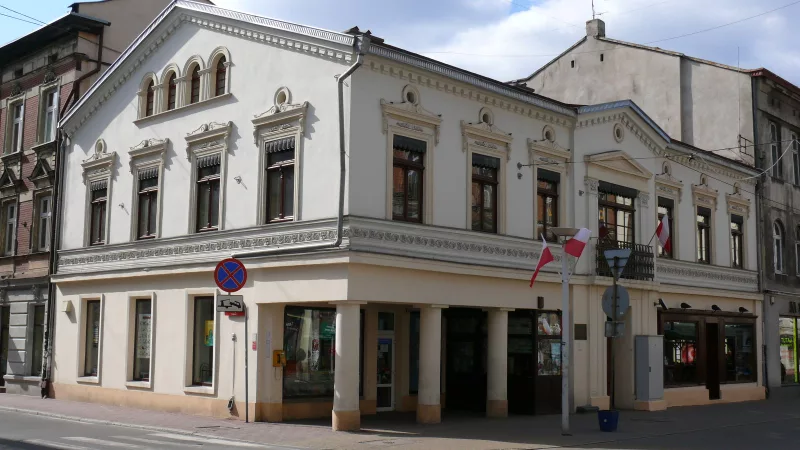
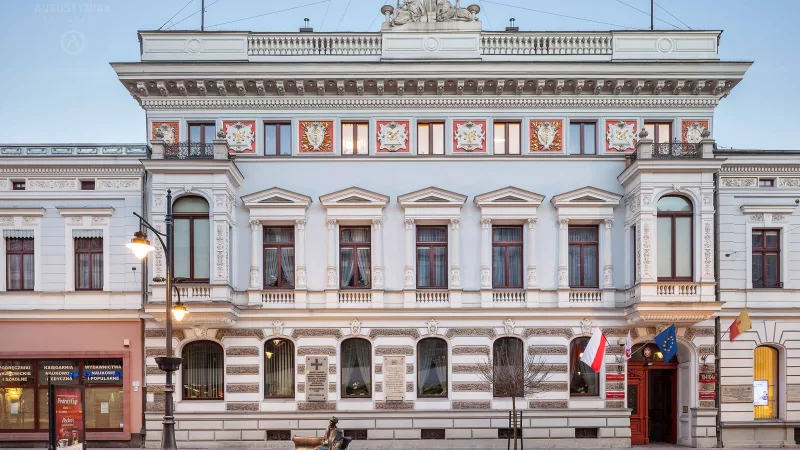
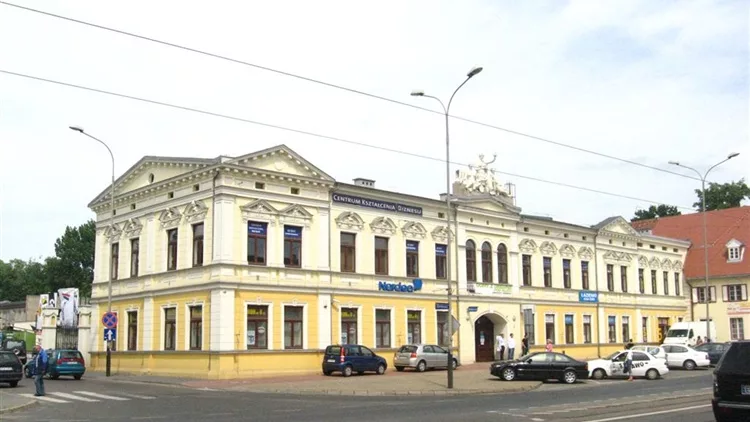
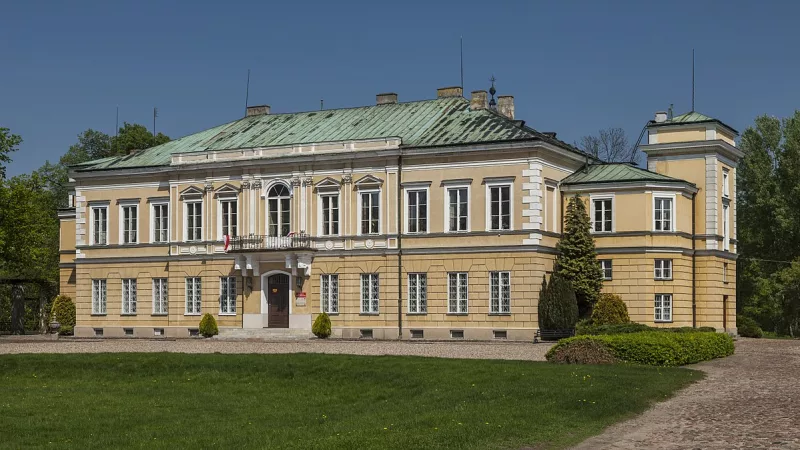
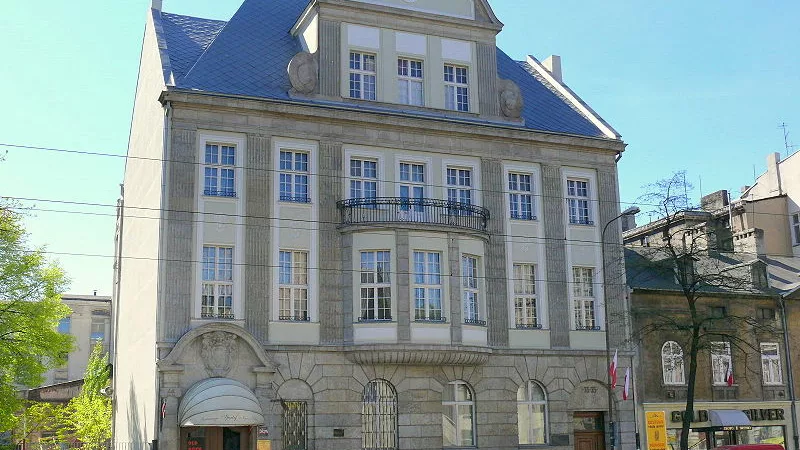
Historic sites in the Łódź region are above all traces of the city's textile-baron era: tenement houses along Piotrkowska Street, the palaces of the Poznański and Scheibler families, and churches of various denominations. In the wider region you'll also find medieval castles, Romanesque churches and old town markets. Łódź has its own, more detailed list on the historic sites in Łódź page - here we gather landmarks from across the whole voivodeship, grouped by theme.
Which historic sites in the region should you see first?
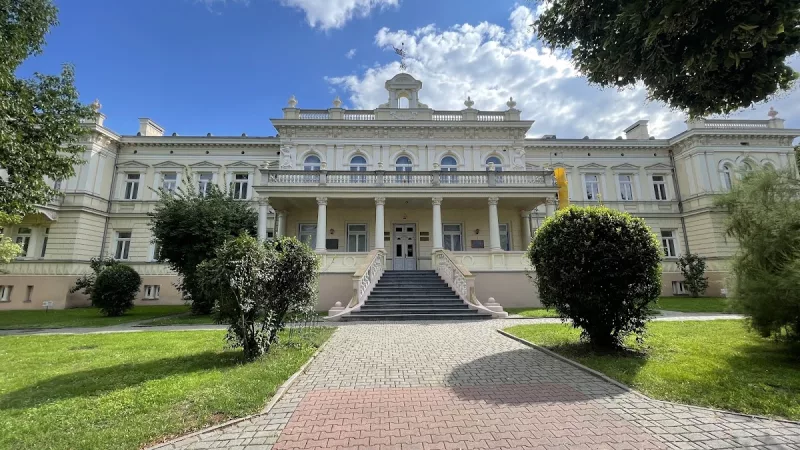
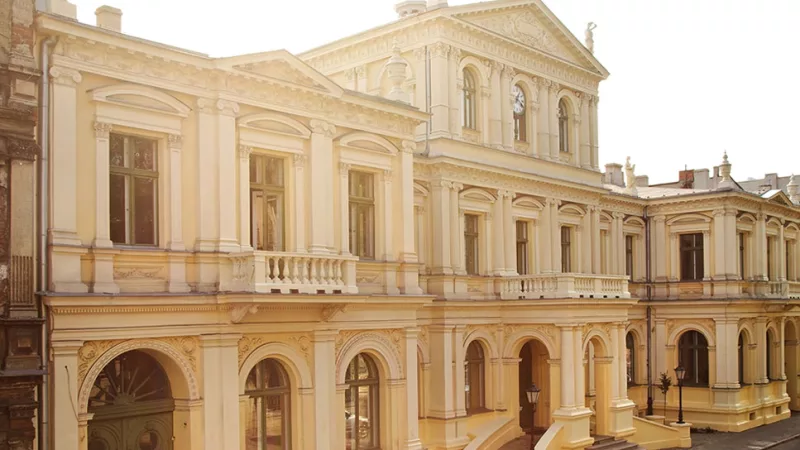
If you're staying in Łódź, start with Piotrkowska Street (Piotrkowska Street) - the city's almost 4.2-kilometre spine, lined with Historicist and Art Nouveau buildings. From there it's an easy walk to the Herbst Palace (Herbst Palace) in Księży Młyn (Priest's Mill), and to the Archcathedral Basilica of St. Stanislaus Kostka, the tallest building in the city. The full list of Łódź landmarks, including the Poznański Palace (Poznański Palace), often called the Łódź Louvre, is on the historic sites in Łódź page. Outside the city, Piotrków Trybunalski plays a similar role - the former seat of the Crown Tribunal, with its own list on the historic sites in Piotrków Trybunalski page.
Piotrkowska Street and factory-owner architecture in Łódź
The facades along Piotrkowska Street are only part of the story - the most interesting finds are often hidden in the courtyards behind the gates, like Rose Passage (Rose Passage) at number 3, covered in hand-cut mirrors by artist Joanna Rajkowska, or the Art Nouveau courtyard at 89 Piotrkowska. Beyond Piotrkowska, Łódź's factory-owner architecture spreads across several districts: the former Poznański spinning mill on the Manufaktura site now houses the ms2 art museum, and at 43 Ogrodowa Street stands the Scheibler Family Chapel (Scheibler Family Chapel), a neo-Gothic mausoleum. The Scheibler factory is showcased by the Fuzja quarter, and the most impressive factory-owner's palace houses the Museum of Cinematography on Zwycięstwa Square - the only film museum in Poland set in a factory-owner's residence. The full list of these hidden corners is on the historic sites in Łódź page.
Churches and monasteries on the historic sites list
The multicultural character of old Łódź is best seen today in the houses of worship of different faiths standing close together in the city centre. The Cathedral of St. Alexander Nevsky on Kilińskiego Street is a working Orthodox church with an iconostasis brought from Saint Petersburg. The Church of the Descent of the Holy Spirit right on Piotrkowska Street is a Neoclassical church, originally Protestant, recognisable by its orange dome. The Garrison Church of St. George in Polesie was once a garrison Orthodox church, now without its characteristic onion domes.
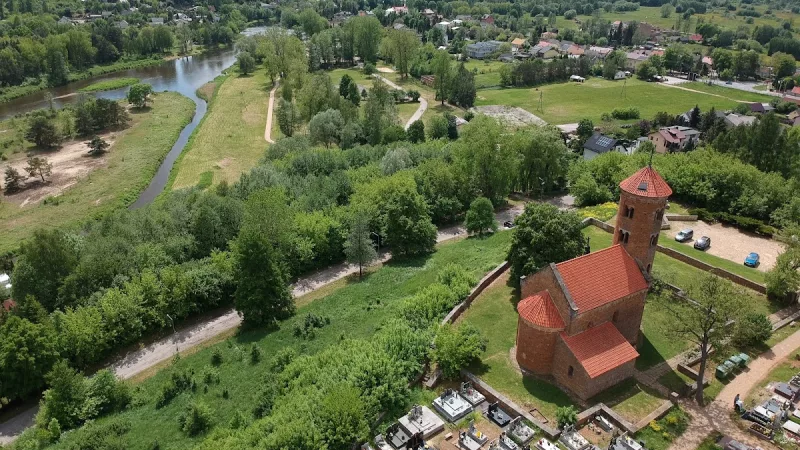
Outside Łódź, the oldest church in the region is the Archcollegiate Church of Our Lady and St. Alexius in Tum near Łęczyca - a Romanesque basilica and an important example of this style in Poland. Even older is the Church of St. Giles in Inowłódz, one of the oldest surviving churches in the country. In Sulejów stands the Cistercian Abbey (Cistercian Abbey), a fortified monastery with towers on the Pilica river, free to enter.
Castles and hillforts in the Łódź region
The region has several castles worth combining into one route outside Łódź. In Uniejów stands the Castle of the Archbishops of Gniezno, with a viewing tower above the Warta river. Near Łęczyca lies the Łęczyca Stronghold (Łęczyca Stronghold) in Tum - a reconstructed hillfort on a river island, once a seat of power for the first Piast rulers. The Royal Castle in Inowłódz on the Pilica dates back to the 14th century and has been rebuilt, now with a cultural centre in its tower.
The ruins of the Castle of the Masovian Dukes in Rawa Mazowiecka have a rebuilt tower with an archaeological exhibition. You'll also find an old town around a former castle in Piotrków Trybunalski - the Piotrków Old Town (Piotrków Old Town) around Trybunalski Market Square, once the site of historic general assemblies (sejms).
Churches and sanctuaries in the region's smaller towns
Piotrków Trybunalski has one of the densest clusters of historic churches in the region - a legacy of its time as seat of the Crown Tribunal. The Parish Church of St. James the Apostle has a 55-metre tower. Nearby stands the Church of All Saints (Church of All Saints), an Orthodox co-cathedral with an iconostasis from Saint Petersburg, and on Pijarska Street stands the Sanctuary of Our Lady of the Tribunal.
In Sieradz you'll find the Parish of All Saints - a Gothic minor basilica founded by King Casimir the Great. In Uniejów, next to the archbishops' castle, stands the Collegiate Church of St. Florian with a marble sarcophagus of Blessed Bogumił. The Collegiate Church of St. Nicholas in Wolbórz has wooden altars by Franciszek Smuglewicz, and in Poświętne stands the Sanctuary of Our Lady of the Holy Family, the main pilgrimage site in the region.
Cemeteries and memorial sites
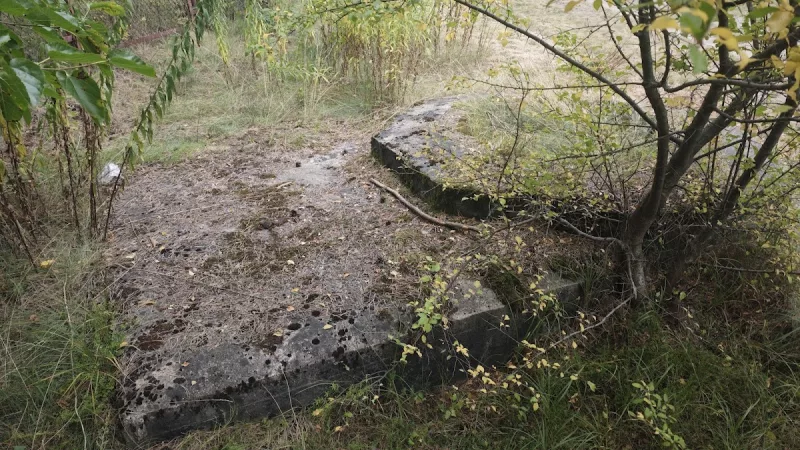
The cemeteries of Łódź are among the most important sepulchral monuments in Poland, given the city's scale and religious diversity. The Jewish Cemetery on Bracka Street is the largest Jewish necropolis in the country, with the mausoleum of Izrael Poznański; admission is free. Next to it lies the Evangelical-Augsburg Cemetery on Ogrodowa Street, with the graves of factory-owning families and the neo-Gothic Scheibler chapel. A different kind of memorial site is the Konewka Bunker (Konewka Bunker) near Inowłódz - a railway shelter visited with a guide.
Historic sites in Bełchatów and Zduńska Wola
In the south, in Bełchatów, it's worth starting at Narutowicza Square with its Balancing Eve sculpture, then heading to two historic churches: the Church of All Saints, with an original 13th-century core, and the Church of the Nativity of the Blessed Virgin Mary. The city's history is told at the Olszewski Manor (Olszewski Manor) - the full list is on the historic sites in Bełchatów page.
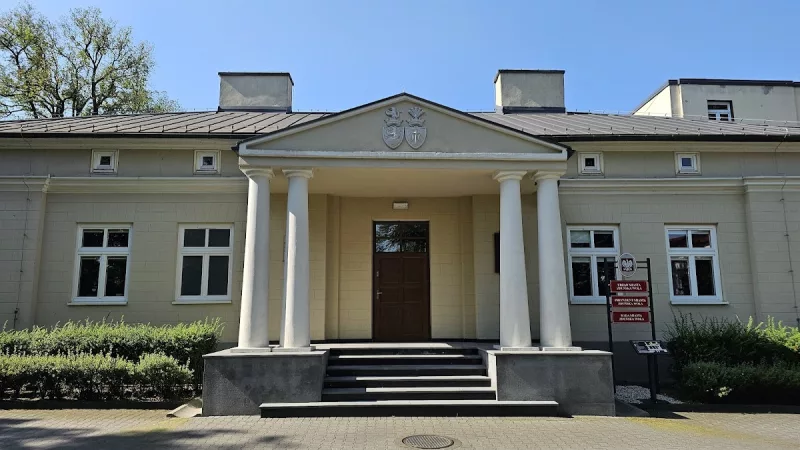
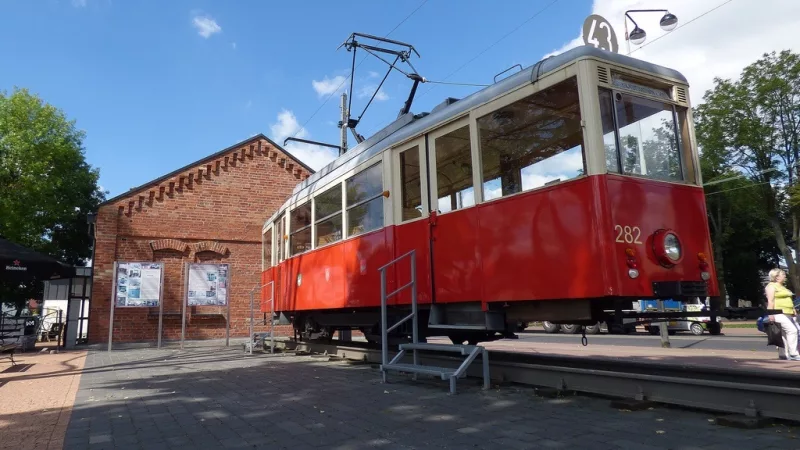
To the west, in Zduńska Wola, the most important landmark is the Basilica of the Assumption of the Blessed Virgin Mary and the Sanctuary of St. Maximilian, where the future saint Maximilian Kolbe was baptised. Next to it stands the Złotnicki Manor (Złotnicki Manor), and the industrial character of this weaving town is shown at the Locomotive Open-Air Museum - the full list is on the historic sites in Zduńska Wola page.
Market squares and old towns in the region
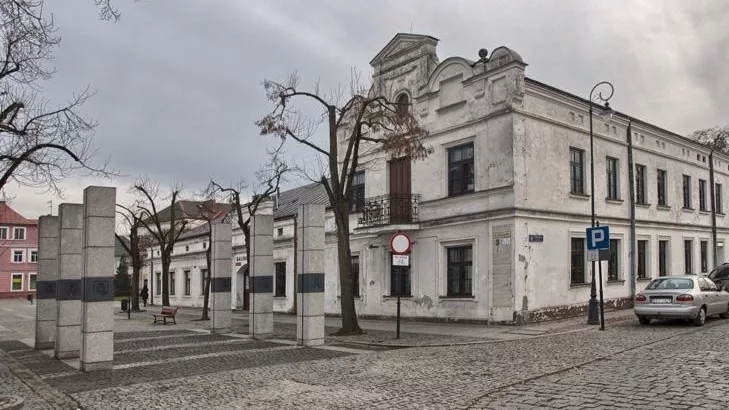
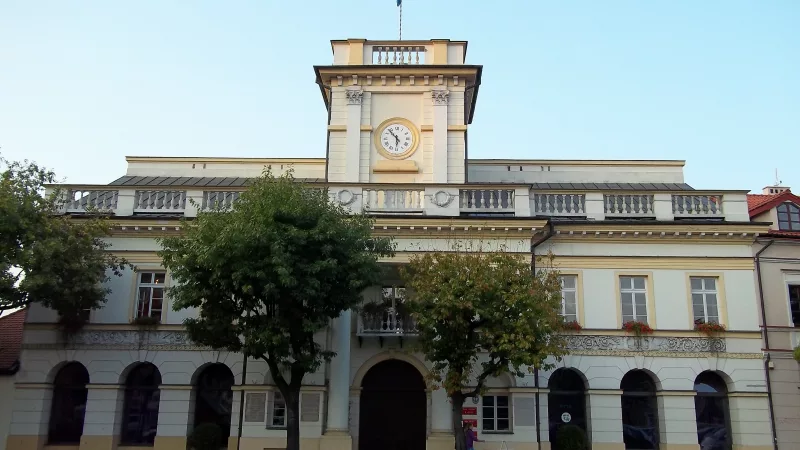
Outside Łódź, the region's smaller towns have preserved the best urban layouts. The Old Market Square in Łowicz is surrounded by a Neoclassical town hall and a Renaissance-Baroque cathedral basilica with the crypts of twelve Polish primates, and nearby lies the triangular New Market Square (New Market Square) - one of the few such layouts in Europe. The full list of Łowicz's landmarks is on the historic sites in Łowicz page. In Łódź itself, the Old Market Square in Bałuty is the city's oldest square, now revitalised with granite paving.
The Market Square in Radomsko in Radomsko is the oldest part of the city, surrounded by historic tenement houses - the full list is on the historic sites in Radomsko page. The Market Square in Skierniewice has a central Neo-Renaissance town hall, and the Old Market Square in Uniejów is a medieval square by the archbishops' castle - more attractions of Uniejów and Piotrków Trybunalski are listed on the pages for those towns.
When to visit Łódź's historic sites, and what's free
Admiring landmarks from the outside - Piotrkowska Street, courtyards, market squares, castle ruins - is possible at any time of day, free of charge, which makes it a good fit for a free day of sightseeing. Church interiors are usually open outside Mass times to those visiting; some also offer viewing towers for a small fee. Museums in historic palaces have their own opening hours, typically Tuesday to Sunday, and charge an admission fee.
Free admission is offered at the Jewish Cemetery, the Evangelical-Augsburg Cemetery and the abbey ruins in Sulejów, among others. On a rainy day, indoor sites - churches, palace museums and chapels - work better than a walk through courtyards or open-air castle ruins.
Frequently asked questions about historic sites in the Łódź region
What are the most important historic sites in Łódź?
Piotrkowska Street with its courtyards, the Archcathedral Basilica of St. Stanislaus Kostka, the Poznański Palace (today the City of Łódź Museum) and the Herbst Palace in Księży Młyn form the set most sightseeing tours of the city start with.
Which historic sites are worth seeing in Łowicz?
In Łowicz it's worth seeing the Old Market Square with its cathedral basilica and the crypts of twelve Polish primates, along with the triangular New Market Square, one of the few squares of this shape in Europe.
What historic sites are in Bełchatów and Zduńska Wola?
In Bełchatów, it's Narutowicza Square with the Balancing Eve sculpture and the churches of All Saints and the Nativity of the Blessed Virgin Mary. In Zduńska Wola - the Basilica of the Assumption of the Blessed Virgin Mary and Sanctuary of St. Maximilian, plus the Neoclassical Złotnicki Manor.
Historic sites pair well with other sightseeing themes: former factories and palaces turned into exhibition spaces are covered on the list of museums in the Łódź region, houses of worship of various faiths are shown in more detail under churches and monasteries, and atmospheric corners are featured under atmospheric places. The full list of Łódź's own landmarks is on the historic sites in Łódź page, and for more ideas for exploring the region, see the main attractions in the Łódź region page.

 Historic Sites